What should you look for when choosing?
First, work out how much crispbread your household gets through with afternoon coffee. Then consider the portion size you want, the ingredients and any allergens.
| What to consider |
What to check when buying |
Who it matters to |
| Amount per pack |
Compare the net weight and the number of slices. Also consider how you’ll store the pack once it’s opened. |
If I only eat crispbread now and then, I don’t want to be left with a large opened pack. For around 36% of consumers, how much they get through comes first. |
| Portion and texture |
Check the size of a slice and whether the variety you choose can be broken into pieces; being easy to break says nothing about how easy it is to chew. |
With my coffee, I sometimes prefer half a slice to a whole one, but I judge the texture separately. Around 29% of consumers prioritise a suitable portion and texture. |
| Wholegrain and fibre |
Look for the wholegrain description and compare the fibre and salt content on the same basis, such as per 100 g. |
I want to choose a wholegrain option deliberately, rather than judging by colour or seeds alone. For around 21% of consumers, this nutritional choice is the top priority. |
| Diet and allergens |
Check the current pack for both the allergens it contains and any warning about possible traces. |
If I need to avoid an ingredient, the specific pack must meet my requirements. For around 14% of consumers, this check comes before the other considerations. |
Crispbread at Joybuy
These packs of crispbread come in different sizes for afternoon coffee: from 125 g if you use a little at a time to 375 g if you get through a pack more often. Check the current label if you’re looking for a wholegrain option.
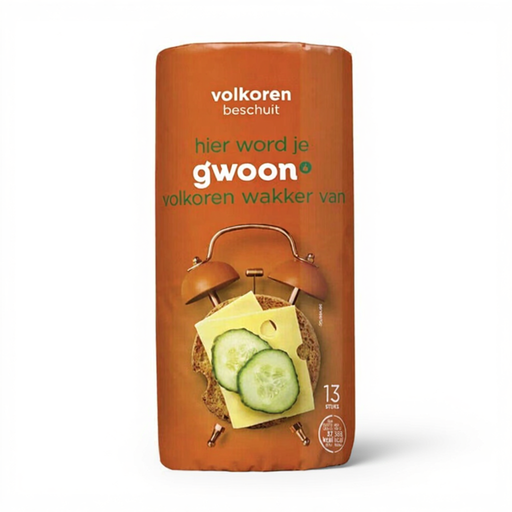 Image unavailable
g'woon Wholegrain crispbread, 125 g
This 125 g pack is worth considering if you only have crispbread with your coffee now and then.
Wholegrain appears in the product name. Check the ingredients, the number of slices and how to store the pack once opened before making your choice.
View at Joybuy
Image unavailable
Bolletje Whole Grain crispbread, 265 g
If you’re looking for a wholegrain option and eat crispbread regularly, compare this 265 g pack with how much you usually get through.
Whole Grain appears in the product name. Check the current label for ingredients and nutritional information, and see how many slices the pack contains.
View at Joybuy
 Image unavailable
Wasa Rustic crispbread, 215 g
At 215 g, this is a pack you can compare with how much crispbread you usually have with afternoon coffee.
If you’re specifically choosing based on wholegrain, fibre or allergens, read the ingredients and nutritional information for this Wasa Rustic variety.
View at Joybuy
 Image unavailable
g'woon Wholemeal crispbread, 375 g
This 375 g pack is best suited to a household that eats crispbread regularly and gets through that amount.
Wholemeal appears in the product name. Check the current label for ingredients and nutritional information, and see how many slices are in the pack.
View at Joybuy
Frequently asked questions
Does all crispbread in the Netherlands contain iodised baker’s salt?
No, you can’t assume this is the case for every crispbread. The Netherlands Food and Consumer Product Safety Authority states that iodine compounds may be present in baker’s salt used in bread substitutes, among other products. For a specific product, check the ingredients or ask the manufacturer.
Is half a slice the same as choosing a smaller pack?
No, half a slice only reduces what you serve at that moment. To see how much you’ll have left once the pack is open, check the pack weight and the number of slices.
How do I compare the nutritional value of half a portion with a whole portion?
Use the weight per slice and the nutritional information on the pack you’ve chosen as your guide. The Netherlands Nutrition Centre gives 10 g and 36 kilocalories for one piece of wholegrain crispbread as a general reference; the size and nutritional value of a specific product may differ.
Is gluten- and lactose-free crispbread also free from other allergens?
No, that description doesn’t tell you whether the product is free from all other allergens. According to Jumbo, Wasa Gluten- & Lactose-free Crispbread Sesame & Sea Salt contains sesame and may contain milk, mustard and soya. So read the full allergen information on the pack you buy.


