
Anyone putting together a coffee platter
You’re looking for crispbread whose shape, grain flavour and texture suit the toppings you have planned. Thin sesame crispbread and traditional rye crispbread give the platter a different feel.


Choose crispbread for a coffee break based on the toppings and your guests, rather than the word ‘premium’. A rye option suits anyone looking for a pronounced grain flavour, while thin sesame crispbread offers a different shape and taste. An explicitly gluten-free option is relevant if a guest needs to avoid gluten. Whichever you choose, check the allergens, nutritional values per 100 g and pack size.
Crispbread plays a different role at every coffee break. Some people focus on how it works with the toppings, while for others, nutritional information or allergens are the deciding factors.
You’re looking for crispbread whose shape, grain flavour and texture suit the toppings you have planned. Thin sesame crispbread and traditional rye crispbread give the platter a different feel.
You check the grains and fibre content per 100 g, while also taking salt and ingredients into account. Compare specific products: the nutritional values of one product don’t apply to the whole brand.
First, work out what your guests need to avoid. A gluten-free option, for example, may still contain sesame. Check the pack you’re serving for any warnings about traces, too.
Start with your guests’ most important requirement. Then compare the shape, ingredients and nutritional values of suitable crispbreads. That way, an attractive presentation won’t come at the expense of an essential allergen check.
| What to consider | What to check when buying | Who it matters most to |
|---|---|---|
| Flavour and presentation | Check the grain, seeds, shape and pack size; choose an option that goes well with the toppings. | If I’m serving a variety of toppings, I want the flavour and shape of the crispbread to work with them. Around 40% of consumers give this combination top priority. |
| Wholegrains and fibre | Check the wholegrain ingredients in the ingredients list, and compare fibre and salt per 100 g. | When choosing, I want to see which grain has been used and how much fibre the product contains. This information comes first for around 30% of consumers. |
| Gluten and other allergens | Read the allergen information and any warnings about traces on the specific pack. | If a guest needs to avoid something, I first want to know which option I can safely serve. This is the main priority for around 20% of consumers. |
| Portions and storage | Choose a suitable pack size and check how the product should be stored after opening. | For a small gathering, I want to serve it easily without opening more crispbread than necessary. Around 10% of consumers put this convenience first. |
The differences between individual products are more concrete than a ‘premium’ label. Albert Heijn states that Leksands Knäcke original contains 97% wholegrain rye flour and 20 g of fibre per 100 g. According to Jumbo’s product information, Wasa Sesam contains wheat and sesame, while the Wasa option described there as gluten- and lactose-free still contains sesame. These details are useful for comparison, but they don’t mean that any of these products is suitable for every guest.
Choosing a gluten-free product doesn’t rule out other allergens. Wasa Gluten- & Lactosevrij Sesame & Sea Salt, as described by Jumbo, contains sesame and states that milk, soya and mustard may be present.
Check the allergen information and warnings on the pack you’re actually using for every guest.
The name of a type of salt or an artisanal look won’t tell you how much salt a crispbread contains. The toppings you serve matter, too.
Compare the salt content per 100 g of specific products and consider which toppings you’ll serve with them.
A product may suit your preferences in terms of one nutritional value, yet still not meet your guests’ allergen or flavour requirements. For example, Jumbo lists wheat gluten as an ingredient in Wasa Protein Wheat.
First decide which requirements are essential, then compare the nutritional information of products that meet them.
To keep crispbread crisp, it’s important to store it somewhere dry and seal it well after opening.
Choose a pack size to suit the number of guests, and add toppings just before serving if crispness matters.
Compare specific products within each brand: the ingredients and nutritional values of one option don’t automatically apply to the rest of the range.
Worth considering if you’re looking for traditional rye crispbread for a coffee platter. Albert Heijn states that Knäcke original contains 97% wholegrain rye flour.
The range shown by Jumbo includes wholegrain, sesame, and gluten- and lactose-free crispbread options.
Albert Heijn stocks Bolletje Oerknäck and wholegrain crispbread, among other options. Check which shape works best with your toppings for each product.
According to Albert Heijn’s range, its own-brand options include regular, wholegrain and sesame varieties.
These products give you options to consider if you’re looking for a wholegrain base or a thinner sesame crispbread for a coffee break. First choose a product that meets your guests’ allergen requirements, then compare the nutritional information and pack size.
 Image unavailable
An option to consider if fibre is an important factor in your choice. Compare the nutritional values per 100 g and check the ingredients and allergens on the pack.
 Image unavailable
A crispbread option to consider if you’re looking for a rustic base for toppings. Check the grains and allergens on the pack before choosing it for your guests.
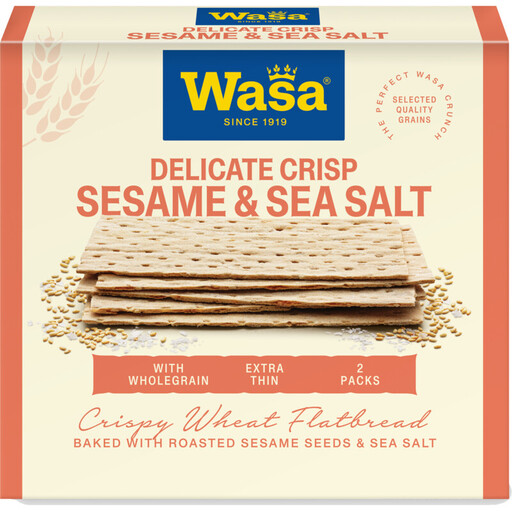 Image unavailable
This thin sesame option suits a coffee platter where shape and sesame flavour matter. Sesame is an allergen, so check the rest of the allergen information on the pack, too.
 Image unavailable
A wholegrain crispbread option to compare if you’re looking for a base for toppings. Joybuy recommends storing this product in a cool, dry place and sealing the pack well after opening. Check the label for your guests, too.
 Image unavailable
A wholegrain crispbread option to compare with other grain-based products. Check the fibre and salt per 100 g, and read the allergen information on the pack.
No. Don’t assume that every crispbread is made with it. In its 2008 agreement on the use of baker’s salt, the Dutch Ministry of Health, Welfare and Sport explained that the government encourages the use of iodised salt in bread and bread substitutes. If iodine is relevant to your choice, check the ingredients list of the specific product.
Compare the fibre per 100 g and check which grain is listed in the ingredients. Albert Heijn states that Leksands Knäcke original contains 20 g of fibre per 100 g and 97% wholegrain rye flour; Jumbo states that Wasa Sesam contains 11 g of fibre per 100 g. Also check the allergens and other nutritional values that matter to your guests.
No. Gluten-free doesn’t mean allergen-free. Wasa Gluten- & Lactosevrij Sesame & Sea Salt, as described by Jumbo, contains sesame and states that milk, mustard and soya may be present. Always read the allergen information on the pack you buy.
Store it somewhere dry and seal the pack well after opening. Joybuy gives this storage advice for Wasa Wholegrain Crispbread. If crispness matters, add toppings shortly before serving.
Yes. If salt is important to your choice, take both the crispbread and the toppings into account. Compare the salt content of crispbread per 100 g and consider the portion you’ll actually serve. A name such as ‘sea salt’ doesn’t tell you how much salt the product contains.