
Small households who have guests now and again
If crispbread is mainly served with coffee, compare the pack size and number of pieces with how much you’re likely to eat afterwards. Check, too, whether you can seal the pack securely once it’s open.


For a small household that serves crispbread with coffee now and again, a pack you can finish after your guests have left is usually more practical than choosing by the term ‘half loaf’. Compare the pack size and number of pieces, choose a flavour and texture to suit your toppings, and check the current label for allergens. A larger pack of 25 pieces is best suited to those who also eat crispbread regularly when they don’t have visitors, and can store it in an airtight container after opening.
If crispbread is mainly served with coffee, compare the pack size and number of pieces with how much you’re likely to eat afterwards. Check, too, whether you can seal the pack securely once it’s open.
A thin cracker, wholegrain crispbread and a seed variety are all different options for the coffee table. Choose a flavour and texture to suit the toppings you plan to serve.
If one of your guests needs to avoid certain ingredients, check the current ingredients list and allergen information before buying. Albert Heijn notes that product information can change.
Start with how much you’ll use, then choose something to suit your toppings and check the label before buying for your guests. The Netherlands Nutrition Centre advises storing opened wholegrain crispbread in a cool, dry, dark place in an airtight container, and says it will keep for around a month in a kitchen cupboard.
| What to consider | What to check before buying | Who should pay particular attention? |
|---|---|---|
| Pack size | Compare the net weight and number of pieces; ‘half loaf’ isn’t a useful measure when making this choice. | If I only serve crispbread when I have occasional guests, I don’t want to be left with a large opened pack. Around 36% of consumers prioritise finding a suitable pack size. |
| Flavour and texture | Check whether it’s crispbread or crackers, then compare the texture and ingredients described with the toppings you have in mind. | With savoury toppings, I want to know whether a thin cracker or a heartier grain variety would work better on the coffee table. Around 21% of consumers prioritise this choice for serving. |
| Ingredients and allergens | Read the current ingredients list, allergen information and any warnings about traces. | If a guest needs to avoid wheat, rye or sesame, I want to know what I can serve before I buy. This check is the top priority for around 29% of consumers. |
| Storage after opening | Check how you can seal the pack and follow the storage advice on the packaging. | If there’s crispbread left after the visit, I want to be able to store it in an airtight container. Around 14% of consumers prioritise how well it keeps after opening. |
Product listings from retailers including Jumbo and ALDI give the weight in grams and the number of pieces. The English term doesn’t tell you how much crispbread you’re actually buying.
Compare the pack size, number of pieces and packaging before choosing.
A pack of 25 pieces needs to be stored somewhere airtight once opened. The Netherlands Nutrition Centre recommends keeping opened wholegrain crispbread in a cool, dry, dark kitchen cupboard for around a month.
Choose an amount you’ll still use after your coffee get-together, and follow the storage advice on the pack.
Ingredients vary from product to product. For example, Jumbo lists wheat and sesame in its hearty crackers with sesame and linseed. A flavour that works well with your toppings doesn’t mean it’s suitable for a guest with an allergy.
Ask which ingredients your guest needs to avoid, then check the packaging of the product you’re serving.
Rules about adding iodine through baker’s salt don’t tell you what type of salt is used in a particular crispbread product.
If the ingredients matter to your choice, check the information on the specific pack.
Wasa’s range includes different pack sizes and product types to compare.
An own-label option to consider if you also eat wholegrain crispbread when you don’t have guests.
A supermarket range where you can compare own-label packs with products from other brands.
An own-label range with different sizes of wholegrain crispbread.
A supermarket range to explore if you’re comparing regular and wholegrain crispbread.
These 180–240 g packs are worth considering if you don’t want to open a 375 g pack for a coffee get-together. The selection includes both crispbread and crackers, so check the product type, ingredients and number of pieces to see what’s right for your guests.
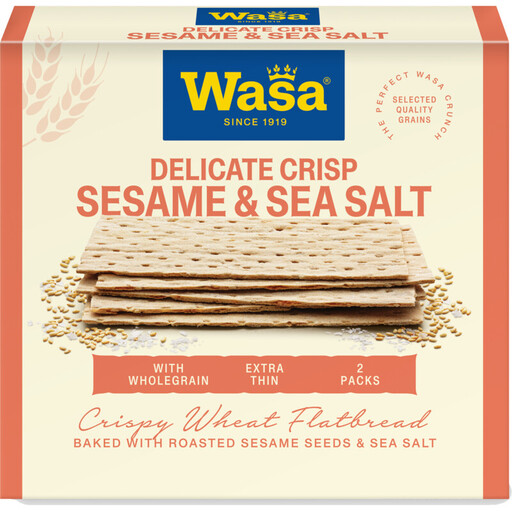 Image unavailable
A 190 g pack for serving a smaller amount when you have guests. Before serving, check the label for allergens and make sure you can seal the rest securely.
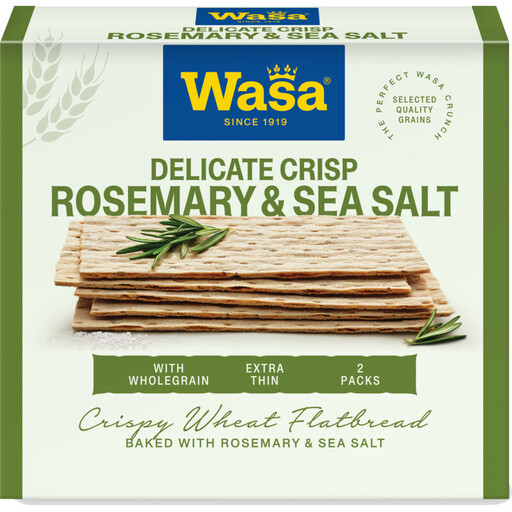 Image unavailable
A 190 g pack to consider if rosemary and salt go well with the toppings you’re planning to serve. Compare the number of pieces and check the allergens on the current pack.
 Image unavailable
A 215 g pack for serving crispbread alongside your toppings. Check the pack to see how many pieces it contains, and read the ingredients if you have guests with allergies.
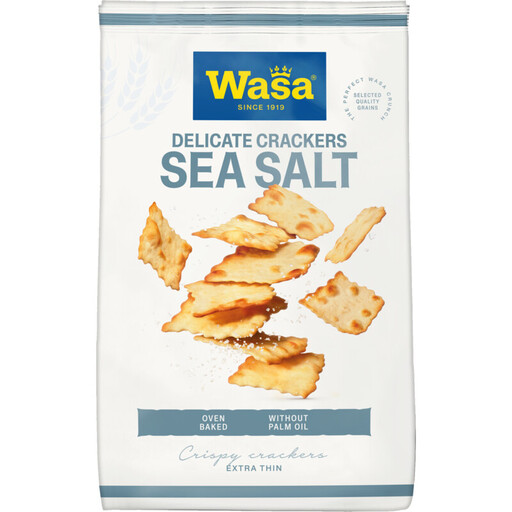 Image unavailable
A 180 g pack of crackers for anyone who’d like to serve a different type of product with coffee. These are crackers, not necessarily crispbread, so check the number of pieces and the allergen information on the packaging.
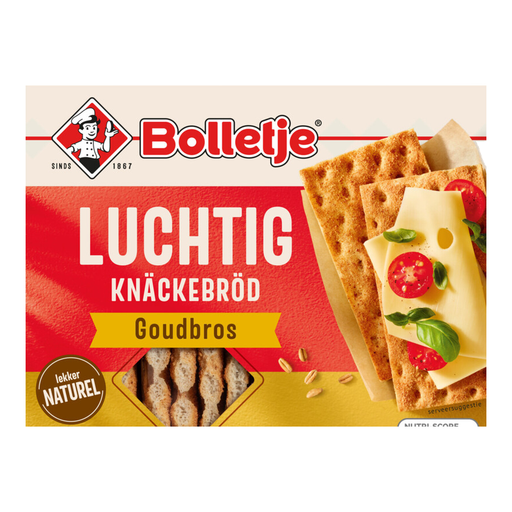 Image unavailable
A 240 g pack for anyone who’d like to eat crispbread after their guests have left, too. Compare the number of pieces with how much you’ll use, and read the current label before serving it to guests.
Don’t use ‘half loaf’ as a measure for a pack of crispbread. Compare the net weight and number of pieces on the product you want to buy. For example, ALDI Netherlands lists a 375 g pack of wholegrain crispbread containing 25 pieces.
Store opened wholegrain crispbread in an airtight container in a cool, dry, dark place. The Netherlands Nutrition Centre says it will keep for around a month in a kitchen cupboard; also follow the instructions on your product’s packaging.
Read the ingredients list, allergen information and any warnings about traces on the current pack. The Netherlands Food and Consumer Product Safety Authority explains that allergens must be declared on the labels of prepacked foods. Ingredients vary from product to product.
Don’t assume that every pack contains iodised baker’s salt. Dutch rules on the permitted addition of iodine through baker’s salt don’t confirm what’s in any individual product; check the ingredients information on the label.