
Parents packing food for school or childcare
You want to pack crispbread and need to know which allergens the variety contains and what rules the school or childcare setting has.


If you’re looking for crispbread to go with familiar toppings, choose a plain rye or wholegrain variety. A variety with seeds or fruit may be a better fit if your child likes those ingredients and flavours. Before packing it, always check the allergens on the packaging and the rules at their school or childcare setting. Don’t automatically assume that crispbread contains iodised baker’s salt.
You want to pack crispbread and need to know which allergens the variety contains and what rules the school or childcare setting has.
You’re looking for something crisp that your child can pair with toppings they already know. A plain rye variety has different ingredients from a variety with fruit or seeds.
You check the stated wholegrain content and the nutritional information for each variety, without taking it for granted that it contains iodine from baker’s salt.
Start with allergens and the rules for bringing food in. Then compare the flavours and ingredients of the varieties you’re considering.
| What to consider | What to check before buying | Who it matters to |
|---|---|---|
| Allergens and school rules | Read the allergen information and any warnings on the current packaging; ask the school or childcare setting what food is allowed. | If I want to pack something, it needs to suit the allergies in the group and the school rules. This check is a priority for around 42% of consumers. |
| Flavour and toppings | Compare a plain variety with one containing fruit or seeds, and think about which toppings would go well with it. | My child prefers crispbread with familiar toppings to a variety with a strong flavour of its own. Flavour and how well it pairs with toppings are the first considerations for around 33% of consumers. |
| Wholegrain and ingredients | Check the stated wholegrain content and compare the ingredients and nutritional information for the specific varieties. | I mainly want to know which grains have been used and how the nutritional information per 100 g differs. Around 25% of consumers give this comparison priority. |
Rye and wheat are cereals containing gluten; a seeded variety may also contain sesame. The Netherlands Food and Consumer Product Safety Authority lists both types of ingredient among the allergens consumers must be informed about. Schools and childcare settings may also have their own rules.
Read the packaging for the variety you’ve chosen, including any warnings about cross-contamination, and check the rules before packing the crispbread.
According to Ryvita, Original contains 88 g of wholemeal rye flour per 100 g. Ryvita’s Fruit Crunch also contains ingredients such as currants and sugar. So the ingredients in one variety don’t describe another.
Compare the ingredients list and nutrition table for the specific varieties you’re choosing between.
According to the Netherlands Nutrition Centre, bread made with iodised baker’s salt provides iodine. That doesn’t tell you which salt is used in a particular pack of crispbread.
If this matters to your choice, check the product ingredients or ask the manufacturer.
Wasa offers a range of crispbread varieties; Albert Heijn lists a Wasa product among its range, for example.
Ryvita describes a plain rye variety, a multigrain variety and a fruit variety, among others.
Albert Heijn lists Leksands Original as a crispbread variety.
These products offer options to pair with toppings, as well as varieties to compare if you’re looking for wholegrain or a different texture. Whether you can pack a variety for school or childcare depends on the packaging and the rules at the setting.
 No image available
A wholegrain variety to consider if you’re looking for crispbread to pair with toppings. The pack contains 375 g.
Before packing it, check the current allergen information, especially for gluten and sesame, as well as the rules at the school or childcare setting.
 No image available
A variety to compare as a base for familiar toppings. The pack contains 215 g.
Before packing it, read the current information on the packaging about gluten and any traces of other allergens.
 No image available
A wholegrain variety for anyone wanting to compare the ingredients in different types of crispbread. The pack contains 265 g.
If packing it for school, check the current information about gluten, sesame and any other allergens.
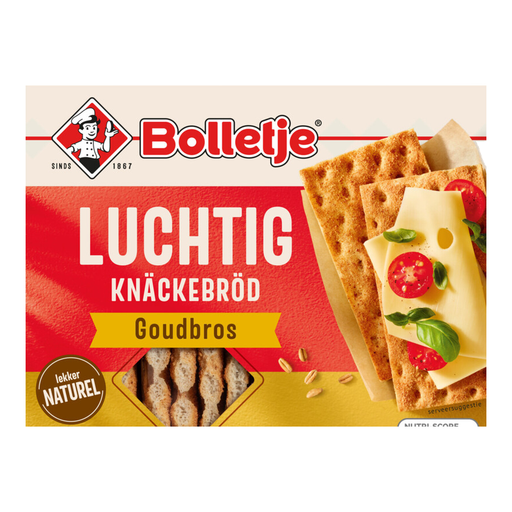 No image available
Another crispbread variety to compare for texture and flavour. The pack contains 240 g.
If wholegrain is important to your choice, read the ingredients and nutritional information; also check the allergens and school rules.
No. Don’t assume the same rules apply to every product and every school. Check the allergens on the packaging and ask the school or childcare setting what rules apply to bringing in food.
No, rye is a cereal that contains gluten. If gluten needs to be avoided, check the current allergen information for the specific product and don’t choose based on the word crispbread alone.
Yes, check whether the variety you’ve chosen contains sesame and read any warnings on the packaging. According to Ryvita, its Multigrain variety contains sesame seeds, but the ingredients may differ in other varieties.
No, you can’t assume that every product does. The Netherlands Nutrition Centre explains that bread made with iodised baker’s salt provides iodine. Check the ingredients of the crispbread you’ve chosen or ask the manufacturer which salt was used.