What should you look for when buying?
First, check the full allergen information against the childcare setting’s arrangements. Then compare the nutritional information on suitable products and decide what role crispbread will play at lunchtime.
| What to consider | What to check when buying | Who does this matter to? |
|---|
| Allergens |
Read the ingredients and warnings about possible cross-contamination on the current packaging. Check them against the group policy and individual arrangements. |
When I’m buying for several children, one product needs to meet all the relevant requirements. For around 42% of consumers, checking allergens would be their first concern. |
| Wholegrains, fibre and salt |
Compare the wholegrain claims, fibre and salt per 100 g, and consider the topping chosen for lunch. |
I want to be able to compare wholegrain options without losing sight of the salt content. For around 33% of consumers, this combination would be the priority. |
| Its place alongside bread |
Decide whether it’s for variety or a regular replacement for bread on the menu. |
If I’m offering variety, I don’t want to assume that crispbread automatically serves the same purpose as bread. For around 25% of consumers, this would be the key consideration. |
Crispbread and snack options on Joybuy
This selection includes wholegrain crispbread, a rye variety and a filled snack to add variety at lunchtime. Check every pack against the childcare setting’s arrangements; the filled option isn’t a neutral base for your own choice of topping.
 Image unavailable
Bolletje wholegrain crispbread, 265 g
A wholegrain option to consider as an alternative at lunchtime.
Check the nutritional information per 100 g and check cereals containing gluten, sesame and the warning about the possible presence of lupin against the childcare setting’s arrangements.
View on Joybuy
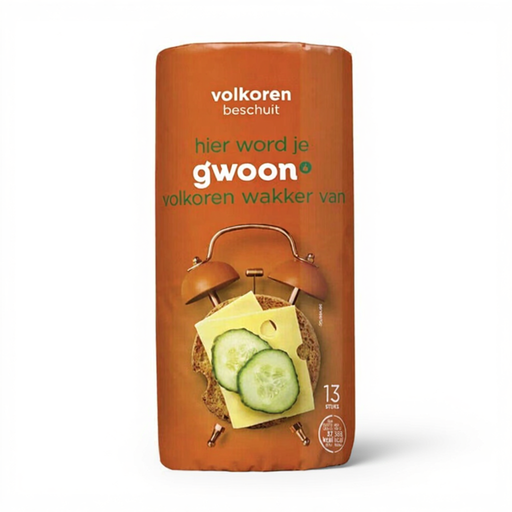 Image unavailable
g'woon wholegrain crispbread, 125 g
A wholegrain option for buyers looking to serve crispbread alongside the usual bread-based lunch.
Compare the fibre and salt per 100 g on the pack. Also check wheat, barley, egg and the warning about the possible presence of soya against the group policy.
View on Joybuy
 Image unavailable
Wasa Rustic crispbread, 215 g
A rye option to consider when crispbread is suitable as an alternative at lunchtime.
Check for gluten from rye and warnings about the possible presence of milk and sesame on the current pack. Compare the nutritional information per 100 g before choosing based on fibre or salt.
View on Joybuy
 Image unavailable
Wasa Wholegrain crispbread, 260 g
A wholegrain crispbread option to add variety alongside bread.
Check for gluten from rye and warnings about the possible presence of sesame and milk against the allergen policy. Use the current nutritional information to compare fibre and salt per 100 g.
View on Joybuy
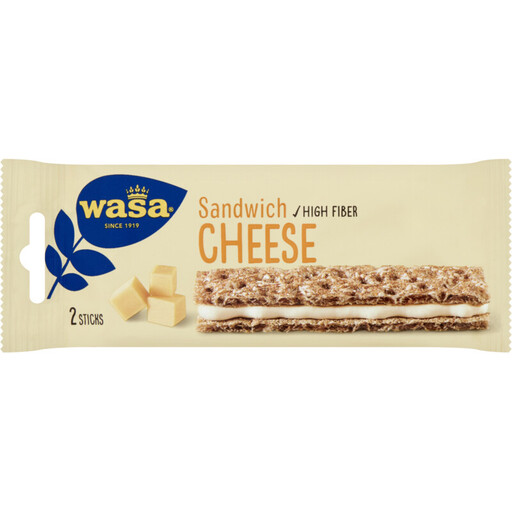 Image unavailable
Wasa Cheese Sandwich, 3 × 31 g
A filled crispbread snack for variety, not the same lunch base as plain crispbread.
Include the cheese filling in your assessment of the lunch, and check gluten, milk, sesame and warnings about the possible presence of soya and lupin against the group’s arrangements.
View on Joybuy
Frequently asked questions
Does crispbread for childcare always have to be gluten-free?
No, not if cereals containing gluten are permitted under the allergen policy and individual arrangements. Check the allergen information on the pack for the group; a gluten-free option isn’t automatically necessary for every child.
Is gluten-free crispbread also suitable for other allergies?
Not necessarily. For Wasa Gluten- & Lactosevrij Sesame & Sea Salt, Jumbo lists sesame and the possible presence of milk, mustard and soya. Check the current pack against each child’s arrangements.
Can crispbread completely replace bread at lunchtime?
Don’t treat crispbread as a complete bread replacement for young children without first assessing the menu. The Netherlands Nutrition Centre lists bread as a source of carbohydrates, protein, fibre, iodine, B vitamins and iron, among other nutrients, for children aged 1 to 3; crispbread doesn’t automatically provide the same contribution simply because it belongs to that product category.
What should I look for if by ‘digestive’ I mainly mean fibre?
Compare the stated fibre per 100 g and read the ingredients list rather than relying on the term ‘digestive’. A product name alone doesn’t tell you how much fibre a pack contains, nor does it prove that the product helps with digestive complaints.


