
Daily coffee drinker on a budget
Looking for simple crispbread for a regular coffee break and keeping an eye on how much each pack contains.


For a daily coffee break, pack size is a useful starting point, but the ingredients determine whether a crispbread suits your preferences. To compare wholegrain content and fibre, check the nutritional information per 100 g. If you need to avoid allergens, always check the latest packaging rather than relying on terms such as ‘lightweight’.
Looking for simple crispbread for a regular coffee break and keeping an eye on how much each pack contains.
Wants crispbread as a base for sweet or savoury toppings and compares the ingredients and nutritional information of different varieties.
Needs to check the ingredients and allergens on the specific pack. A name such as ‘lightweight’ or ‘high-fibre’ doesn’t tell you whether it’s suitable.
Start with what matters most for your coffee break: how much you use, the ingredients or whether the product is suitable for your allergy requirements. Then compare the information on the packs of the varieties that meet your needs.
| What to consider | What to check when buying | Who it matters to |
|---|---|---|
| Pack weight for daily use | Check the weight and, if stated, the number of pieces per pack. | I often have crispbread with my coffee and want to know how much is in a pack. For around 42% of consumers, the amount for regular use comes first. |
| Wholegrain and fibre | Read the ingredients and compare fibre per 100 g; check the rest of the nutritional information too. | I’m looking for a wholegrain base for toppings and want to compare the fibre content of different varieties. Around 33% of consumers prioritise these ingredients. |
| Allergens and dietary suitability | Check the ingredients and allergen information on the latest pack; if avoiding gluten, look for an explicit suitability claim. | I need to know whether a specific variety is suitable for my allergy or dietary restriction before I buy it. This is the top priority for around 25% of consumers. |
These terms don’t tell you whether a product is suitable for people with allergies. Wasa Light Weight product information lists gluten from rye and milk, and says that sesame may be present.
If you have an allergy or avoid gluten, read the ingredients and allergen information on the latest packaging.
According to the Netherlands Nutrition Centre, adding baker’s salt to bread isn’t compulsory. So don’t assume a product will contribute iodine just because it belongs to this category.
If baker’s salt matters to you, check the label on the specific product.
For anyone looking to choose between different crispbread ingredients and varieties.
A supermarket own-brand option if you’re looking for a wholegrain or seeded variety for regular use.
A supermarket option if you’d like to pick up seeded crispbread while doing your shopping.
These varieties come in different pack sizes and have different ingredient claims. First choose what suits your needs, then check the nutritional information and any allergens before buying.
 Image unavailable
A rye variety for anyone who likes to add toppings to their crispbread at coffee time. If you have dietary or allergy requirements, check the ingredients on the pack.
 Image unavailable
For anyone who considers fibre when choosing crispbread to have with their coffee. The product information lists 26 g of fibre and 1.1 g of salt per 100 g, and identifies sesame and cereals containing gluten as allergens; check the latest packaging.
 Image unavailable
A 375 g pack of wholegrain crispbread for anyone who regularly has crispbread with their coffee. If they matter to your choice, read the ingredients and allergen information on the pack.
 Image unavailable
A wholegrain variety for anyone looking for crispbread as a base for toppings. Compare the nutritional information on the pack with other varieties, and check the allergens if necessary.
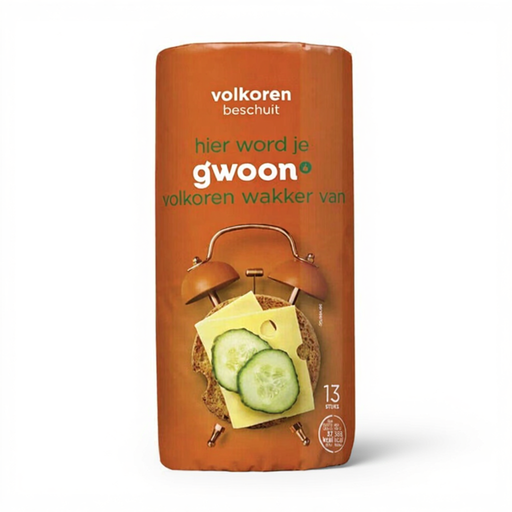 Image unavailable
A 125 g pack for anyone who’d like a smaller amount of wholegrain crispbread with their coffee. Check the ingredients and allergens for this variety on the packaging.
According to the Netherlands Nutrition Centre, ‘wholegrain’ on crackers means that the flour is made entirely from whole grains. If you’d also like to compare fibre content, check the nutritional information for the specific pack, ideally per 100 g.
No, don’t assume that it does. The Netherlands Nutrition Centre says that adding baker’s salt to bread isn’t compulsory. If this matters to you, check the ingredients on the label of the specific crispbread.
Read the allergen information and ingredients on the pack you’re planning to buy. The Netherlands Food and Consumer Product Safety Authority says that allergen information must be provided on prepacked foods. A variety name such as ‘lightweight’ doesn’t tell you which allergens the product contains.
Seal the pack tightly after opening and store the crispbread somewhere dry, away from moisture. Also follow the storage instructions on the packaging.