What should you look for when choosing?
Start with the nutritional information per 100 g, then consider which other feature matters most for your breakfast.
| What to consider |
What should you check? |
Who is this important for? |
| Sugars |
Compare ‘of which sugars’ per 100 g and consider the toppings you want to use. |
If I mainly want to compare products with lower sugar values, I start with the same unit of measurement. Around 42% of consumers make this sugar comparison their priority. |
| Fibre and grain base |
Check the fibre content per 100 g and which grains the product contains. |
For my regular breakfast, I want to know how much fibre my chosen product contains as well as its sugar content. This is a priority for around 33% of consumers. |
| Allergens and replacing bread |
Read the allergen information, compare salt per 100 g and, if you regularly replace bread, check the ingredients for iodised baker’s salt. |
If I often replace bread with crispbread, I first want to check that the ingredients suit what I eat. For around 25% of consumers, these kinds of dietary and bread-replacement questions matter most. |
Crispbread and crackers at Joybuy
These products offer different grain bases and pack sizes to compare for a weekday breakfast. Check the current nutritional and allergen information for each product; ‘Light’ or ‘High-Fiber’ in a name is no substitute for checking.
 No image available
Bolletje Whole Grain Crispbread – 265 g
A choice for anyone who wants to compare sugars and fibre at breakfast. Joybuy’s product information lists 1.5 g of sugars, 14 g of fibre and 0.97 g of salt per 100 g. Check the current packaging for allergens if you need to avoid certain grains or sesame.
View at Joybuy
 No image available
g'woon Wholemeal Crispbread – 375 g
A wholemeal crispbread to consider if you’re comparing different grain products for a weekday breakfast. The pack contains 375 g. Read the nutritional information per 100 g and the allergen list before choosing.
View at Joybuy
 No image available
Wasa High-Fiber Crackers – 300 g
A cracker option to compare with other crispbreads and crunchy grain products for breakfast. The pack contains 300 g. Compare the nutritional information per 100 g and check the allergens on the label.
View at Joybuy
 No image available
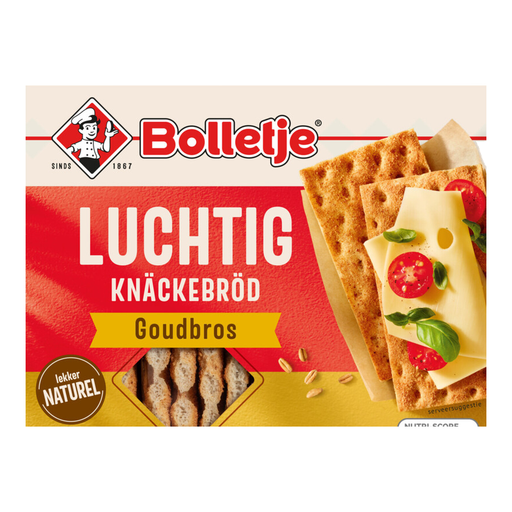
Bolletje Light Crispbread Golden Crisp – 240 g
A crispbread to compare with other products for a quick breakfast. The pack contains 240 g. Don’t assume ‘Light’ in the product name tells you the sugar content; compare the nutritional information per 100 g instead.
View at Joybuy
 No image available
Wasa Wholegrain Crispbread – 260 g
A wholegrain crispbread to compare if you’re looking for a grain-based option for a weekday breakfast. The pack contains 260 g. Check the current nutritional and allergen information before comparing it with other varieties.
View at Joybuy
Frequently asked questions
Does a lower sugar figure tell you enough about crispbread for breakfast?
No. Compare ‘of which sugars’ per 100 g, but also look at fibre, salt, ingredients, allergens and the toppings you use. According to Albert Heijn’s product information, Leksands Zaden & zeezout contains 0.4 g of sugars and 16 g of fibre per 100 g, compared with 1.5 g of sugars and 20 g of fibre per 100 g for Wasa Volkoren.
Does crispbread automatically provide iodine when used instead of bread?
No. A particular crispbread doesn’t automatically provide iodine just because it can replace bread. The Netherlands Food and Consumer Product Safety Authority explains that iodine compounds may only be present in bread substitutes through added baker’s salt; manufacturers aren’t required to use this salt. Check the ingredients list, especially if you often replace bread.
Can I choose rye crispbread if I need to avoid gluten?
Not if the rye crispbread contains gluten, as the Wasa Volkoren discussed here does. According to Albert Heijn’s product information, Wasa Glutenvrij en lactosevrij classic is labelled gluten-free. Always check the current label of your chosen variety to make sure it meets your specific allergen requirements.
How should I store crispbread after opening?
Keep it in a cool, dry place and seal the pack tightly. These are the storage instructions on the Joybuy product page for Wasa Volkoren Knäckebröd. For other varieties, follow the instructions on the packaging.


