
Commuter who wants to add their own toppings
Wants to prepare breakfast quickly and take it along. The shape of the crispbread, how sturdy it is with toppings and whether the pack reseals well after opening all matter.


For a quick breakfast, choose crispbread that’s easy to top or take with you, and check the pack for the serving size, fibre, salt and allergens in your chosen variety. If you’re looking for a substantial base, consider a product described as hearty; a ready-made sandwich doesn’t need toppings, but it isn’t the same as plain crispbread. Don’t assume a particular crispbread category contains iodine: check whether the pack lists iodised salt or baker’s salt.
Wants to prepare breakfast quickly and take it along. The shape of the crispbread, how sturdy it is with toppings and whether the pack reseals well after opening all matter.
Compares the ingredients and nutritional values of their chosen variety, paying attention to fibre per 100 g and per piece, as well as salt per serving.
Reads the information on the exact pack, including details about rye, wheat, gluten and sesame. If you’re looking for gluten-free crispbread, also check for an explicit gluten-free label and compare the nutritional values.
First decide whether you want a base to add your own toppings to or something ready to eat. Then compare the shape, labelling and pack format of the varieties that suit your breakfast. A description such as ‘medium sliced’ doesn’t replace these checks.
| What to consider | What to check when buying | Who it matters to |
|---|---|---|
| Shape and sturdiness | Check the shape and serving size, and whether the product is intended as a base for toppings or as a ready-to-eat snack. | If I’m adding toppings to breakfast in a hurry and putting it in a bag, I want to know whether the pieces are practical for that. Around 31% of consumers prioritise this kind of convenience. |
| Wholegrain and fibre | Compare the grain ingredients and the stated fibre per 100 g; use the value per piece if it’s given on the pack. | When I eat the same breakfast regularly, I want to compare varieties using the same nutritional values. For around 31% of consumers, wholegrain ingredients and fibre are the first things they consider. |
| Ingredients and allergens | Read the allergen information on the exact pack and, if necessary, look for an explicit gluten-free label. | If I need to avoid certain ingredients, I need to know whether this variety is suitable before considering anything else. Around 23% of consumers put this check first. |
| Pack format and storage | Check the number of pieces or servings and the storage instructions for an opened pack. | If I only eat crispbread occasionally, I want to use a pack without the rest losing its crunch. Around 15% of consumers give pack format and how well it keeps after opening top priority. |
According to the Netherlands Nutrition Centre, using baker’s salt in bread is not compulsory. So the name ‘crispbread’ doesn’t tell you whether a particular product contains iodised salt.
If this information matters to your choice, look for ‘iodised salt’ or ‘baker’s salt’ in the ingredients list on the pack you’re considering.
Wholegrain describes the grain ingredients used; it doesn’t mean that a product is gluten-free. Fibre and salt levels also vary between varieties.
Check the gluten-free label separately, then compare the nutritional information per 100 g for the products you’re considering.
A product page alone doesn’t confirm that you can order the crispbread and receive it in time for a planned breakfast.
Check current availability and delivery options before relying on an order.
These brands give you a starting point for comparing specific crispbread varieties. The features of one product don’t necessarily apply to the rest of the range.
Wasa describes Rustiek as a hearty, crunchy variety for anyone looking for a base with a distinctive texture.
The different AH varieties let you assess regular and explicitly labelled gluten-free products separately.
According to Jumbo, Jumbo Knäckebröd Volkoren comes in a pack of 5 × 5 pieces, which is useful if you want to estimate the number of pieces in advance.
Goud Gebakken Knäckebröd volkoren is a useful comparison if you want to assess the contents and number of pieces in a regular pack.
Ryvita Original provides a product-specific point of comparison if you’re looking at rye-based crispbread.
This selection includes both crispbread to top yourself and a ready-made crispbread sandwich. First decide which suits your morning, then check the size and serving format on the pack of loose crispbread varieties.
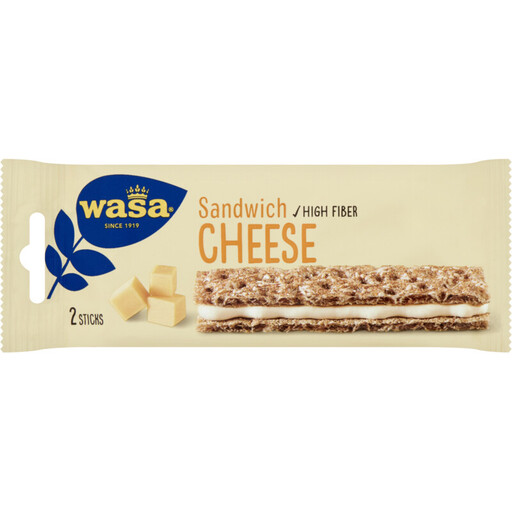 Image unavailable
A handy choice if you want to take a ready-made crispbread sandwich with you: the pack contains three sandwiches, each weighing 31 g. The cheese filling means this isn’t a plain base for adding your own toppings, so check the current label if you have dietary restrictions.
 Image unavailable
Worth considering if you want to add your own toppings to rye crispbread. Check the pack for the size and number of pieces if you want to prepare portions to take with you. If you need to avoid gluten or other allergens, also read the current ingredients information.
 Image unavailable
A wholemeal crispbread to compare if you’re putting together your own breakfast with toppings. Check the pack for the number and size of the pieces, and read the current allergen information before choosing a variety.
 Image unavailable
Worth a look if you’re after a wholegrain base for your choice of toppings. Check the piece size and pack format if you plan to take breakfast with you, and read the current label for ingredients and allergens.
 Image unavailable
A wholegrain crispbread to consider if you want to add your own toppings. Compare the fibre content, size and allergens on the pack when choosing; don’t assume that the information for Wasa Rustiek applies to this variety.
No, don’t rely on the product name alone. According to the Netherlands Nutrition Centre, using baker’s salt in baking isn’t compulsory. For packaged crispbread, check the ingredients list on the exact product to see whether it lists iodised salt or baker’s salt.
No, wholegrain doesn’t mean gluten-free. The wholegrain varieties described from Wasa, Albert Heijn and Jumbo contain rye and/or wheat. If you’re looking for a gluten-free variety, check for an explicit label on the pack you choose.
Keep it dry and seal an opened pack well, as Albert Heijn and Jumbo advise for the products described. If your toppings could make the crispbread soggy, take them separately and add them just before eating.
No. Albert Heijn lists 2.4 g of salt per 100 g for AH Glutenvrij Vezelrijk and 0.7 g per 100 g for AH Knäckebröd volkoren. These figures are for two specific varieties; always compare the nutritional information per 100 g when looking at other products.