What should you look for when choosing?
First decide which feature matters most for your breakfast. Then compare the nutritional information per 100 g and per serving: pieces of crispbread can vary in weight.
| What to look for | What to check when buying | Who it matters to |
|---|
| Wholemeal and fibre |
Check the grains in the ingredients list and compare fibre per 100 g and per serving. |
If I often eat crispbread with savoury toppings, I mainly want to know what the grain base adds to my breakfast. Around 29% of consumers put this need first. |
| Flavour and texture |
Check which seeds have been used and whether the shape works well with your toppings. |
With simple toppings, I want the crispbread itself to have flavour and a satisfying crunch. This matters most to around 24% of consumers. |
| Protein per serving |
Compare the amount of protein per piece or serving as well as the amount per 100 g. |
If I’m keeping an eye on protein at breakfast, I want to know how much I get from my usual serving. Around 18% of consumers put this question first. |
| Practical choice |
Check the pack size and whether you can find your preferred variety at your usual shop. |
I want to choose a pack that suits how often I eat crispbread, without having to switch to another variety all the time. Around 17% of consumers prioritise practicality. |
| Gluten and allergens |
If needed, look for a clear gluten-free label and read the full allergen and may-contain information. |
If I need to avoid gluten or another allergen, I need to be able to check the label on this specific pack. This is the main concern for around 12% of consumers. |
Crispbread for different breakfast preferences
These Joybuy products are mainly wholemeal varieties for everyday use, plus one sesame variety for anyone looking for a different flavour. If you have a dietary requirement, always check the information on the individual pack.
 No image available
Bolletje wholemeal crispbread, 265 g
A wholemeal variety to compare if you regularly eat crispbread with savoury toppings. The pack contains 265 g; check the label for fibre per serving and allergen information.
 No image available
g'woon wholemeal crispbread, 375 g
A second wholemeal option for savoury toppings, in a 375 g pack. Compare the fibre per serving with other wholemeal varieties and read the allergen statement on this pack.
 No image available
Wasa Wholegrain crispbread, 260 g
A wholemeal variety to compare with other grain bases. The pack contains 260 g; check the ingredients and don’t rely on the name alone to assess fibre per serving.
 No image available
Wasa Rustic crispbread, 215 g
A crispbread variety to consider if you’d like a different base for savoury toppings. The pack contains 215 g; read the ingredients and nutritional information before comparing it with a wholemeal variety.
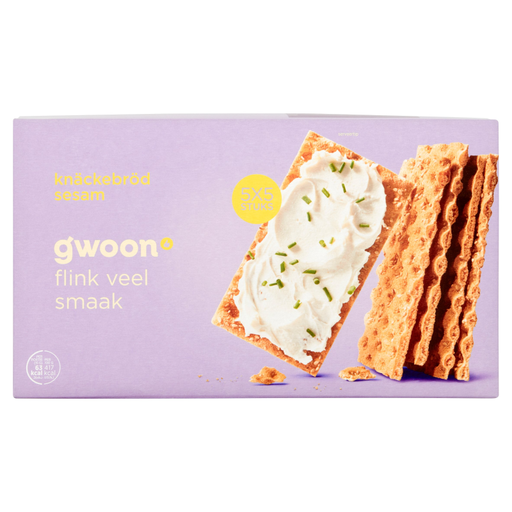 No image available
g'woon sesame crispbread, 5 pieces
A sesame variety to consider if you’re looking for a different flavour for your savoury breakfast. The listed variety contains 5 pieces; check the allergen information because it contains sesame.
Frequently asked questions
Is premium crispbread automatically a healthier choice?
No. Check the ingredients, fibre, salt and serving size of the specific varieties you’re considering. A distinctive flavour or a special-looking pack won’t give you the full picture.
How do I choose crispbread if I need to avoid gluten?
Choose a product with a clear gluten-free label and read the full allergen information. Wheat, rye and barley contain gluten, so a label such as wholemeal doesn’t mean the crispbread is gluten-free.
Does crispbread automatically contain iodine because it uses baker’s salt?
No, don’t assume all crispbread contains iodine. If this matters to your choice, check the ingredients of the specific product for baker’s salt. The fact that Dutch rules on iodine in bakery products exist doesn’t prove that every variety contains it.
How do I compare the fibre in two types of crispbread?
Compare both the amount per 100 g and the amount per serving. According to the Netherlands Nutrition Centre, a 10 g piece of wholemeal crispbread contains an average of 1.4 g of fibre, but the weight and nutritional value of individual products can vary.
What should I look for if I want to eat less salt?
Compare the salt per 100 g and factor in how many pieces you usually eat. This helps you judge the value on the label in the context of your own serving, rather than relying on the product name alone.


