For a darkened home cinema with seats at an angle to the screen, OLED is a natural choice. If you often watch in daylight or want to factor in score bars that stay on screen for long periods, compare mini-LED too. With either technology, assess the motion handling of the specific model and check that you can actually stream the match you want to watch: a smart TV does not automatically give you access to a broadcast.
Who is this choice relevant to?
Cricket fan with a darkened cinema room
You want to follow the ball, players and camera movements clearly, and you also use the TV in a dark room. Compare the model’s motion handling and weigh up OLED against the possibility of static match elements remaining visible for long periods. Consumentenbond discusses motion handling as something to consider when choosing a TV for sport.
Host with guests sitting side by side
You watch matches with others who won’t all be sitting directly in front of the screen. The viewing angle and the position of the seats at either end matter here. Consumentenbond highlights viewing angle as something to consider when choosing a television.
Viewer who watches matches in daylight
You can’t always darken the room and want to assess reflections and brightness as well as the contrast you need for film nights. Consumentenbond discusses brightness and viewing angle as factors to consider when choosing a TV.
What should you look for in a TV for cricket?
OLED TV
Best suited if: you usually darken the room or guests also watch from seats at an angle to the screen. Consumentenbond says OLED TVs generally offer deeper blacks and a wider viewing angle.
Bear in mind: score bars and other static images that stay on screen for long periods. Image retention is a general OLED trade-off, not a guaranteed outcome for every model.
Mini-LED LCD TV
Best suited if: you often watch in daylight or want to factor in static match elements that stay on screen for long periods. RTINGS.com describes mini-LED as an option worth comparing for bright rooms.
Bear in mind: assess reflections and viewing angle for each model too. The technology name alone won’t tell you how the picture will look in your room.
| Factor to consider |
What to look for |
Who should weigh this more heavily? |
| Motion during the match |
Compare motion handling at model level. A higher stated refresh rate does not guarantee that generated extra frames will improve fast, erratic action; Consumentenbond warns that image processing can also introduce artefacts. |
If I want to follow fast action without distracting blur, I look at how the specific model handles it. About 29% of consumers prioritise motion handling. |
| Picture from the side |
Assess the TV from the seats at either end, not just from directly in front. Consumentenbond discusses viewing angle as a factor to consider. |
When watching matches with guests, I want those sitting at the sides to enjoy a comfortable view too. For about 23% of consumers, a good picture from several seats is a priority. |
| Daylight and reflections |
Compare reflections and brightness in the room where you watch, and also consider the contrast you want for film nights. RTINGS.com discusses the differences between OLED and mini-LED in bright and dark rooms. |
If I can’t darken the room during a match, I want to know how the screen handles ambient light. About 18% of consumers give daylight and reflections top priority. |
| Screen size and viewing distance |
Measure the distance from your eyes to the planned screen position and check the space available. In research published on 5 May 2026, Consumentenbond gives around 2.4 times the screen diagonal as a comfortable viewing distance; use this as a starting point, not a hard-and-fast rule. |
If my room or viewing distance limits the screen size, I want to know what will fit first. For about 18% of consumers, the size that suits their room matters most. |
| Access to the broadcast |
Check which service is showing each match in your region and whether it works on the TV or through an external player. The ICC says streaming availability varies by region and event. |
If I want to watch a particular match, I check the broadcast and how to stream it first. About 12% of consumers prioritise access to the match. |
Common buying mistakes
-
Assuming a high refresh rate guarantees a sharp picture of cricket
A TV can generate extra frames, but this processing can also create visible artefacts during fast, erratic movement. Consumentenbond highlights this as something to consider with TV refresh rates.
Compare the motion handling of the specific model and, if possible, try different settings.
-
Assessing the picture only from the middle seat
Viewing angle and reflections can affect the picture for guests sitting at either end. Consumentenbond identifies viewing angle and reflections as relevant factors when choosing a TV.
Assess the model from the seats you use during matches and in similar lighting conditions.
-
Choosing or ruling out OLED without considering static images
Score bars that remain visible for long periods make image retention a consideration with OLED. Consumentenbond’s discussion is based on older tests under specific conditions; these cannot predict the outcome for every new model or viewing pattern.
Consider how often and for how long static match elements appear on screen, and check the usage guidance and warranty terms for the model you choose.
-
Assuming a smart TV will automatically show the match
Broadcast rights and streaming availability vary by match and region. The ICC makes this regional and event-specific availability clear.
Before buying, check the match you plan to watch and its availability in the Netherlands. Also check whether the service works on the TV or whether you need an external player.
Brands to compare
LG
The Dutch OLED65C68LA is a 65-inch OLED option for anyone combining a darkened room with film viewing.
- LG lists OLED and a 4K screen for this model.
- LG’s picture-quality descriptions are manufacturer claims, not independent measurements of cricket performance. If score bars remain visible for long periods, bear in mind the general OLED trade-off around image retention.
Samsung
The Dutch S95H OLED and QN1EH mini-LED are options to compare for different lighting conditions.
- Samsung lists Glare Free for the Dutch S95H and positions the QN1EH as a Neo QLED mini-LED.
- Features of one range do not automatically apply to another. An independent sports assessment of the S95H does not specify a Dutch version.
TCL
The Dutch 65C7K is a 65-inch QD mini-LED option to compare with other mini-LED models.
- TCL lists a native refresh rate of 144 Hz for the 65C7K.
- TCL’s descriptions of brightness and contrast are manufacturer specifications. Assess reflections, viewing angle and motion handling separately.
Philips
According to Philips, the Philips 65OLED810/12 combines a 65-inch OLED screen with Ambilight for anyone who wants lighting behind the TV.
- Philips lists Ambilight and VRR up to 144 Hz for this model.
- The description of an immersive effect is a Philips claim, not an independent performance measurement. Check that your wall and TV placement suit your set-up; it is still an OLED TV, with the associated trade-off around static images.
Sony
BRAVIA 7 is a mini-LED range worth assessing alongside other models if you also use the TV in a bright room.
- Sony lists mini-LED and 4K for BRAVIA 7.
- The descriptions of brightness and the cinema experience are manufacturer claims. Check the screen size and full model code that suit your set-up.
TVs on Joybuy
This selection includes OLED TVs for a darkened home cinema and mini-LED TVs to compare if you also watch in daylight. For each TV, check the size, available connections and motion handling of the specific model.
 No image available
LG OLED65C68LA OLED evo AI C6 4K Smart TV
An OLED option for a darkened home cinema; the model listing is not an independent assessment of cricket picture quality.
65 inches; OLED evo; 4K; native 120 Hz; VRR up to 165 Hz. Match elements that stay on screen for long periods remain a general OLED consideration.
Joybuy
 No image available
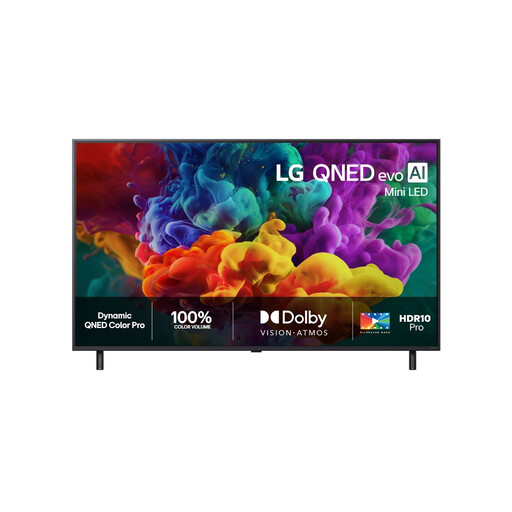
LG QNED85B6B QNED evo Mini LED 4K Smart TV
A mini-LED option to compare if you also want to factor in daylight when watching matches. Check that the large screen size suits your viewing distance and available space.
QNED evo Mini LED; 4K; 86 inches.
Joybuy
 No image available
TCL 50Q6C QD-Mini LED 4K HDR Smart TV
A compact screen size to compare if viewing distance or available space is a factor; measure up first.
50 inches; QD-Mini LED; 4K HDR; Google TV. The smart TV label does not guarantee access to a specific cricket broadcast.
Joybuy
 No image available
Samsung S85F Series GQ55S85FAU 55-inch OLED 4K TV
An OLED option for a darkened home cinema. If score bars remain visible for long periods, bear in mind the general OLED trade-off around image retention.
55 inches; OLED; 4K. The model specifications are not an independent assessment of motion handling for cricket.
Joybuy
 No image available
METZ 55MNE8000Z 55-inch QD-Mini LED Google TV
A mini-LED model to compare if you want to factor in ambient light when watching matches. Assess the motion handling of the specific model; the listed features alone do not prove its performance for cricket.
55 inches; QD-Mini LED; 4K HDR 10+; 144 Hz; Sports Mode; VRR; MEMC.
Joybuy
Frequently asked questions
Do you need 120 or 144 Hz to watch cricket?
No, don’t treat either as a universal minimum. Consumentenbond explains that a TV can generate extra frames from a standard 50 Hz TV signal, but this can also cause picture artefacts during fast, erratic movement. So compare the results on the specific model, using the settings you plan to watch with.
How do you choose a screen size if you don’t yet know your viewing distance?
First, measure the distance from your eyes to the planned screen position. Based on its own research, Consumentenbond suggests around 2.4 times the screen diagonal as a starting point for a comfortable viewing distance. Also look at nearby sizes and take the space available into account.
Can every smart TV stream every cricket match directly?
No. The ICC says streaming availability depends on the region and the match. So check which service is showing the match you want to watch, and whether it works on your TV or requires an external player.
What should you consider when wall-mounting your TV and connecting cables?
Before mounting, check the TV and bracket manuals and plan which connections you’ll need. Philips warns that, depending on the type of mount, you may need to take the TV off the wall to connect cables.


