
Vandaag of morgen in huis

Kwaliteit gegarandeerd

Welkomstaanbiedingen ontgrendelen: GRATIS bezorging | Tot 80% korting | Gratis 30 dagen JoyPlus-proefperiode
Download de app
Choosing a new set of creative writing and drawing materials may seem straightforward. But products can vary considerably in nib shape, ink type, drying time and the surfaces they work on. A cheap set may turn out to be awkward for everyday use, while a larger set may include colours you hardly ever use.
For school pupils, students, parents, journalling enthusiasts and creative hobbyists, these three pitfalls are particularly worth bearing in mind:
The nib determines how much control you have and what kinds of lines you can create.
Always check that the product description clearly states the nib size and type. Attractive packaging tells you little about how much control you’ll have when drawing.
Water-based ink is often suitable for paper, schoolwork and simple creative projects. In some cases, it may be easier to remove, but the result depends on the surface. For example, the Jar Melo markers are described as water-based, alcohol-free and washable. According to the product information, the ink is 90% washable from skin and most fabrics. This is a product specification, not a guarantee that every stain can be removed from every fabric.
Gel ink generally writes smoothly on paper. Erasable gel pens use heat-sensitive ink. This means you can erase the writing with the rubber tip, but according to the product information, exposure to high temperatures may also affect it unintentionally.
Acrylic ink is designed for use on various surfaces, including paper, ceramics, wood, glass and canvas. The Faber-Castell markers in this selection use water-based acrylic ink and need to be shaken and pumped to activate them before use. Test them on a small area of material first, especially when colour coverage or adhesion is important.
Alcohol markers dry quickly and, according to the product description, are water-resistant and permanent once dry. This makes them less suitable if you want to make corrections easily. For best results, use marker paper or thicker paper to reduce bleed-through.
How long a pen lasts depends on more than its brand or price. Replace caps as soon as you’ve finished using a pen, and store markers according to the product instructions. Metallic felt-tip pens such as STABILO Trio Deco should be stored horizontally. Other pens can be stored upright, according to their description.
Also look out for:
For scrapbooking, the cutting dies aren’t the only thing that matters. Check that you have a suitable die-cutting machine and that the dimensions work for your paper, cards or photos. A metal cutting die without clear measurements may be less useful than you expect.
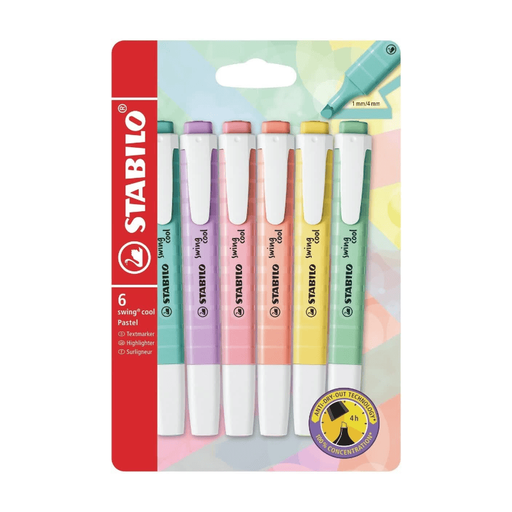
Why it suits this profile: A compact set for school, studying, diaries and planners where you only need a few soft colours.
The number of colours is manageable. According to the product information, the chisel tip creates lines of 1 and 4 mm, so one pen can be used in two ways.
Six pastel colours, water-based ink, a clip and a slim design. The description says they can be left uncapped for up to four hours without drying out.

Why it suits this profile: For illustrators and hobbyists who want to combine colour gradients, quick sketches and fine details in one set.
The nib details are clear: a brush nib measuring 1 to 5 mm and a 0.6 mm metal fineliner nib. That means you won’t have to use one broad nib to create small details.
24 colours, alcohol-based ink and a cardboard storage box. The product description says the ink dries quickly and is permanent once dry.

Why it suits this profile: For makers who want to decorate more than just paper, including ceramics, wood, canvas, glass or plastic.
The product information clearly lists the suitable surfaces and the two nib sizes. This lets you check in advance whether the marker is right for your project.
Six colours, water-based acrylic ink, an ink-level indicator and a shake-and-pump activation system.
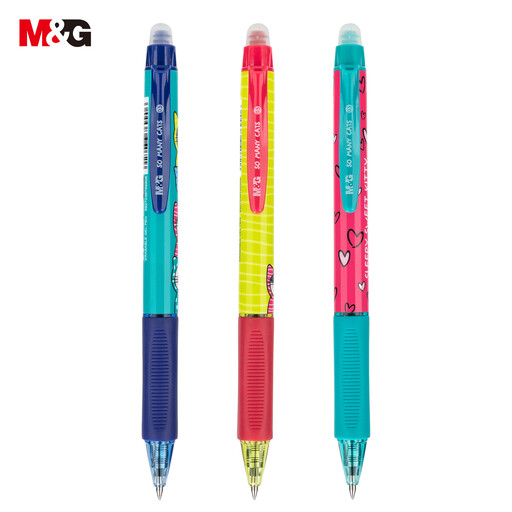
Why it suits this profile: Handy for planning, making corrections and colour-coding if you’d rather not use correction fluid.
The fine 0.5 mm nib is ideal for small notes. The retractable nib means there’s no separate cap to lose.
Six pens, blue heat-sensitive gel ink, a click mechanism and an integrated eraser at the top.
We’ve put together a complete, up-to-date list of products that meet these strict selection criteria and the applicable European safety regulations.
For highlighting, highlighters with two line widths are practical. Gel pens with a 0.5 to 0.7 mm nib work well for notes. Choose erasable gel pens only if you understand both their benefits and the sensitivity of heat-sensitive ink.
Replace the cap as soon as you’ve finished using a pen and check that it closes properly. Store metallic pens according to the product instructions, often horizontally, and keep acrylic markers tightly capped. It’s best to store alcohol markers horizontally or according to the manufacturer’s instructions.
Drawing pens, metallic markers, gel pens and pastel highlighters are suitable for adding details and accents to scrapbooking projects. You can use scrapbooking cutting dies for shapes and borders. Check the dimensions and paper type in advance, and make sure you have a suitable die-cutting machine. This will help you choose craft supplies that are genuinely right for your project.
