
Vandaag of morgen in huis

Kwaliteit gegarandeerd

Welkomstaanbiedingen ontgrendelen: GRATIS bezorging | Tot 80% korting | Gratis 30 dagen JoyPlus-proefperiode
Download de app
A new set of creative hobby and school supplies can look appealing, with lots of colours, extra accessories or eye-catching packaging. But a large number of items does not always mean a set will be useful. For parents, school pupils, students and hobbyists, the contents, ease of use and storage are what matter most.
A set with dozens of pens, colours or accessories may look appealing. But first, check exactly what’s included. Some products leave out important details, such as the type of ink, nib size, dimensions or recommended age. This makes it difficult to decide whether a set is right for school, hand lettering or general crafting.
Craft sets for children sometimes contain small parts. Check the recommended age and any warnings. For example, the Clementoni Pen Creator Studio is intended for children aged 7 and over, and children should be supervised by an adult while making the pens. The product information also warns that the set contains small parts.
When buying clay, it’s worth checking the material and usage information. According to the Jar Melo product information, the clay has a tested, non-toxic formula and the set is intended for children aged 3 and over. Always check the current packaging and product page yourself before children start using it.
A brush pen is designed for varying line widths, while a gel pen is best for consistent writing. A pastel highlighter also works differently from a standard neon highlighter. The surface matters too: according to the product description, the Faber-Castell Brush Pen Set is suitable for light-coloured paper, but not black paper.
Don’t just look at the colour — check the nib too. A chisel tip is useful for both broad and fine marks. According to the product information, the STABILO BOSS ORIGINAL Pastel has a chisel tip with writing widths of 2 and 5 mm. This makes the highlighters useful for highlighting, drawing lines and simple hand lettering.
For black gel pens, the nib size affects how they feel to write with. The WRITECH pens have a 0.7 mm tip, a retractable mechanism and fast-drying black gel ink. They can be handy for notes, journalling and everyday schoolwork. Left-handed writers may want to try the ink on their own paper first; how quickly it dries will depend on the paper and writing speed.
Check whether the markers or pens have caps, are retractable or need special storage. Close highlighter caps firmly after use to help prevent them from drying out. Store brush pens and highlighters in a dry place, away from direct sunlight, and follow the manufacturer’s instructions.
A resealable pack is handy for a modelling clay set. The Jar Melo Play clay box contains 24 individually sealed pots of clay, four modelling tools and a transparent cutting mat. According to the product description, the silicone lids help keep colours separate and the clay soft. Reseal the pots after use.
Compare sets based on how many of the items you’re actually likely to use. A pen-making kit, for example, is a good choice for someone who enjoys assembling and decorating things. The Clementoni Pen Creator Studio includes materials for making eight pens, including pens, ink, decorations and accessories. Assembly is required, and adult supervision is recommended.
For drawing and painting, paper size, the technique you want to use and available storage space are also important. A large painting or paintbrush set may be less practical if you mainly work on the go. For school, compact writing supplies or a small set of pastel highlighters may make more sense.
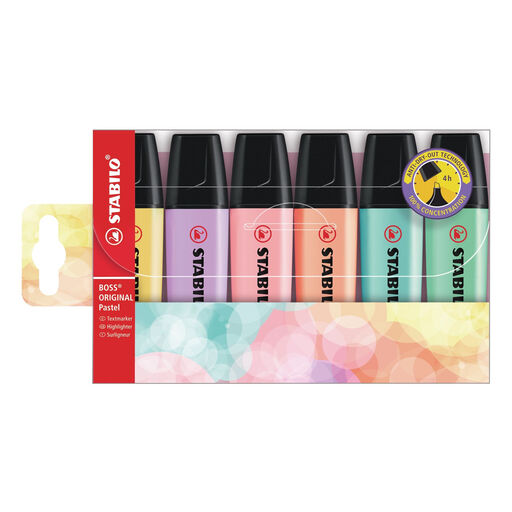
Why it suits this profile: A compact set for school pupils, students and beginners who want to use pastel highlighters for revision notes, planners or simple creative lines.
The product information lists six colours and two writing widths, so you can see what the set is suitable for before you buy.
Water-based ink, a chisel tip and writing widths of 2 and 5 mm; suitable for highlighting and creative lines.
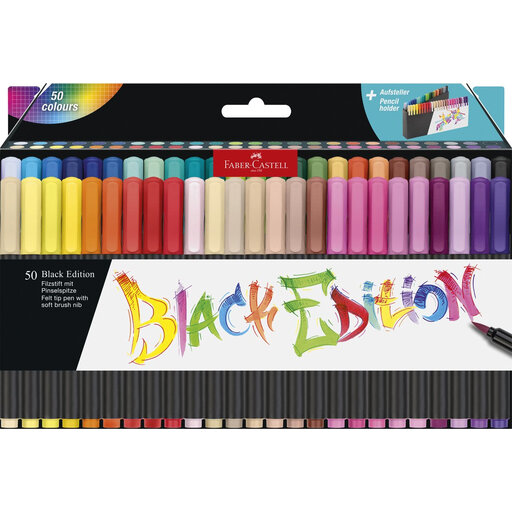
Why it suits this profile: A good choice for hand lettering fans and creative adults or children aged from the stated minimum age who want plenty of colours to choose from.
The product description clearly states that the pens are intended for light-coloured paper. This helps you avoid buying them for use on black paper.
50 colours, brush tips for thick and thin lines, washable ink according to the product information, and a cardboard storage box.

Why it suits this profile: A practical choice for families, schools and children who regularly model with clay and want to create a range of shapes and textures.
The two-tier design and individually sealed pots make it easier to keep colours and items organised in storage.
24 colours, four modelling tools, a cutting mat and a storage box; according to the product information, suitable for children aged 3 and over.
We’ve put together a complete, up-to-date list of products that meet these strict selection criteria and the applicable European safety regulations.
Compact writing supplies such as black gel pens, mechanical pencils and pastel highlighters are practical for school. Check the nib size, whether the pen has a cap or retractable mechanism, and whether it’s suitable for the paper you use. A set with lots of colours is most useful if you’ll use them for schoolwork or planning.
Their lifespan depends on how they’re used, the paper and how they’re stored. Replace the cap after each session, store the pens somewhere dry and keep them out of direct sunlight. Some highlighter product information says they can be left uncapped for a short time, but this doesn’t replace putting the cap back on properly.
Choose a gift to suit their age and interests. A craft set for children with clay is a good fit for modelling and free play. A pen-making kit is better for children who enjoy decorating and assembling things. Always check for warnings about small parts and see whether adult supervision is needed.
