
Vandaag of morgen in huis

Kwaliteit gegarandeerd

Welkomstaanbiedingen ontgrendelen: GRATIS bezorging | Tot 80% korting | Gratis 30 dagen JoyPlus-proefperiode
Download de app
Crackers and crispbreads might seem simple to choose. Yet they differ greatly in ingredients, fibre content, salt, portion size and allergens. A packet labelled “light”, “high in fibre” or “with grains” doesn’t automatically tell you enough about what’s inside.
When you buy wholegrain crackers, breakfast crackers or crunchy snacks online, these are the main pitfalls to watch out for:
If you’re looking for wholegrain crispbread or high-fibre crackers, the ingredients list is a practical starting point. Look for terms such as wholegrain wheat flour, wholegrain rye flour and wholegrain cereals. Then check the amount of dietary fibre per 100 grams.
Values vary across the range. For example, g’woon Wholemeal Crispbread lists 14 grams of fibre per 100 grams. Bolletje Light Whole Grain Crackers lists 15 grams of fibre per 100 grams, while Wasa Wholegrain Crispbread does not show a fibre value in the nutritional information provided. That doesn’t mean the product contains no fibre; the label remains the definitive source.
A higher fibre content can work well for breakfast or lunch with toppings, but also consider the portion size. Two thin crackers weigh less than several thicker slices of crispbread.
Crackers with savoury flavours, such as onion, herbs or salted caramel, can contain more salt than plain wholegrain varieties. For instance, Pacific Biscuits lists 1.2 grams of salt per 100 grams. LU Mini Cracker Olive & Oregano shows 2.7 grams of salt per 100 grams.
Sweet breakfast crackers and muesli bars require a different comparison. MadeGood Granola Mixed Berry lists 27 grams of sugar per 100 grams, while Hero Coconut Muesli Bar lists 28 grams of sugar per 100 grams. For a snack on the go, a small individual portion can be practical, but compare the amount per bar, not just per 100 grams.
Also watch out for terms like “0% added sugar”. This only tells you about added sugar, not automatically about the total amount of carbohydrates or sugars.
For gluten-free snacks, vegan snacks or products for school and the office, allergen information is at least as important as the taste.
For example, the product information provided for MadeGood Granola Mixed Berry includes both a mention of gluten-free oats and “contains gluten”. Where information is contradictory, the current packaging or manufacturer documentation should be followed. If you have a serious allergy, do not rely solely on the product title.
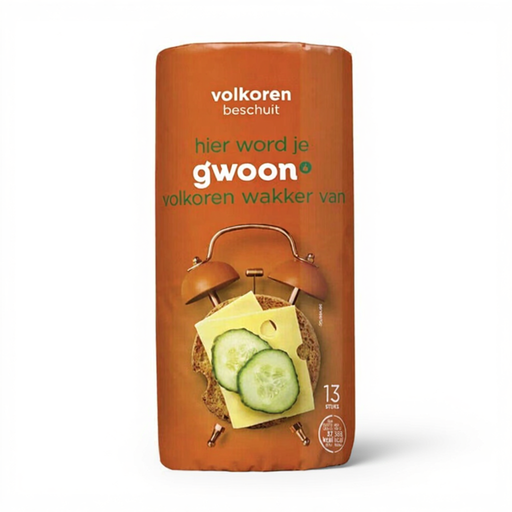
Why this fits the profile: A small pack is handy for trying wholegrain crackers first, whether for breakfast, lunch or a simple snack.
The product information lists wholegrain wheat flour and 7.7 grams of dietary fibre per 100 grams. The ingredients and allergens are clearly stated.
125 grams, 7.7 grams of fibre and 16.4 grams of protein per 100 grams according to the product information.

Why this fits the profile: The ingredients list is short: wholegrain rye flour, yeast and salt. That suits shoppers who want minimal ingredients.
The product description mentions 100% wholegrain rye and just three ingredients. Do check the current allergen information on the packaging.
260 grams per pack, wholegrain rye as the main ingredient and a mild rye flavour according to the product description.

Why this fits the profile: A larger pack and a sturdy wholegrain base are practical for families or daily use at breakfast and lunch.
The product information lists 100% wholegrain cereals and 14 grams of dietary fibre per 100 grams. Wheat, rye, barley and sesame are listed as allergens.
265 grams, 14 grams of fibre and 13 grams of protein per 100 grams according to the product information.
We’ve put together a full, up-to-date list of products that fully meet these strict selection criteria and comply with current European safety regulations.
For crackers for breakfast and lunch, a plain variety works well with cheese, hummus, cottage cheese or vegetables. A sturdy rye cracker can offer more bite, while a lighter cracker is pleasant if you’re eating several pieces with toppings.
For school, work or on the go, individually wrapped snacks are practical. MadeGood Granola Mixed Berry comes in a 144-gram pack and is described as vegan and organic; the nutritional information lists 27 grams of sugar per 100 grams. Holie’s Chewy Bar Double Chocolate contains, according to the product information, 21 grams of protein and 23 grams of fibre per 100 grams, but also wheat, spelt, hazelnuts and barley. Such products therefore suit different preferences than a simple wholegrain cracker.
Store opened crackers and crispbreads in a dry, airtight container. Moisture quickly makes them less crunchy. When ordering online, also check the net weight, number of portions and the best-before information on the packaging.
Crispbread is usually a thin, crunchy bread product, often based on rye or wholegrain wheat. Crackers are a broader product category and can also be light, savoury, sweet or filled. The ingredients list and nutritional values determine the practical differences.
Store them in a cool, dry place and seal the packaging immediately after use. An airtight storage container can help once the original packaging has been opened. Do not use the product if the packaging is damaged.
Not automatically. Check whether wholegrain cereals actually appear in the ingredients list and compare fibre, salt, sugar and fat per 100 grams. Also look at allergens and choose a portion that suits the occasion: breakfast, lunch or a snack in between.
