
Those planning a coffee table
If you regularly serve crackers to several people, the number of pieces and how they’re divided between inner packs are worth considering. Also check how to store an opened pack according to the label.


If you’re planning several coffee breaks, a pack with individually wrapped portions can be practical. If crackers are a regular feature, a larger pack with more pieces may be a better fit. Then compare the nutritional information per 100 g and check the allergens on the packaging. A thin or light cracker will still be crunchy, so it won’t necessarily be suitable for someone with chewing or swallowing difficulties.
If you regularly serve crackers to several people, the number of pieces and how they’re divided between inner packs are worth considering. Also check how to store an opened pack according to the label.
For similar crackers, compare the ingredients, fibre and salt per 100 g. This helps you assess what’s in the pack, rather than relying on the wording on the front.
If you’re buying for someone with chewing or swallowing difficulties, don’t assume that ‘thin’ or ‘light’ means suitable. If there’s a food allergy, check the ingredients and allergens on the pack you buy.
Decide how many coffee breaks the pack needs to cover, and whether inner packs would be useful. Then compare the nutritional information and check that the crunchy texture and ingredients are right for the people you’re buying for.
| What to consider | What to check when buying | Who it matters to |
|---|---|---|
| Pack format and quantity | Check the net weight, number of pieces and whether there are any inner packs. | If I’m stocking up for several coffee breaks, I want to know how much I’ll need to open at once. For around 25% of consumers, quantity may be the most important consideration. |
| Wholegrain and fibre | Read the ingredients and compare fibre and salt per 100 g for similar products. | Anyone who values wholegrain options will want to look beyond the product name. For around 31% of consumers, nutritional information may be the deciding factor. |
| Texture and toppings | Decide whether you want a thin cracker or a firmer crispbread; thin doesn’t mean soft. | For small topped bites, I look for a different texture than I would in a firm crispbread. Texture may be the top priority for around 19% of consumers. |
| Allergens and labelling | Check the allergens on the pack and, if needed, compare the salt per 100 g. | When I’m buying for someone with a food allergy, the packaging needs to suit their dietary requirements. For around 25% of consumers, checking the label may be the first priority. |
The number of pieces, weight and inner packs each tell you something different. Albert Heijn lists around 34 toasts in two resealable bags for Liga Cracotte, while Wasa Wholegrain packs contain around 20 pieces each.
Compare the pack format with the number of people and coffee breaks you’re buying for.
A fibre claim tells you nothing about the salt content or allergens. For Wasa Wholegrain, Albert Heijn lists both 20 g of fibre and 1.2 g of salt per 100 g.
For similar crackers, compare both values on the same basis and read the allergen information on the packaging.
Van der Meulen describes Melba Crackers Original as ultra-thin, but also as crunchy. That doesn’t mean the texture will suit someone with chewing or swallowing difficulties.
If you know someone has difficulties, ask a healthcare professional for advice on a suitable texture before serving a crunchy cracker.
Ingredients and allergen information can change, as Albert Heijn points out in its product information.
When you buy the product, read the ingredients, allergens and storage instructions on the pack itself.
Offers crackers in packs of four, as well as a multiseed option containing 4 x 3 pieces.
Manufacturer Van der Meulen describes Melba Crackers Naturel as ultra-thin and crunchy.
The supermarket’s own-brand range includes a product called AH Luchtige cracker volkoren 4-pack.
ALDI lists Goud Gebakken Thin Rye Crackers as containing 33 pieces per pack.
Wasa Wholegrain is a crispbread option; Albert Heijn lists around 20 pieces per pack.
These crackers and crispbreads are options to consider if pack weight and wholegrain varieties are your main priorities for afternoon coffee. Weight alone won’t tell you how many individual portions or inner packs you’ll get.
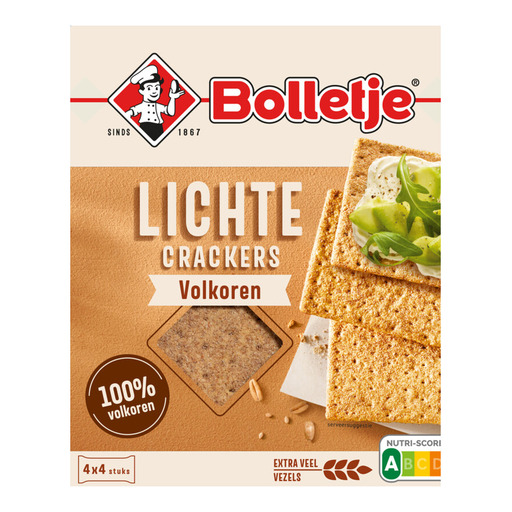 Image unavailable
An option to consider if you’re looking for a pack to cover several coffee breaks. The pack contains 190 g; check the number of pieces, pack format and allergens on the current label.
 Image unavailable
A wholegrain crispbread option if a crunchy base would work well on your coffee table. The pack contains 265 g; check the pack for the number of pieces and listed allergens.
 Image unavailable
A 300 g pack for anyone who wants to factor the weight of their supplies into their choice. Compare the nutritional information per 100 g with similar crackers and check the allergens on the packaging.
 Image unavailable
A crispbread option if you’re looking for a larger pack. The pack contains 375 g; also check the number of pieces, nutritional information and allergens on the label.
 Image unavailable
A rye cracker option if a crunchy texture suits your coffee break. The pack contains 235 g; check the ingredients, allergens and pack format before buying.
For similar crackers, compare fibre and salt per 100 g, then check the net weight, number of pieces and inner packs. This shows you both what’s in the pack and how you can divide it between coffee breaks.
No, whether a crunchy cracker is suitable depends on the individual. If someone has known chewing or swallowing difficulties, you can’t tell which texture is appropriate from words like ‘thin’ or ‘light’. Ask a healthcare professional for specific advice.
Read the ingredients and highlighted allergens on the pack you’re buying. According to Your Europe’s EU guidance, allergen information must be provided for prepacked foods; don’t rely solely on an online product description.
Follow the storage instructions on the packaging you choose. Before buying a pack for several coffee breaks, also check whether it contains individually wrapped portions.
No, also check the ingredients, salt per 100 g and allergens. The Netherlands Nutrition Centre advises comparing the nutritional values on labels per 100 g.