If you can’t move any further back and want to photograph the whole courtyard, first choose a camera and lens combination with a sufficiently wide angle of view; the camera body alone won’t be enough. If you want to isolate a few paving stones, use a longer focal length or zoom in, so you capture less of the surroundings from the same spot. Before buying, check the exact lens, mount and kit contents.
Who is this choice relevant to?
Photographer looking for an overview with limited space
You can’t move any further back and want to capture the whole courtyard. So compare the angle of view of the specific camera and lens combination; Canon Europe explains how focal length determines how much of the scene appears in the frame.
Photographer focusing on lines and stone texture
You want to frame the paving, façades and variations in light deliberately, while limiting distracting edges or distortion.
Photographer focusing on a specific detail
By a narrow field of view, you mean a close-up of a few stones or an architectural detail, not the widest possible overview.
What should you look for when buying?
First decide whether you want to show the whole courtyard or focus on a detail. Then choose a lens and camera to suit the framing you want.
Mirrorless camera with an ultra-wide zoom lens
Choose this if: you want to frame the entire courtyard from a confined spot and may want to use other lenses later.
Bear in mind: a body or standard kit may not include the wide-angle lens you need; check the exact kit contents.
Compact camera with a fixed zoom lens
Choose this if: you don’t want to change lenses and the built-in lens is wide enough from where you’ll be standing.
Bear in mind: you can’t replace the fixed lens later; Canon describes the PowerShot V1 as a video-focused compact camera.
Longer focal length for close-ups
Choose this if: you want to isolate a pattern, stone or architectural detail rather than show the whole courtyard.
Bear in mind: less of the surroundings will appear in the frame from the same spot. If you’re photographing a detail up close, check the lens’s minimum focusing distance too.
| What to consider |
What to look for when buying |
Who is this important for? |
| Full overview |
Compare the angle of view of the exact camera and lens combination and, if possible, try out the framing you want from where you’ll be standing. |
If I can’t move any further back, I want to fit the whole courtyard in the frame. Around 34% of consumers list a full overview as their top buying priority. |
| Straight lines |
Look at sample shots taken with the exact lens, especially around the edges, and check which lens corrections are available. |
I want to frame the paving and façades with straight, controlled lines, even if that means a narrower view. Around 20% of consumers prioritise straight lines and geometry above all else. |
| Stone texture and light |
Check the aperture settings and assess the results in the light you’ll actually be shooting in. |
I want to bring out the texture and variations in light across the stones. Around 20% of consumers put stone texture and light at the top of their buying list. |
| Complete kit |
Check whether you’re buying a camera body, a standard kit or a kit with the wide-angle lens you want. |
I want to know in advance which lens comes with the camera and whether I can get the framing I want straight away. Around 13% of consumers prioritise simplicity and clarity about what the kit includes. |
| Narrow close-up framing |
Decide how large the detail should appear in the frame and check the zoom range and, for close-up photography, the minimum focusing distance. |
I want to isolate a stone or pattern rather than photograph the whole courtyard. Around 13% of consumers choose narrow close-up framing as their top buying priority. |
Common buying mistakes
-
Assuming the camera body determines the angle of view
A standard kit may include a different lens from the wide-angle lens you need when space is tight. For example, the Canon EOS R50 standard kit includes an RF-S 18-45mm; the RF-S 10-18mm is a separate lens.
Compare the full product name and kit contents with the lens that suits the space you’ll be shooting in.
-
Assuming the widest zoom setting is automatically the best choice
A wide-angle lens can emphasise depth, but it may also show distracting elements or distortion around the edges of the frame.
Assess the framing you want and check the edges of sample shots. For a close-up, zoom in instead.
-
Confusing the manufacturer’s warranty with your statutory rights
A manufacturer’s warranty does not replace your statutory right to a product that is fit for purpose. According to the Dutch Government, if a product is faulty, the seller is responsible for providing a solution.
Before opting for an additional warranty, check what extra protection it actually offers.
Camera brands to consider
Canon
Canon offers both mirrorless cameras with interchangeable lenses and compact cameras with a fixed lens.
- Canon Netherlands states that the RF-S 10-18mm is designed for APS-C cameras in the EOS R series and that the EOS R50 supports RF-S lenses.
- The EOS R50 standard kit mentioned includes the RF-S 18-45mm, not the separate RF-S 10-18mm. Canon describes the PowerShot V1 as video-focused.
Nikon
The Nikon Z 30 + 12-28 DX PZ kit is an option if you’re looking for a mirrorless camera supplied with a wide-angle zoom lens.
- Nikon Netherlands confirms that the kit includes the DX 12-28mm and gives this lens a full-frame equivalent range of 18-42mm.
- At its short end, this range isn’t as wide as the 15mm-equivalent Sony lens specified by Sony Netherlands; this comparison relates to the angle of view only.
Sony
You can pair a Sony α6700 with a separate E PZ 10-20mm F4 G lens for wide framing.
- Sony Netherlands specifies a full-frame equivalent range of 15-30mm for this lens and an E-mount with an APS-C sensor for the α6700.
- This lens range only applies if this separate lens is actually included with the camera or paired with it; it doesn’t automatically describe every offer.
Fujifilm
The XF10-24mmF4 R OIS WR is a wide-angle zoom lens for use with a compatible Fujifilm X body.
- Fujifilm X Netherlands gives this specific lens a full-frame equivalent range of 15-36mm.
- The lens specifications don’t tell you which X body or lenses are included in a particular kit; check the contents of the set you’re considering.
Cameras at Joybuy
These cameras are suited to adjustable framing or a narrower view of the paving. For each model, check whether its widest setting will also work if you want to photograph the entire courtyard.
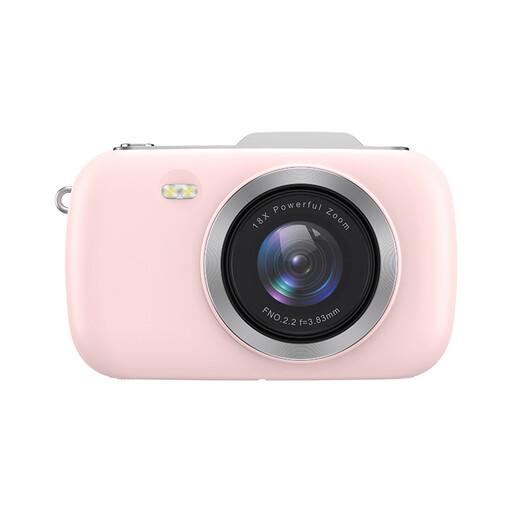 Image unavailable
KOMERY G7-A 4K 80MP 18× zoom camera, pink
The stated 18× zoom offers different framing options if you want to capture a closer view of the paving.
The product name specifies 18× zoom and 4K video.
View at Joybuy
 Image unavailable
KOMERY G7 5K 80MP 18× zoom camera, white
The stated 18× zoom gives you room to adjust the framing when you want to isolate a detail in the paving.
The product name specifies 18× zoom and 5K video. According to the product description, an SD card is not included.
View at Joybuy
 Image unavailable
Sony ZV-E10 + 16-50mm zoom, black
The kit includes a zoom lens, so you can adjust the framing; check whether its widest setting gives you enough of an overview from where you’ll be standing.
According to the product description, an SD memory card is not included.
View at Joybuy
Frequently asked questions
Is a wider angle always better for this courtyard?
No. A shorter focal length shows more from the same spot, but it can also bring distracting elements at the edges into the frame. If you want a close-up of the stones, zoom in instead; if you want to show the whole courtyard but can’t move further back, look for the widest setting.
Does every mirrorless camera kit include an ultra-wide lens?
No, it depends on the kit you choose. The EOS R50 standard kit described by Canon Netherlands includes an RF-S 18-45mm; so check the full kit contents if you’re specifically looking for the RF-S 10-18mm.
How can you check whether a lens is compatible with your camera?
Check that the lens mount and sensor format are compatible with the exact camera body. Don’t assume lens correction will be available either: if you’re relying on it, check that the camera and lens you’ve chosen support the setting.
What does a statutory warranty mean for a camera?
In the Netherlands, this means a product must be fit for purpose. According to the Dutch Government, if a product is faulty, the seller is responsible for providing a solution. An additional manufacturer’s warranty does not replace your statutory rights.
Can you photograph identifiable visitors in a courtyard and publish the photo?
That depends, among other things, on how you use the photo. The Dutch Data Protection Authority distinguishes between photos kept exclusively for private use and images shared more widely or used commercially; for that wider use, you may need a legal basis under the GDPR.


