
Building with multiple local previews
You want to use your editor, browser and one or more local site environments side by side. Requirements vary by tool, including Local and Docker Desktop.


Choose a desktop that suits the tools and browsers you use for your course enrolment website: a Windows desktop is a good fit for a Windows-focused workflow, while macOS is relevant if you need Safari’s developer tools. Don’t add together the system requirements of individual programmes and treat the result as proof of performance across your entire workflow. Instead, compare the configuration and storage of the exact model with your own projects (Docker; Apple Developer; Local).
You want to use your editor, browser and one or more local site environments side by side. Requirements vary by tool, including Local and Docker Desktop.
Your choice depends on software that requires Windows or macOS, or on whether you need to view your site using Safari’s developer tools (Apple Developer).
You’re looking for a compact desktop and want to check in advance that your monitors and peripherals will connect, and find out which components you can access later (Lenovo).
Choose this option if: your workflow requires Windows software or Docker Desktop for Windows (Docker).
Bear in mind: the Windows edition and installation requirements of the specific tools you use.
Choose this option if: you want to work on macOS or use Safari Web Inspector and Responsive Design Mode in your preview workflow (Apple Developer).
Bear in mind: how much storage your local projects need, and which connections you’ll need for your monitor and peripherals.
| What to consider | What should you check? | Who is this important for? |
|---|---|---|
| Using local environments at the same time | Count the sites, containers and browser tabs you plan to use at once, then compare that workflow with the memory and storage configuration of the exact model. | If I keep my editor, browser and local environments open while I build, I want to know whether my chosen configuration can handle that use. Around 40% of consumers say running multiple local environments at once is their main concern when buying. |
| Tool and preview compatibility | Make a note of your CMS, plugins, editor, container use and preferred browsers. Then check the current requirements for each programme you need (Local; Docker; Apple Developer). | If my project needs a particular tool or browser, I want to find out first which operating system supports that workflow. Around 30% of consumers put tool compatibility and the preview platform first. |
| Storage and upgrade options | Compare the SSD capacity and the documented options for upgrading components on the exact model. Larger local sites may need more storage (Local). | If my local projects grow, I want enough storage or a clearly documented way to upgrade later. Around 20% of consumers say project storage and upgrade options are their main concern when buying. |
| Monitors and peripherals | Compare the video outputs and other ports with your own monitors, and check which accessories are included with the model. | If I want to use a compact computer with my existing setup, I want to know whether my monitors and input devices will work with it. Around 10% of consumers prioritise connectivity and having a complete workstation. |
The requirements for an editor, browser and local site environment apply to each programme individually. They don’t show how that combination will perform with your projects.
List the programmes and local sites you use at the same time, then compare them with the full configuration.
A product family can include different processors, memory configurations and storage options. So, a similar model range doesn’t guarantee that two versions have the same components.
Compare the full model number, processor, memory, storage and operating system before weighing up different versions.
A desktop may require a separate monitor, input devices or compatible cables. The connections you need will also depend on the equipment you already have.
Check the connections and what’s included with the exact model before you decide.
The Mac mini is a compact macOS workstation, and may be particularly relevant if your workflow includes Safari’s developer tools.
The Pro Micro QCM1250 is a compact, configurable business desktop running Windows.
The ThinkCentre M70q Gen 5 Tiny is a compact Windows workstation where access to components may be a consideration.
The Pro Mini 400 G9 is a compact business PC running Windows. Compare its exact configuration with your needs.
These desktops and mini PCs are options to compare for building and previewing locally. Check that the listed configuration and connections suit your tools, monitors and workspace.
 No image available
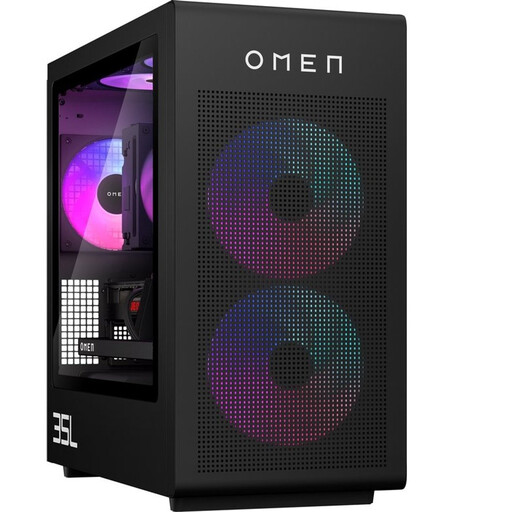
A desktop to compare for a permanent workspace with local previews. Check that the full configuration and connections suit your workflow.
The product name identifies a gaming desktop from the OMEN 35L range. Leave at least 10 cm of clear space around it and keep the vents unobstructed.
 No image available
A compact option to compare if desk space and a small Windows workstation are important to you. Check which processor variant comes with the version you’re considering.
The product name lists Intel Core i5 8250U/8350U, Windows 11, 8 GB DDR4, 256 GB SATA SSD, BT5.2 and Wi-Fi 5.
 No image available
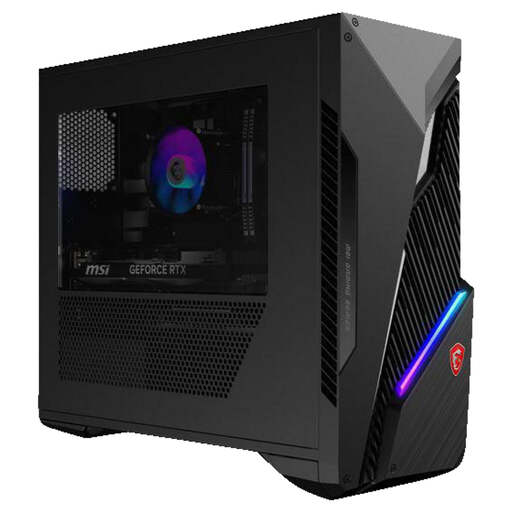
Compare this desktop with your own development tools and preferred workspace setup. The product name alone can’t tell you whether it will suit your entire workflow.
The product name lists the MSI MAG Infinite S3 14NVM7-3002EU, an Intel Core i7 and RTX 5060 Ti.
 No image available
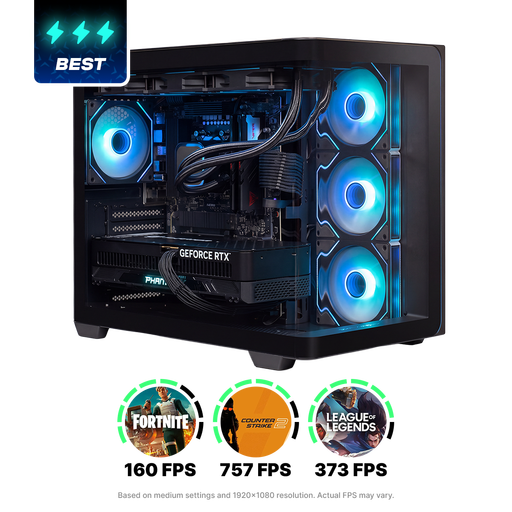
The listed memory and storage make this version an option to compare for local projects. You should also check system and tool compatibility.
The product name lists RTX 5090, Ryzen 9, 32 GB RAM and a 2 TB SSD. Keep the vents unobstructed and ensure there is enough airflow.
 No image available
A mini PC to compare if a compact case is important to you. Check that the listed operating system is compatible with your own tools.
The product name lists NVIDIA GB10, 128 GB RAM, a 4 TB SSD and NVIDIA DGX OS. Use the supplied power adapter and leave at least 10 cm of space around the vents.
Not always: an editor and a locally running site are separate parts of your workflow. Compare the requirements of your chosen editor with those of your local environment. Local and Visual Studio Code set out the requirements for their own software, not the performance of the full setup.
Check the supported Windows edition and version, the installation option and the WSL requirements for your setup. Docker lists WSL 2 as the default backend for many users. Check the requirements for your chosen installation before selecting a desktop.
Estimate your needs based on your own sites, files and local services, and leave room to grow. Local notes that large sites may need more disk space than the installation minimum, so that minimum won’t be right for every project.
No, compare the exact version. Check the full model number, processor, memory, storage and operating system, as configurations can vary within a product range.
Yes, if you process personal data during that test or pilot. The Dutch Data Protection Authority states that the GDPR applies in this situation and that an organisation must determine appropriate security measures. This isn’t a general hardware requirement for every desktop.