
Cook with limited cupboard space
You already cook soup in a pan and mainly want to avoid storing lots of appliances and loose parts. The Consumentenbond reviews hand blenders on factors including their blending performance and durability.


If you cook courgette soup in a pan and have limited storage space, a hand blender without a large set of attachments is the most practical choice. A jug blender is suitable for hot soup only if the jug and the instructions for the exact model are designed for it. A soup maker or heated blender is a good option if you also want to automate the cooking and have space for a jug-style appliance. Whichever you choose, check the fill markings and the manual for guidance on hot ingredients and cleaning.
You already cook soup in a pan and mainly want to avoid storing lots of appliances and loose parts. The Consumentenbond reviews hand blenders on factors including their blending performance and durability.
You want to blend hot soup with care, paying attention to splashing, controls and the instructions for your chosen appliance. Bosch lists AntiSplash for the MSM66110, but this does not replace careful handling of hot soup.
You want the appliance to cook or heat the soup as well, and take the jug capacity and fill markings into account. For the SoupMaker range covered here, Philips describes automatic programmes and a 1.2-litre jug.
A good fit if: you cook courgette soup in your usual pan and want to store as few loose parts as possible.
The trade-off: you hold the blender yourself and cook the soup separately.
A good fit if: you’ll also use the extra attachments for chopping or whisking.
The trade-off: the attachments need extra storage space; the Consumentenbond reports varied chopping results among the hand blenders it has tested.
A good fit if: you want to blend soup in a jug and the manufacturer confirms that the jug and instructions are suitable for hot ingredients.
The trade-off: you’ll need to transfer the soup, then store and clean the jug; hot contents can splash or release steam.
A good fit if: you want to automate heating or cooking too, and the stated capacity suits your portions.
The trade-off: you’ll need space for a separate appliance and must follow the minimum and maximum fill markings.
| What to consider | What to look for | Who is this important for? |
|---|---|---|
| Storage and use in a small kitchen | Compare the dimensions, cord length, detachable parts and storage space needed for the exact model. | If I have limited worktop and cupboard space, I’d rather not keep parts I rarely use. Around 36% of consumers put limited space first. |
| Blending hot soup with care | Check the manual for the exact model for guidance on hot ingredients, fill level, lid and speed. The EMEA manual for the Vitamix A2500i warns about splashing and escaping steam. | Anyone blending hot soup benefits from clear instructions and controls that suit the way they work. Around 29% of consumers prioritise blending hot soup with care. |
| Texture and other blending tasks | Check whether a chopper or whisk is actually included, and look for test results for the task you have in mind and the exact model. Wattage alone doesn’t tell you how smooth the result will be. The Consumentenbond assesses blending and chopping separately. | If I want to chop ingredients as well as make soup, or achieve a particular texture, I want to be able to assess those specific tasks. Around 21% of consumers prioritise texture or extra blending tasks. |
| Cooking yourself or automating soup preparation | Check whether the exact appliance heats the soup, its usable capacity and the position of the minimum and maximum fill markings. For the SoupMaker range covered here, Philips states a capacity of 1.2 litres; Tefal gives the Perfectmix Cook BL83SD30 a stated capacity of 1.75 litres. | If you’d rather let the appliance do the cooking, consider the portion size and the space available. Around 14% of consumers prioritise automation. |
A stated motor power rating doesn’t, by itself, tell you how well a model blends, how it feels in your hand or how durable it is. The Consumentenbond assesses blending performance and other features separately.
Start by considering how you’ll use it and how much storage space you have. Then compare test results and the manuals for the exact models you’re considering.
The Consumentenbond says a heat-resistant jug is essential for making soup in a blender. The EMEA manual for the Vitamix A2500i also warns that hot contents can splash or release steam.
Before buying or using an appliance, check that the exact model is suitable for hot ingredients and read its safety instructions.
A chopper or whisk gives you more options, but also needs extra storage space. The Consumentenbond reports varied chopping results among the hand blenders it has tested, so the inclusion of a chopper alone doesn’t tell you how well it will perform.
Choose extra attachments only if you expect to use them, and check both where you’ll store them and how well they perform for the task in question.
Attachments take up space when stored, even if you only use them now and then.
The ErgoMixx MSM66110 is an example of a hand blender for blending soup in the pan.
The MultiQuick 5 MQ50236M is worth considering if you’ll use its included chopper and whisk as well as making soup.
The product information covered here includes ProMix hand blenders and SoupMakers. A SoupMaker is an option if you want the appliance to heat the soup as it prepares it.
The Perfectmix Cook BL83SD30 is an example of a heated jug blender for hot and cold preparations.
This selection focuses on hand blenders for soup made in a pan, including models with and without extra attachments.
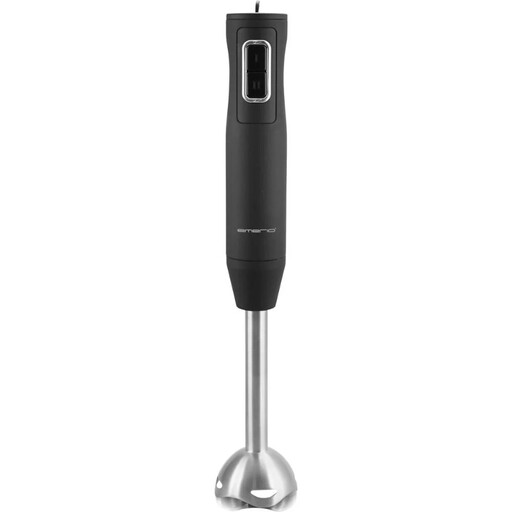 No image available
A hand blender for making soup in the pan.
The product description lists a stainless steel blending foot and two speeds.
 No image available
A hand blender for making soup in the pan, with speed control for added convenience.
The product name specifies 800 W and stainless steel; the description lists 20 speeds and a splash-resistant design.
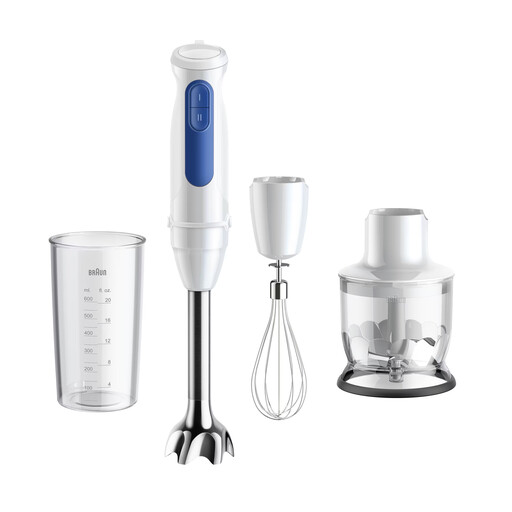 No image available
A hand blender for blending soup straight in the pan.
The product description lists PowerBell VPlus and SplashControl.
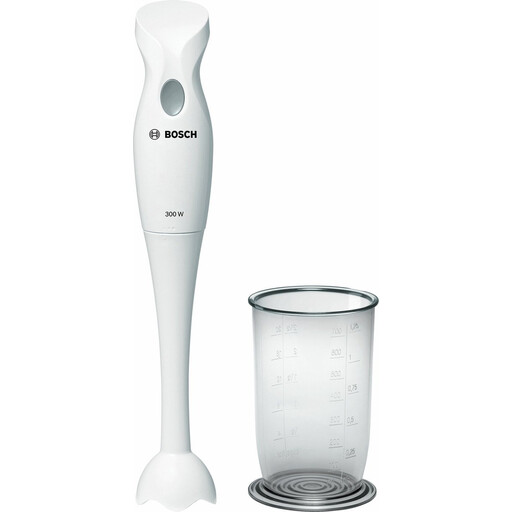 No image available
A hand blender for making soup in the pan, with a stated width you can factor into your storage plans.
The product information lists a width of 6.1 cm and one speed.
 No image available
A set for anyone who wants to blend soup and use a chopper and whisk too.
The product name specifies up to 1200 W, 15000 rpm, a 700 ml beaker and a 500 ml chopper. The instructions limit continuous use to 1 minute, followed by 1 minute of rest; the attachments also need storage space.
No. You can’t tell from the product category alone. The Consumentenbond says a heat-resistant jug is essential for making soup in a blender. Also check the manual for the exact model for guidance on hot contents, the lid, fill level and speed.
Follow the markings and instructions for your appliance. For the SoupMaker described here, Philips recommends keeping the quantity between the minimum and maximum levels; these markings don’t necessarily apply to other models.
No, it depends on the part and model. In its care instructions, Braun excludes the motor and cord, among other parts, and notes exceptions for certain drive units and lids. Check the instructions for your exact model before putting any parts in the dishwasher.
If you buy a product in the Netherlands, you’re entitled to a product that works properly, and the seller is your point of contact for a solution. According to the Rijksoverheid, there is no fixed statutory guarantee period; what you can expect from a product depends, among other things, on the product itself and the sales information.
Specific EU rules may apply to electrical and electronic equipment, requiring CE marking. The European Union emphasises that CE marking is only compulsory for products covered by applicable harmonised rules. CE marking is not a performance test and does not prove that a jug is suitable for hot soup; also check the safety information for the appliance in question.