Start with the space available: a countertop model takes up worktop space, while a slimline freestanding dishwasher needs floor space and suitable connections, but can handle more of your everyday washing-up. The Consumentenbond describes slimline dishwashers as around 45 cm wide; check the height and depth of each model too, as well as the space needed to open the door. Then check the care instructions for your lunchbox: being dishwasher-safe doesn’t automatically mean it’s suitable for every programme.
Who is this guide for?
Worktop space, but no spare cupboard
You’re looking for somewhere to put a dishwasher without giving up a kitchen cupboard, and weighing up worktop space against floor space. The Consumentenbond and Inventum provide information about dimensions and installation.
A lunchbox with washing restrictions
You want to clean containers, lids and seals without going against the care instructions for the specific product. Mepal, for example, provides separate instructions for its Campus lunchbox.
Lunchboxes and everyday washing-up
You want to wash lunchbox parts alongside plates and cutlery, and are weighing up loading space against the room the machine takes up. The Consumentenbond and ETNA provide information about capacity and layout.
What should you consider when choosing?
Countertop model
A good fit if: you have a suitable spot on the worktop and would rather not use floor or cupboard space.
The trade-off: it takes up worktop space, and its smaller capacity may mean running it more often.
Slimline freestanding dishwasher
A good fit if: you have suitable floor space and want to wash lunchbox parts with more of your everyday washing-up.
The trade-off: a width of around 45 cm doesn’t necessarily mean a shallow machine; measure the door opening and the route to the connections too.
Existing dishwasher or washing by hand
A good fit if: you only have a few parts to wash, or the suitable programme isn’t compatible with your lunchbox’s care instructions.
The trade-off: washing by hand takes time. Milieu Centraal says washing up in a bowl with a small amount of hot water is usually more economical than using an average dishwasher.
| What to consider |
What should you look for? |
Who should pay particular attention? |
| Installation |
Measure the width, height and depth, including the space needed for the open door; check whether you have room on the worktop or floor. |
If you don’t want to give up a cupboard, the machine needs to fit in the space you do have. Around 25% of consumers put installation first. |
| A programme suitable for the lunchbox |
Check the instructions for each container, lid and seal against the temperature of the programme you plan to use. |
If your main concern is making sure a programme doesn’t exceed the limits for your lunchbox, check the instructions for each part. Around 25% of consumers prioritise this compatibility. |
| Usable rack space |
Compare your containers and lids with the rack layout, and check that the parts won’t block the spray arms. |
If you want to wash lunchbox parts with your usual washing-up, the usable rack space matters more than the number of place settings alone. Around 20% of consumers prioritise loading space. |
| Connections |
Check the manual and make sure the water supply, drain and electrical connection are accessible. |
If you want to install the machine in a particular spot, check in advance that the connections can be set up there. Around 15% of consumers give connection requirements top priority. |
| Energy use and drying |
Compare the energy labels on the same eco-programme basis, and allow for the number of cycles you’ll need and the possibility of having to dry plastic by hand. |
If you want to compare electricity and water use per usable load, consider how often you’ll need to run a cycle too. Around 15% of consumers prioritise energy use and drying. |
Common buying mistakes
-
Assuming ‘dishwasher-safe’ means ‘suitable for every programme’
The maximum permitted temperature varies by product. For one personalised Campus bento lunchbox, Mepal recommends a maximum of 40 °C; this limit doesn’t automatically apply to other versions.
Check the instructions for your own container, lid and seal, and compare them with the programme temperature.
If you use a programme that goes beyond the product instructions, you may still have to wash some parts by hand.
-
Confusing ‘compact’ with ‘slimline’
According to the manufacturer, the Inventum VVW5520 countertop model is 55 cm wide. Bosch lists the SPS4EMW61E as 45 cm wide, but 845 mm high.
Measure the entire space available, including room for the open door—not just the width.
A countertop model takes up worktop space. A freestanding model may not fit if the intended floor space or doorway is too small.
-
Comparing only litres per cycle
You may need to run a smaller machine more often to wash the same amount. The EU energy label uses standardised data for the eco programme; on its own, it doesn’t tell you how many cycles your lunchboxes will need.
Compare energy use on the same label basis, and also check how many parts you can actually fit in each cycle.
If the lunchbox parts won’t fit with your everyday washing-up, you may need extra cycles and more dishwasher detergent.
Brands to consider
Inventum
The VVW5520 countertop model is worth considering if the space you have available is on your worktop.
- Inventum lists the VVW5520 as 55 cm wide, with 6 place settings, D energy rating and water use of 6.5 litres per cycle.
- The manufacturer doesn’t list a half-load option. The stated capacity doesn’t tell you how many lunchboxes will actually fit.
Bosch
The SPS4EMW61E is a slimline freestanding option for a suitable spot on the floor and more everyday washing-up.
- Bosch gives the dimensions of this model as 845 × 450 × 600 mm, with a D energy rating and an automatically opening door as a drying feature.
- Bosch notes that plastic doesn’t dry as well. Features of one Bosch model don’t necessarily apply to other models.
ETNA
The VWV147SWIT is a slimline freestanding option to consider if you want to wash lunchboxes alongside your everyday washing-up.
- ETNA lists a width of 44.8 cm, 9 place settings, an adjustable upper rack and an E energy rating.
- The stated capacity and rack layout don’t tell you how many lunchboxes of your size will fit.
Beko
The BDFS26046XQ is a slimline freestanding model that can be used as a reference when comparing compact dishwashers.
- The Consumentenbond lists this model as having 10 place settings and a C energy rating.
- This information alone doesn’t indicate how well it washes or dries. Check the latest model details and rack layout.
Joybuy products
This selection of Joybuy products includes slimline freestanding dishwashers and countertop models for smaller kitchens. Compare the listed dimensions and capacity with your available space and the parts you want to wash.
 No image available
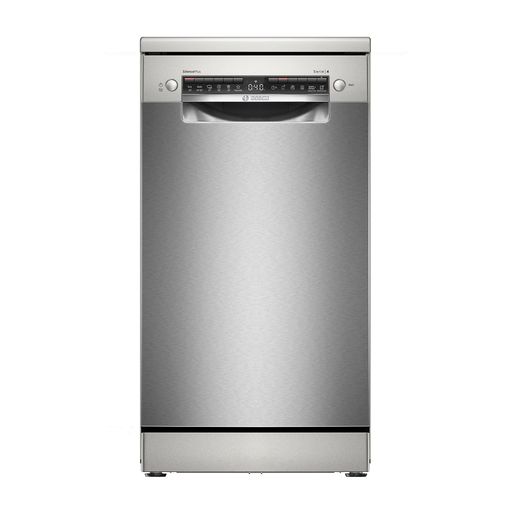
Bosch SPS4EMI17E freestanding dishwasher, 45 cm, 13 place settings
A slimline freestanding option if you have a suitable spot on the floor and want to wash lunchboxes alongside more of your everyday washing-up.
The product name lists a width of 45 cm, a capacity of 13 place settings, EcoSilence Drive and AquaStop.
View at Joybuy
 No image available
Bosch SPS4HKW49E Series 4 freestanding dishwasher, 45 cm, white
A freestanding model to compare if you have floor space and are looking for a 45 cm-wide dishwasher.
The product name lists a width of 45 cm and the colour white.
View at Joybuy
 No image available
AIRMSEN countertop dishwasher, 4 place settings
A countertop model to consider if you have a suitable spot on your worktop and want to wash a small load.
The product name lists a capacity of 4 place settings, dimensions of 37 × 50 cm, a 5-litre water tank and 9 programmes.
View at Joybuy
 No image available
Heinrich's HTG 8855 countertop dishwasher, 3 place settings
A countertop model for a suitable worktop space and a small load.
The product name lists a capacity of 3 place settings, a 5-litre water tank, 7 programmes, a noise level of 56.3 dB and a C energy rating.
View at Joybuy
 No image available
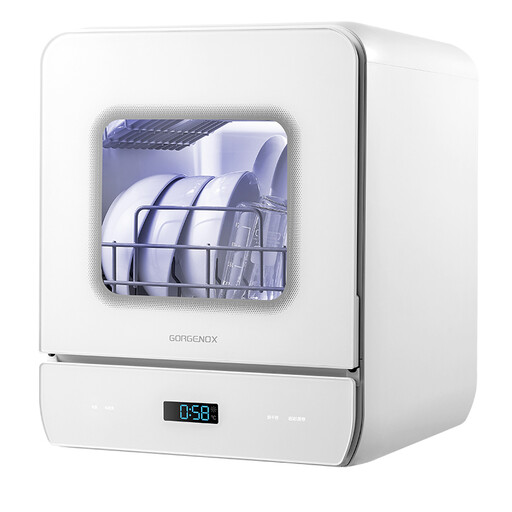
GORGENOX DW5-D40A countertop dishwasher, capacity 3 place settings
A countertop model to compare if you don’t want to put a freestanding machine on the floor.
The product name lists a capacity of 3 place settings, with washing, drying and storage functions.
View at Joybuy
Frequently asked questions
Can every dishwasher-safe lunchbox go in the eco programme?
No. Check the product instructions and the temperature of the programme you plan to use. For one personalised Campus bento lunchbox, Mepal recommends a maximum of 40 °C; this limit doesn’t automatically apply to other versions.
How can I stop lunchbox parts coming out wet after washing?
Position the parts so water can drain away, and make sure small lids are secure. Bosch explains that plastic doesn’t absorb as much heat, so it doesn’t dry as well. Mepal recommends letting the lid and container dry and storing them separately.
What should I check before installing the dishwasher?
Check the manual for the exact appliance and make sure the water supply, drain and electrical connection can be set up where you plan to put it. The Consumentenbond recommends an earthed socket for the connections. For the VVW5520, Inventum specifies that the electrical supply must meet the requirements on the rating plate.
What running costs should I take into account?
Compare the EU energy labels on the same eco-programme basis, and allow for the number of cycles you’ll need. Dishwasher detergent is an ongoing cost; depending on the detergent and washing results, salt or rinse aid may also be relevant.
What information does the EU energy label provide for dishwashers?
The label includes the energy efficiency class, energy consumption per 100 eco cycles, water consumption per eco cycle, programme duration, capacity and noise emissions. This information helps you compare models, but it doesn’t tell you whether a particular lunchbox material can withstand a specific programme.


