
People with a small kitchen
If you regularly make cold drinks but need the machine to fit on a limited worktop, or want to put it away after use.


First, measure the available width, depth and height, and leave room to operate and clean the machine. Then compare the first batch of ice with the water tank capacity: a stated daily output does not mean ice is ready straight away, while a smaller tank may need refilling more often. The production times and capacities quoted are manufacturer figures, not independent measurements.
If you regularly make cold drinks but need the machine to fit on a limited worktop, or want to put it away after use.
If you want ice quickly for a few glasses and mainly need to know when the first cubes will be ready.
If you make several drinks during a get-together and need to weigh up a larger water tank against the extra worktop space the machine takes up.
Start by checking the space available and the room you need to operate the machine. Then compare the first batch of ice, tank capacity and maintenance requirements.
| What to consider | What should you check? | Who is this important for? |
|---|---|---|
| Will it fit? | Measure the available width, depth and height. Also check the orientation and the space needed for operation and ventilation. | If I have little worktop space, I want to know whether the machine will really fit and still be easy to reach. Space is the top priority for around 40% of consumers. |
| First batch of ice | Compare the stated time and number of cubes per batch; treat daily output as a separate measure. | If I want to make a few drinks on the spur of the moment, I want to know when the first cubes will be ready. Having ice quickly for a few glasses is the top priority for around 25% of consumers. |
| Tank and removing the ice | Check the tank capacity and ice basket separately. A larger tank may take up more space. | If I’m making several drinks for guests, I consider how often I’ll need to refill it and remove ice while it’s running. Extended use is the top priority for around 17% of consumers. |
| Cleaning and draining | Read the manual for the specific model and check which parts can be removed and how to drain the water. | If you use the machine often, you’ll want to know how much maintenance its parts need. Easy maintenance is the top priority for around 18% of consumers. |
A shallow depth doesn’t automatically mean a model is narrow. For example, the manufacturer lists the SEVERIN EZ 7415 as 18.5 cm deep and 30.2 cm wide. The dimensions listed for the CASO IceChef Compact are not consistent.
Measure the available space in both directions and, if in doubt, check the dimensions for the exact model in its product documentation.
A figure in kilograms per 24 hours is different from the number of cubes in the first batch. For a few drinks, the time and quantity for that first batch matter more.
Compare the stated time and number of cubes per batch; for extended use, also check the tank and ice basket.
A cleaning programme doesn’t automatically remove the need for all manual cleaning. The DOMO DO9220IB manual lists the ice basket, water tank, water tray, cooling fingers and ice scoop among the parts that need regular cleaning.
Read the manual for the exact model and check how to access and clean the tank, basket and drain.
According to DOMO, the DO1132IB has a 1-litre tank and compact external dimensions, while the DO9220IB has a 1.5-litre tank and takes up more worktop space.
According to CASO, the IceChef Compact has a 1-litre tank, a carry handle and a self-cleaning function.
The EZ 7415 may be worth considering if worktop depth is your main constraint.
The 283069 is worth considering if adjustable ice sizes and a larger water tank matter more to you than a confirmed small footprint.
These models are designed to make ice for cold drinks on or near the worktop. Compare the stated dimensions with the space you have available, and check each model’s first batch of ice, tank capacity and cleaning features.
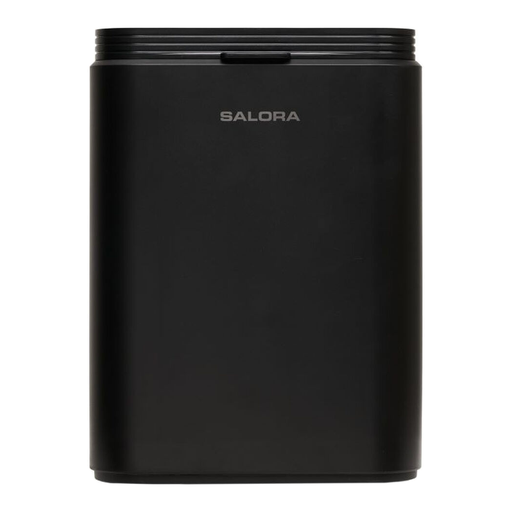 No image available
An option to compare if you’re weighing up the external dimensions and the size of the first batch for a limited worktop.
The product information lists 8 cubes in 6–9 minutes, a 1.3-litre tank and two ice sizes. The stated dimensions are 213.4 × 295.9 × 270 mm.
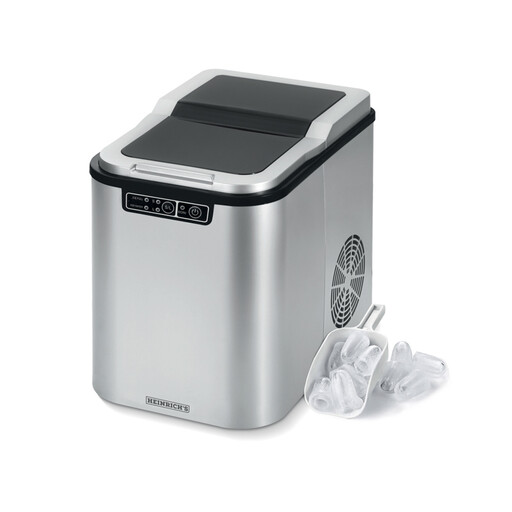 No image available
A model to compare if a larger tank is important to you and you have enough worktop space.
The product title lists 9 cubes in 9 minutes, two ice sizes, a 2.2-litre tank, 120 W of power and a self-cleaning function.
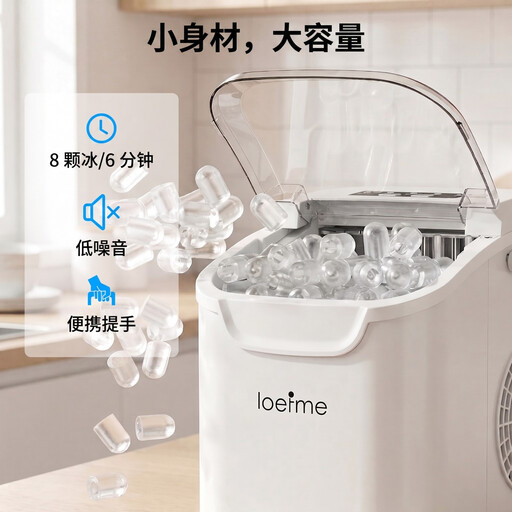 No image available
A smaller tank may suit you if you only make ice for cold drinks occasionally; measure the machine and the available space beforehand.
The product title lists 9 cubes per batch in 6–13 minutes, two sizes (S/L), a 0.8-litre tank and an automatic cleaning function.
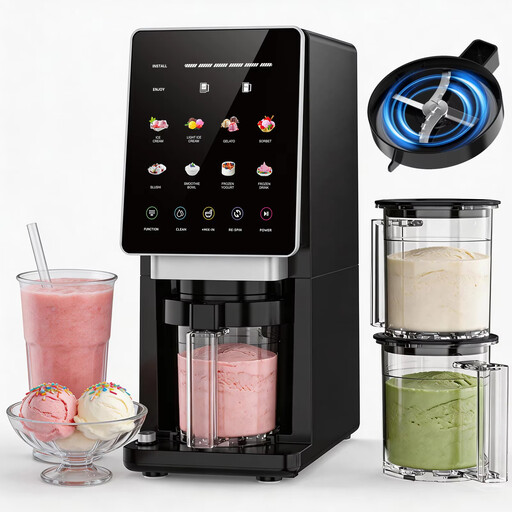 No image available
Compare the controls with the way you plan to use the machine, and check its external dimensions before placing it in a limited space.
The product title lists 8 preset settings, a self-cleaning function, and mixing and restart functions. No tank capacity or production time is included as a product specification here.
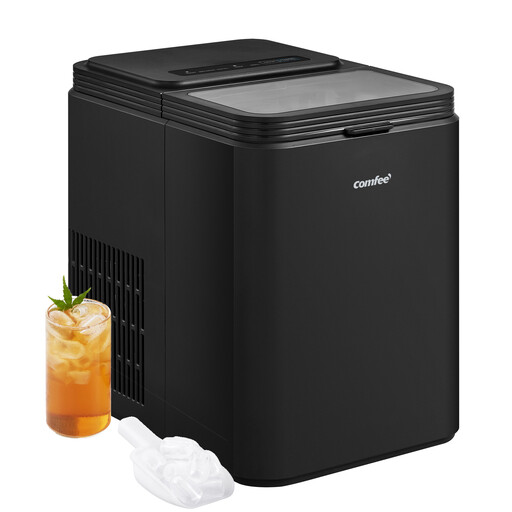 No image available
A model to compare if you want to weigh up the stated first batch of ice and the dimensions for your worktop.
The product title lists 8 cubes in 6 minutes, a 1.3-litre tank and self-cleaning. The stated dimensions are 295.7 × 213 × 295 mm; the product title also mentions an ice scoop and basket.
No. A figure in kilograms per 24 hours describes production over a full day; eight cubes in a few minutes describes a single batch. For a few drinks, focus on that first batch. For extended use, also check the tank and basket. These are manufacturer figures.
You can, if you store it according to the instructions for the exact model. DOMO says you can freeze the cubes for later use with the DO9253IB; don’t assume the ice basket in other models will keep ice frozen for a long time.
Follow the manual for the exact model. The DOMO DO9220IB manual lists the ice basket, water tank, water tray, cooling fingers and ice scoop among the parts that need regular cleaning. A self-cleaning programme on another model doesn’t automatically mean you can skip manual cleaning.
No, not to benefit from your statutory guarantee rights in the Netherlands. The Dutch Government says there is no fixed statutory guarantee period; if a product doesn’t meet the terms of the agreement, the seller is your point of contact. Compare any additional cover with the rights you already have.
Electrical appliances must meet the applicable EU product requirements; CE marking is mandatory for certain product categories. The marking is a declaration by the manufacturer, not an independent safety test. Materials that come into contact with water or ice must comply with the applicable rules for food-contact materials. A product listing alone does not confirm that a specific model meets all requirements.