
For anyone with a narrow cupboard
You want to put the machine away after use. So compare its external dimensions, and allow space for the lid and a suitable, well-ventilated spot to use it.


Measure both the cupboard and the available worktop space: a slim casing won’t necessarily fit if the lid can’t open or the ventilation is blocked. Then choose between a smaller reservoir for a few drinks and a larger one for several batches. The stated output per 24 hours doesn’t tell you how much ice the basket can hold at once.
You want to put the machine away after use. So compare its external dimensions, and allow space for the lid and a suitable, well-ventilated spot to use it.
You make several batches in a row, so look beyond the first cycle and consider the reservoir and ice basket capacity, as well as whether you can store ice in the freezer.
You want to be able to remove water and ice easily. Compare features such as a removable basket, a drain and any cleaning functions, but also check what manual cleaning the instructions recommend.
First, measure both the space where you’ll store the machine and the spot where you’ll use it. Then compare the reservoir, cycle and maintenance requirements with how much ice you usually need.
| What to consider | What to look for | Who should prioritise this? |
|---|---|---|
| Storage and positioning | Measure the cupboard’s width, depth and height. Also check that the lid can open and the ventilation remains unobstructed during use. | If I want to put the machine in a narrow cupboard after use, I also need enough room for the lid and ventilation while it’s running. Around 36% of consumers say storage and positioning are their top priority. |
| First cycle | Compare the number of ice cubes and the stated time per cycle separately from the output per 24 hours. | For chilled drinks, I want to know when the first batch will be ready, not just how much the machine can produce in a day. Around 29% of consumers prioritise the first batch of ice. |
| Emptying and cleaning | Check whether the basket is removable, whether there’s a drain, and what the instructions say about cleaning and drying. | If I want to put the appliance away after use, I need to be able to remove the water and ice easily and know how to let it dry properly. Around 21% of consumers put ease of maintenance first. |
| Refilling and stock | Compare the reservoir capacity with your needs, and check how much space you have to freeze ice separately. | When I have guests, I want to make several batches without having to refill the water too often. Around 14% of consumers prioritise making several batches. |
The cupboard dimensions won’t tell you whether the lid can open during use or the ventilation will remain unobstructed. The product information for the PRIMO PR409IB says its ventilation openings must be kept clear.
Measure the cupboard and worktop separately, and follow the positioning instructions for the model you choose.
A machine that fits in the cupboard for storage may need a separate spot on the worktop when it’s in use.
The stated daily output doesn’t tell you how much ice is ready at once. For the DO9253IB, DOMO gives both the output per 24 hours and advice to freeze previously made ice separately.
Check the first cycle, basket capacity and available freezer space before relying on the daily output figure.
If you want to save ice for later, you may need to transfer it part-way through and make room in the freezer.
A power rating isn’t a measurement of the energy used during your actual usage time.
Only compare energy costs when consumption, usage time and tariff are all known on the same basis; don’t try to work out a cost from the wattage alone.
The DO9292IB and DO9253IB models show how a smaller or larger reservoir capacity can come with different casing sizes.
The PR409IB is a countertop model with stated compact external dimensions and a drain opening to consider when thinking about storage and emptying.
The 283098 is an option to compare if two ice sizes and a larger reservoir are important to you.
The IceChef Compact is available with a 1-litre reservoir and two ice sizes, for anyone weighing these features against the space available.
This Joybuy selection features ice makers for chilled drinks; the product titles specify two ice sizes. Compare the reservoir capacity and stated dimensions with your needs and the space available.
 No image available
An option if you’re looking for two ice sizes and a 1.3-litre reservoir; compare the stated dimensions with the space available.
The product information lists dimensions of 213.4 × 295.9 × 270 mm and a self-cleaning function. The title states an output of 12 kg per 24 hours.
 No image available
An option if you want to choose between two sizes and make several batches using a 2.2-litre reservoir.
The title lists 120 W, 9 cubes per 9-minute cycle, a self-cleaning function and a stated output of 12 kg per 24 hours.
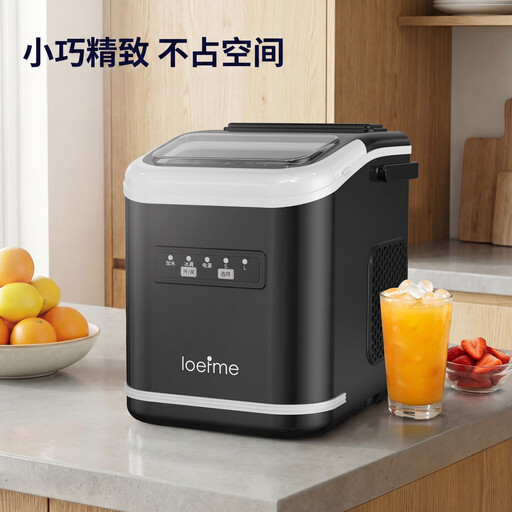 No image available
An option if you want to choose between two ice sizes and weigh the reservoir capacity against the space you have available.
The product title lists a 1.4-litre reservoir, 9 cubes per 6–13-minute cycle, an automatic cleaning function and a stated output of 12 kg per 24 hours.
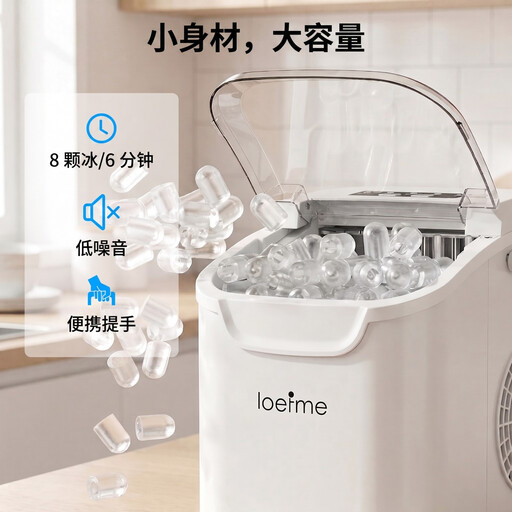 No image available
An option if you want to choose between two ice sizes and are looking for a 0.8-litre reservoir.
The product title lists 9 cubes per 6–13-minute cycle, an automatic cleaning function and a stated output of 12 kg per 24 hours.
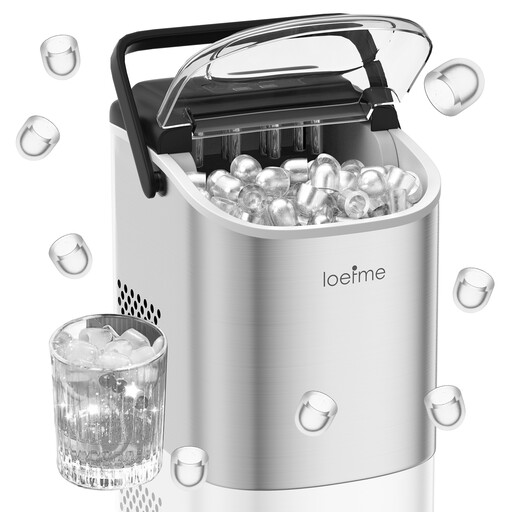 No image available
An option if you want to choose between two ice sizes and are looking for a 1.2-litre reservoir.
The product title lists 9 cubes per 6–13-minute cycle, an automatic cleaning function and a stated output of 12 kg per 24 hours.
Don’t cover the ventilation openings, and don’t assume the storage dimensions are suitable for use. MediaMarkt Netherlands says the PRIMO PR409IB needs clear ventilation; check the positioning instructions for the model you choose.
Don’t assume the ice will stay frozen in the basket for long. DOMO recommends storing previously made ice in the freezer for the DO9253IB, so make room in the freezer if you’re making ice to use later.
No, the function doesn’t automatically remove the need for all manual cleaning. Check the instructions for the exact model to find out how to drain the water, clean the parts and let the machine dry before putting it away.
According to Ondernemersplein, the Dutch government’s business information portal, electrical kitchen appliances must meet the applicable requirements, including those for electrical safety and CE marking. The Netherlands Food and Consumer Product Safety Authority says that materials which come into contact with water or ice for consumption must comply with the applicable food contact material rules. A statement on a product page alone doesn’t prove that an individual product fully meets every requirement.
According to the Dutch government, you’re entitled to a product that meets reasonable expectations, and there’s no fixed statutory warranty period in the Netherlands; if there’s a problem, contact the seller. For eligible distance sales, you’ll usually have a 14-day cooling-off period. Check the terms and exceptions that apply to your purchase.