
People short on space
If you don’t have any floor space to spare, you’ll want to wash breakfast bowls automatically without losing too much valuable worktop space. The Consumentenbond lists a small dishwasher as an option for a small kitchen.


A countertop model could suit a small kitchen if you have a suitable spot with a water supply and drainage, and the rack fits your bowls. If there’s no fixed water supply, consider a model with a reservoir, but check the drainage too. If you want to wash more dishes every day and have room for an appliance around 45 cm wide, compare slimline dishwashers. Milieu Centraal warns that a mini dishwasher isn’t automatically the most energy-efficient choice, so compare the EU energy label and think about how often you can fill the machine.
If you don’t have any floor space to spare, you’ll want to wash breakfast bowls automatically without losing too much valuable worktop space. The Consumentenbond lists a small dishwasher as an option for a small kitchen.
A model with a reservoir could be worth considering if there’s no fixed water supply where you want to put it. You’ll still need a suitable place to drain the wastewater; Daan Tech describes this set-up for Bob.
If you want to wash plates, glasses and cutlery as well as bowls, weigh up a countertop model against a slimline dishwasher. The Consumentenbond describes slimline dishwashers as 45 cm wide; the Beko BDFS26046XQ is listed as having capacity for ten place settings.
First measure the space and your bowls, then work out how much washing-up you want to do in one load. After that, check the water supply, drainage and energy use. The Consumentenbond explains the trade-off between compact and slimline models, while Milieu Centraal and the European Commission offer guidance on comparing energy use using the same label criteria.
| What to consider | What should you check? | Who is this important for? |
|---|---|---|
| Fit | Measure the available width, height and depth, the space needed for the open door and your own bowls. Check the rack layout of the exact model. | If space is tight, I want to know whether both the appliance and my bowls will fit. Around 31% of consumers say fit is their top priority. |
| Water supply and drainage | Check how the model gets its water, where the drain hose can go and what type of electrical connection it needs. | If there’s no fixed water supply where I want to put it, I need a suitable way to fill it and a safe place to drain the water. Around 25% of consumers say the lack of a fixed water supply is their top priority. |
| Capacity | Count how many bowls and other items you usually wash together, and check how they fit in the rack. Place settings are a useful point of comparison, but they don’t guarantee that your bowls will fit. | If I want to wash bowls alongside mugs, plates and cutlery, the amount I can fit in each load matters. Around 25% of consumers say capacity is their top priority. |
| Energy and water use | Compare kWh per 100 eco cycles and water per eco cycle on the EU label. Also consider how often you’ll actually fill the machine. | If I mainly want to weigh up electricity and water use against the amount of washing-up I have, I look at both the label figures and how I use it. Around 19% of consumers say energy use is their top priority. |
A small exterior size doesn’t, in itself, tell you how much energy and water a dishwasher uses. Milieu Centraal advises against choosing a compact mini dishwasher on the basis of energy use and ease of use; an appliance that suits your needs and is filled properly may be a better fit for that priority.
Compare the label figures on the same basis, and only choose a size once you’ve worked out how much washing-up you usually do in one load.
A reservoir can replace a fixed water supply, but according to Daan Tech, Bob still needs a hose to drain the wastewater.
Decide in advance where the drain hose can safely empty, and follow the instructions for the version you choose.
The stated capacity doesn’t tell you exactly whether your breakfast bowls will fit in the rack. You’ll also need to allow for the space taken up by the open door.
Measure your own bowls and the available space, and check the rack layout of the exact model.
The TDW5501B is a countertop model listed as having capacity for six place settings, with a fixed water supply and drainage.
The VVW5520 is a freestanding compact model listed as having capacity for six place settings.
Bob is an ultra-compact model that the manufacturer describes as having a built-in tank and a water inlet connection.
The freestanding slimline BDFS26046XQ is a narrow option listed as having capacity for ten place settings and energy class C.
This selection features compact countertop models for smaller loads, including models whose product information mentions a built-in water tank or an alternative water supply. Check the details for the exact model to see how drainage and positioning are handled.
 No image available
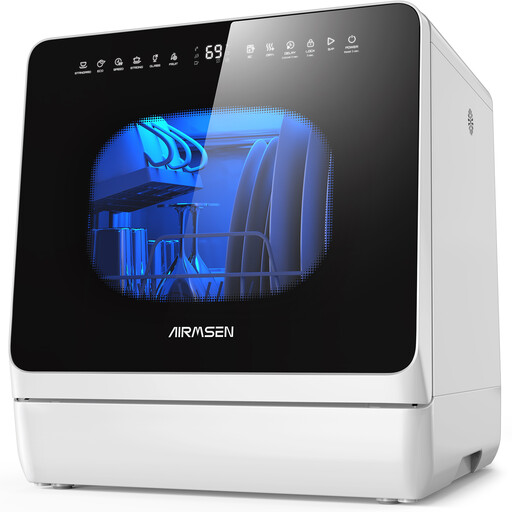
The product description states that it has room for 4 place settings, which may be worth considering for smaller loads.
The title lists 8 programmes, a water softener, a delay start and a child lock. Check how the water supply and drainage are set up for this version; the product information doesn’t mention a water tank.
The safety information specifies indoor use on a flat, stable surface, as well as requirements for earthing and the electrical connection.
 No image available
The product information lists a built-in tank and a tap connection as water supply options, giving you a choice when deciding where to position it.
Listed features include capacity for 4 place settings, 9 programmes, dimensions of 37 × 50 cm and energy class D.
The safety information specifies indoor use on a flat, stable surface, as well as requirements for earthing and the electrical connection.
 No image available
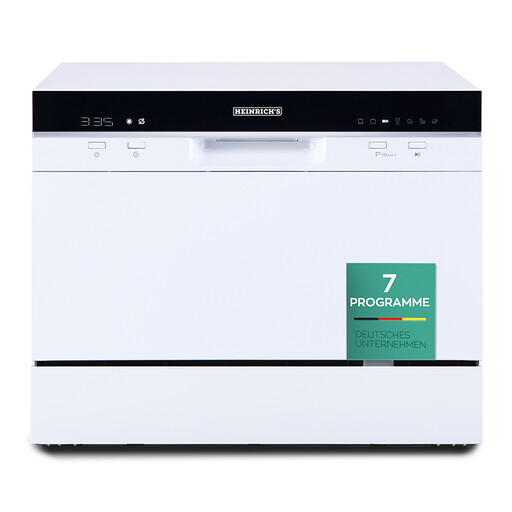
The stated capacity of 6 place settings can help you compare it with the amount of washing-up you do each day; check whether your bowls fit in the rack.
The product information lists 7 programmes, a 24-hour delay start, automatic door opening for drying, energy class D and a noise level of 47 dB.
 No image available
With a stated capacity of 3 place settings, this model is designed for smaller loads.
The product information lists a 5-litre water tank or a direct tap connection, 7 programmes, energy class C and a noise level of 56.3 dB. Check that the version you choose suits your planned set-up.
 No image available
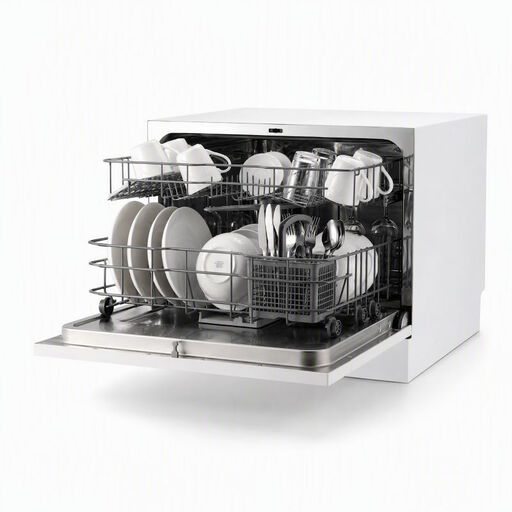
The stated capacity is 6 standard place settings; compare this with the bowls and other items you want to wash at the same time.
The title lists a 30-minute quick wash, a 24-hour delay start and 8 functions.
No, a reservoir doesn’t automatically replace every connection. With Bob, the built-in tank replaces the fixed water supply, but Daan Tech also specifies a drain hose. Check the electrical and positioning instructions for the version you choose too.
Make sure you can position the model in a suitable place in line with its instructions, and that the plug and hoses are accessible. The Tomado TDW5501B manual, for example, specifies a sturdy, level surface and hoses that aren’t kinked. Follow the instructions for any other model you choose.
According to Milieu Centraal, you don’t need to pre-rinse dishes before putting them in the dishwasher. Remove any food scraps so they don’t block the filter, and use the eco programme when it’s suitable for your load.
Compare the latest EU label figures on the same basis: kWh per 100 eco cycles and water per eco cycle. Also consider how often you can fill the machine; its exterior size alone won’t tell you how much it will use in your home.