Who is a countertop dishwasher suitable for?

Lunchbox users short on worktop space

If you want to wash lunchboxes every day, measure the containers and separate lids, as well as the available space, including room for the door to open. The Consumentenbond and Mepal provide information about compact dishwashers and caring for lunchboxes.

Small households without a fixed dishwasher connection

A model with a manually filled tank may be an option if you don’t have a fixed water supply, but you’ll still need a suitable drain. AIRMSEN describes both water-supply options for the TDQR09; check the manual for the exact model version.

Households combining lunchboxes with everyday dishes

If you also want to wash mugs, plates and cutlery, consider the shape and usable space of the rack. The Consumentenbond, Inventum and Tomado describe compact models and their capacity; the number of place settings doesn’t guarantee that your lunchboxes will fit.

What should you look for when choosing one?

Model with a fixed water supply

Choose this if: you want to wash lunchboxes with plates, mugs and cutlery, and have a suitable space with a water supply and drain.

Bear in mind: you’ll need the required connections and space for the appliance and its open door. A compact size doesn’t automatically mean lower consumption for the amount of washing up. Milieu Centraal highlights the importance of consumption and how full the machine is.

Smaller model with a water tank

Choose this if: a fixed water supply isn’t possible, your load is small enough and you can safely drain the wastewater.

Bear in mind: you’ll need to fill the tank yourself and check the rack space, drainage method and programme instructions for each model. AIRMSEN describes the TDQR09 as having a 5 L tank and a tap connection; this doesn’t automatically apply to other versions.

Use your existing washing-up setup

Choose this if: your lunchboxes aren’t suitable for any machine programme or there’s no safe place for the water supply and drainage.

Bear in mind: according to Milieu Centraal, washing up in a bowl can use less energy if you use only a little hot water, but it will take time and effort.

What to consider What to look for Who should pay particular attention?
Temperature and programme Compare the instructions for the container, lid and separate components with the temperature of the programme you’ve chosen. If I want to avoid putting a component through a programme that’s too hot, I check each one separately. Around 30% of consumers prioritise temperature and compatibility.
Usable rack space Measure the largest container with its lid on and check that the spray arms can rotate freely. If I also want to put everyday dishes in the same load, I check whether the containers will fit alongside mugs and plates. Around 30% of consumers prioritise having one usable combined load.
Water supply and drainage Check the tap, hose, drain and positioning requirements in the manual for the exact model. If a fixed water supply isn’t convenient, the type of connection matters to me; a tank model still needs somewhere for the wastewater to go. Around 20% of consumers consider the water supply a deciding factor.
Consumption per usable load Compare kWh per 100 eco cycles and litres per eco cycle on the same labelling basis, and consider how many cycles your load will need. If I mainly want to assess consumption for the amount of washing up I actually have, I compare the eco figures and how full the machine is. Around 10% of consumers prioritise consumption per useful wash.
Drying and maintenance Check the drying option and find out how to position the containers, maintain the filters and dry the components. If I want to put the containers away dry after washing, I look out for water left in the rims or separate components. Around 10% of consumers give drying and maintenance the greatest weight.

Common buying mistakes

  • Assuming ‘dishwasher-safe’ means suitable for every hot programme

    Mepal recommends a maximum temperature of 40 °C for the Take a Break midi. This recommendation doesn’t cover hotter programmes.

    For the container, lid and separate components, compare the manufacturer’s instructions with those for the exact dishwasher programme.

    A temperature that isn’t permitted could damage a box or component.

  • Assuming six place settings means there’s room for six lunchboxes

    A place setting refers to standard tableware for one person, not how many wide containers or lids will fit in a rack.

    Measure your own components and check the rack, door movement and space for other dishes. The Consumentenbond describes place settings as a measure of standard tableware.

  • Assuming a water tank means there’s no need for a drain

    A tank can replace a fixed water supply, but it doesn’t remove the need to drain used water.

    Check both the water supply and drainage requirements in the manual for the exact model version. The Tomado manual describes the installation requirements for the TDW5501W.

    You’ll also need a suitable place or route for the drain hose.

  • Comparing litres per cycle alone

    A figure per cycle doesn’t tell you how many lunchboxes will actually fit in the machine alongside the rest of your dishes. Milieu Centraal points out that a compact mini dishwasher isn’t automatically economical for the amount of washing up.

    Compare eco figures on the same basis and consider how many cycles you’ll need for a usable load.

    If everything doesn’t fit in one load, extra cycles could also use more electricity and dishwasher detergent.

Brands worth considering

Inventum

According to Inventum, the VVW5520 is a compact model with a mains connection and a stated capacity of six place settings.

  • Inventum lists an eco and hygiene programme, as well as an adjustable automatic door opening, for this model.
  • There’s no half-load option; the listed features are manufacturer specifications, not independent performance measurements.

Tomado

According to Tomado, the TDW5501W is a countertop model for six place settings, with five programmes.

  • Tomado lists programmes from 40 °C to 70 °C and space for plates up to Ø 25 cm.
  • The stated plate size doesn’t prove that a lunchbox will fit. The manual sets out the water supply and drainage requirements.

Klarstein

The Oceana 10048548 is a smaller version with a stated capacity of three place settings.

  • Klarstein lists seven programmes and a maximum plate diameter of 26 cm.
  • The plate diameter doesn’t tell you whether your lunchbox will fit. Manufacturer claims about cleaning or savings aren’t independent performance measurements.

Bosch

The SKS62E32EU is included here only as an example of a different combination of programmes and drying options.

  • Bosch lists Glass 40 °C and Extra Dry for this model.
  • Bosch states that this model is no longer available. If any of your boxes have a temperature limit, check that all the relevant instructions are compatible with the programme you choose.

AIRMSEN

AIRMSEN describes the TDQR09 as a mini dishwasher with either a tank or a tap connection.

  • According to the manufacturer, the TDQR09 has a 5 L tank and both water-supply options.
  • AIRMSEN describes different plug versions; this information doesn’t confirm that a listing with a different description is exactly the Dutch TDQR09 version.

Joybuy product picks

These models include countertop dishwashers for everyday dishes and more compact versions for smaller loads, including models with a tank or tap connection. For each model, check that you have suitable drainage and that the rack has room for your lunchboxes.
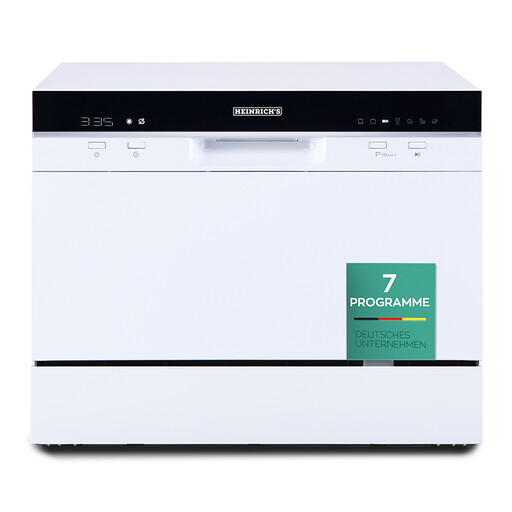
Heinrich's HTG 8840 Weiss countertop dishwasher

Heinrich's HTG 8840 Weiss countertop dishwasher

The stated capacity of six place settings may suit those who want to wash lunchboxes alongside everyday dishes; check the actual rack space.

The product name lists seven programmes, automatic door opening and a noise level of 47 dB.

View at Joybuy

Heinrich's HTG 8855 countertop dishwasher

Heinrich's HTG 8855 countertop dishwasher

The product name says it can be used with or without a water connection, which may be useful if you don’t have a fixed supply. Check how the exact version drains wastewater.

The stated capacity is three place settings, and the product name lists seven programmes.

View at Joybuy
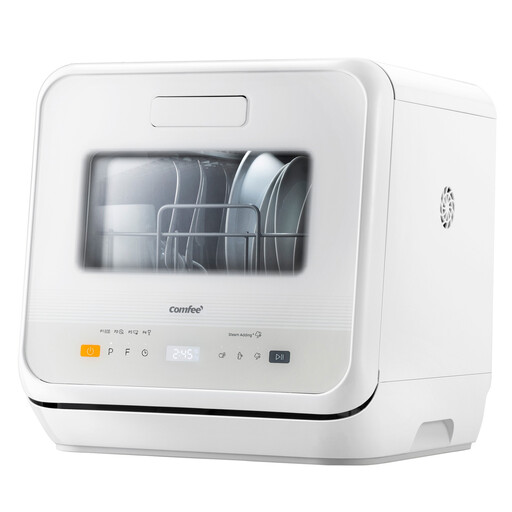
Comfee CDWMTO201D(W) countertop dishwasher

Comfee' CDWMTO201D(W) countertop dishwasher

The product name describes a built-in 5 L water tank and a model for households of 2–3 people; check the rack against your own lunchboxes.

The product name lists 6+3 programmes.

View at Joybuy
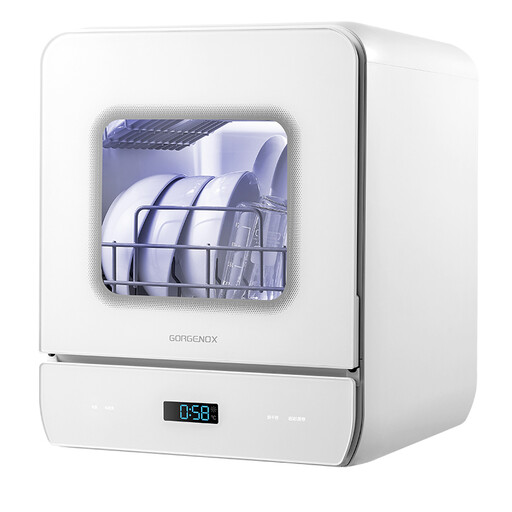
GORGENOX DW5-D40A countertop dishwasher

GORGENOX DW5-D40A countertop dishwasher

The product name gives a capacity of three place settings; check that the dimensions and layout suit your lunchboxes and other dishes.

The product name lists a drying function.

View at Joybuy

Frequently asked questions

Can every dishwasher-safe lunchbox go in the eco or hygiene programme?

No, not just because it’s labelled ‘dishwasher-safe’. Mepal recommends a maximum of 40 °C for the Take a Break midi. Check the instructions for your container, lid and separate components against the temperature and guidance for the dishwasher programme you choose.

Do you still need a drain with a dishwasher that has a water tank?

A tank can remove the need for a fixed water supply, but you’ll still need a suitable drain. AIRMSEN describes this for the TDQR09; consult the manual for the exact version for drainage and electrical connection details.

How can you prevent food residue and moisture in lunchboxes after washing?

Remove larger food scraps, position the components so water can drain away and clean the filter regularly. The Consumentenbond advises placing items with a rim at an angle; Mepal recommends storing the lid and lunchbox separately so they can dry.

Is a mini dishwasher always cheaper to run?

No. Compare energy and water consumption on the same eco basis and consider how many cycles your load will need. Milieu Centraal warns that compact mini dishwashers can use a lot of electricity relative to the amount of washing up, and suggests washing up by hand with little hot water as a potentially more economical alternative.

What warranty and energy label information applies when buying in the Netherlands?

According to the Dutch government, the seller is your point of contact if a product is faulty, and the Netherlands has no fixed statutory two-year warranty period. EU energy labelling rules apply to household dishwashers; the label includes information such as electricity consumption per 100 eco cycles and water consumption per eco cycle.
