
Washing lunch boxes with limited worktop space
You want to wash lunch boxes and separate parts every day without giving up too much worktop space. So check the external dimensions, how much room the open door takes up and the layout of the basket.


Start by checking the worktop space available and the temperature limit in your lunch boxes’ care instructions: dishwasher-safe doesn’t mean every programme is suitable. Then choose a model that fits the amount of washing-up you do each day, and check that the door, basket, water supply and drainage will work in your kitchen.
You want to wash lunch boxes and separate parts every day without giving up too much worktop space. So check the external dimensions, how much room the open door takes up and the layout of the basket.
You’re looking for a model that can run from a water tank. Bear in mind that used water still needs a suitable route to drain away.
You want to fit lunch boxes, lids and other dishes in together. Compare the usable basket space with the items you own: the stated number of place settings doesn’t tell you how many lunch boxes will fit.
A good fit if: worktop space is limited or there’s no fixed water supply.
Bear in mind: you’ll need to fill it by hand and provide a drain; also check whether open lunch boxes will fit in the basket.
A good fit if: you have enough space and suitable connections, and want to load several items at once.
Bear in mind: the machine and its open door take up extra space; place settings don’t tell you how many lunch sets will fit.
A good fit if: you have a suitable tap and drain, and the stated small capacity is enough for you.
Bear in mind: this connects directly to a tap rather than using a water tank; check the temperature of the programme you want to use.
| What to consider | What to look for | Who is this important for? |
|---|---|---|
| Size and worktop space | Measure the width, depth and height, as well as the space around and in front of the machine. | If I have limited worktop space, I still want enough room to cook and prepare food once the machine is in place. Around 25% of consumers prioritise keeping their worktop space. |
| Lunch box suitability | Check the instructions for the box, lid and separate parts against the temperature of the programme you’ve chosen. | I want to wash my own lunch boxes and parts according to their instructions, rather than assume every programme is suitable. Around 25% of consumers prioritise protecting their lunch boxes. |
| Water supply and drainage | Check the permitted water supply method, the required connector or hose, and the drainage route for the exact model. | If there’s no fixed water connection, I want to know in advance whether I can fill a tank and where the waste water will go. Around 20% of consumers choose mainly based on whether a connection is practical. |
| Space for lunch sets | Compare your usual load with the basket layout, and make sure the spray arms can move freely. | I want to fit several lunch boxes, lids and perhaps other dishes in each load. Around 20% of consumers prioritise usable basket space and the number of loads they’ll need. |
| Running costs and maintenance | Compare energy and water use on the same eco programme basis, taking capacity into account; also check how to maintain the filter. | If I want to keep running costs down, I look beyond the cost of one cycle and consider how many loads I’ll need for my daily washing-up. Around 10% of consumers focus mainly on consumption and maintenance per usable load. |
The temperature limit can vary from product to product. Mepal recommends a maximum of 40 °C for one specific bento lunch box; that limit doesn’t automatically apply to other models.
Compare the instructions for all the parts with the temperature of the programme you want to use.
Place settings refer to standard tableware for a meal, not the shape and space needed for large containers, lids and inserts.
Check the basket against the dimensions of your open lunch sets, and leave the spray arms unobstructed.
A load that doesn’t fit well may mean extra wash cycles or hand-washing.
Daan Tech says Bob can work without a fixed water supply, but the model still needs a drain hose.
Before buying, plan where you’ll fill it and how you’ll drain it in your kitchen.
Without a practical place for the hose, your intended setup may not work.
The figures on the EU energy label are based on eco cycles. The number of loads you need also depends on the usable space for your lunch sets.
Compare consumption on the same eco programme basis, and take your usual load and filter maintenance into account.
Bob is a narrow countertop dishwasher worth considering if worktop space is limited or there’s no fixed water supply.
The VVW5520 is a tabletop model to compare if you’re looking for more basket space and have room for a machine around 55 cm wide.
The Aquatica 10047348 is a 42 cm-wide tabletop model to consider for a small load if you have a suitable tap connection.
This selection includes countertop dishwashers for smaller kitchens. Before choosing a model for your lunch boxes, check its basket space, connection options and programme instructions.
 No image available
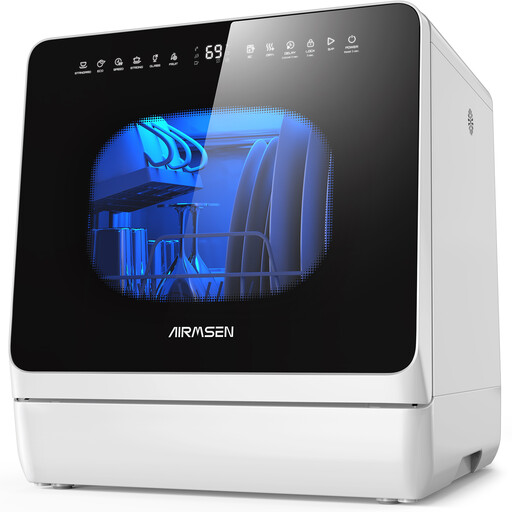
A compact countertop dishwasher worth considering if you’re looking for a model for a smaller kitchen; check how your own lunch sets fit in the basket.
The product name lists 8 wash programmes and an integrated water softener.
Check the temperature of your chosen programme against the instructions for your lunch boxes and parts.
 No image available
The stated width may be useful if you’re short on space; measure the depth too, as well as the room needed for the door to open.
The product name lists a built-in 5-litre water tank, 9 wash programmes and dimensions of 37 × 50 cm.
Check that the parts fit securely in the basket and that the chosen programme stays within their temperature limits.
 No image available
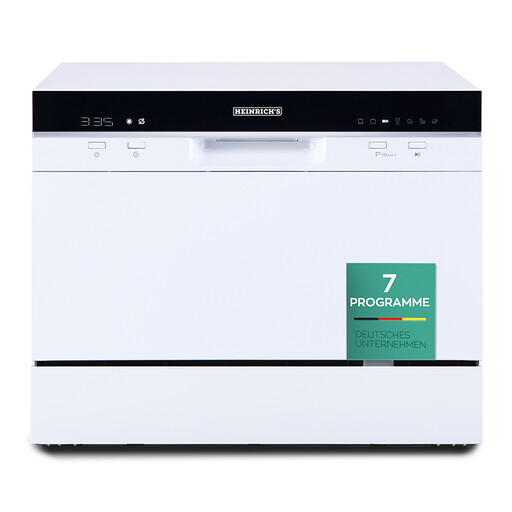
A tabletop model to compare if you want to load several items at once; check the basket against the dimensions of your lunch sets.
The product name lists a capacity of 6 place settings and 7 programmes.
The number of place settings doesn’t tell you how many lunch boxes will fit; remember to allow for the space needed on your worktop too.
 No image available
A tabletop model with a stated capacity of 3 place settings to compare for a smaller load; check how many open lunch boxes will actually fit in the basket.
The product name lists 7 programmes.
Before buying, check which water supply options are available for this version and where the waste water drains.
 No image available
A tabletop model to consider if you want to check whether a tank or tap connection will work in your kitchen.
The product name lists a built-in 5-litre water tank and 6+3 programmes.
Compare the programme instructions with the temperature limits for your own lunch boxes and separate parts.
No. Check the instructions for your specific lunch box and parts. Mepal recommends a maximum of 40 °C for one specific bento lunch box; that limit doesn’t automatically apply to other models. Some plastics can warp in hot water.
A water tank can remove the need for a fixed water supply, but you’ll still need a drain. Daan Tech says Bob uses a drain hose that can run into, for example, the sink; check the installation instructions for the model you’re considering.
Follow the instructions for the lunch box and machine, don’t stack the parts, and keep the spray arms clear. Consumentenbond advises placing plastic items in the top rack and checking the filter regularly, cleaning it when necessary.
Compare models on the same EU energy-label basis, including kWh per 100 eco cycles, litres per eco cycle and capacity. Then consider how many loads your lunch sets need; your costs will also depend on your electricity and water rates.
According to ACM ConsuWijzer, you have a legal guarantee in addition to any manufacturer’s or retailer’s guarantee. If a product breaks sooner than you could reasonably expect with normal use, the retailer is responsible for providing an appropriate solution; there is no general fixed two-year limit for this legal right.