
Cook with limited worktop space
Wants to wash dishwasher-safe cutlery without losing too much preparation space. The appliance’s width and the room needed to open the door are key considerations.


First, measure the available width and depth, and allow space for the door to open. Then choose a cutlery layout and capacity that suit the amount you want to wash in one go. A slim model with a water tank may work if there’s no fixed water supply, while a wider countertop model may offer more room for dishes. In either case, check how the waste water is drained.
Wants to wash dishwasher-safe cutlery without losing too much preparation space. The appliance’s width and the room needed to open the door are key considerations.
Looking for a countertop model that can be filled by hand, and also needs to find a suitable place for the drain hose. Daan Tech lists an integrated water tank for Bob; it still needs a drain.
Wants to wash cutlery alongside plates and glasses, so the cutlery holder layout and available loading space matter. The Consumers’ Association describes compact dishwashers as models with one rack.
First, measure the entire space where you plan to put the appliance. Then compare the cutlery layout, connections and consumption figures of the models that will actually fit.
| What to consider | What should you check? | Who is this important for? |
|---|---|---|
| Worktop space | Measure the width, depth and height of the space, as well as the room needed to open the door. Compare these measurements with the exact model. | If my worktop is narrow, I want to know whether the appliance will fit without blocking my workspace. Around 36% of consumers say available space is their top buying priority. |
| Cutlery and other dishes | Check the cutlery module or basket, and compare the interior layout with your own cutlery and largest dishes. | If you want to wash cutlery with your everyday dishes, a layout that suits both is useful. Around 29% of consumers give washing cutlery and dishes together their highest priority. |
| Water supply and drainage | Check whether the model uses a water tank or a fixed water supply, and where the drain hose can empty. Follow the installation instructions for the hoses and plug. | If there’s no fixed water supply where I want to put the appliance, I want to know whether I can fill it by hand and where the waste water can go. Around 21% of consumers say connection options are their top priority. |
| Consumption per load | Compare kWh per 100 eco cycles, litres per eco cycle and the number of place settings on the energy label. Bear in mind how full you can usually load the machine. | If you want to factor in the consumption of regular washes, compare the figures on the same eco-cycle basis. Around 14% of consumers prioritise consumption per usable load. |
An appliance may seem to fit on paper, but still get in the way of a doorway, hose routing or your workspace. Tomado’s manual calls for a sturdy, level surface and a suitable position near the connections.
Measure the height and depth too, and allow room for the door to open. Plan the route for the drain hose, water supply and plug before choosing a spot.
Place settings refer to standard tableware for one person. The mix of your own plates, pans and cutlery determines how much will actually fit in one wash.
Check the cutlery holder on the exact model and compare the interior layout with your own dishes.
If your usual load doesn’t fit, you may need to run extra cycles or wash some items by hand.
Milieu Centraal describes mini dishwashers as relatively inefficient and recommends filling a suitably sized machine as much as possible.
Compare the energy-label figures on the same eco-cycle basis and bear in mind your usual load. For just a few pieces of cutlery, carefully washing them in a small amount of warm water is an alternative also suggested by Milieu Centraal.
Alongside Bob’s integrated water tank, Daan Tech specifies a drain hose for used water.
For your chosen location, check separately how to fill the model and where its waste water will drain.
A location without a suitable drain may make your planned installation impractical.
Bob is designed for people with limited worktop space or no fixed water supply where they want to put it.
The VVW5520 is a 55 cm-wide countertop model for people who want to wash cutlery alongside more tableware.
The TDW5501W is a countertop model with a fixed water supply and drain, plus a cutlery basket.
The 42 cm Aquatica version reviewed is a mid-sized option for a small load, with a tap connection.
Bosch describes the SKS6ITB00E as a compact freestanding dishwasher in the 55 cm width category.
This selection features compact countertop and tabletop dishwashers for small or mixed loads. Check that each model’s setup and cutlery layout suit your kitchen.
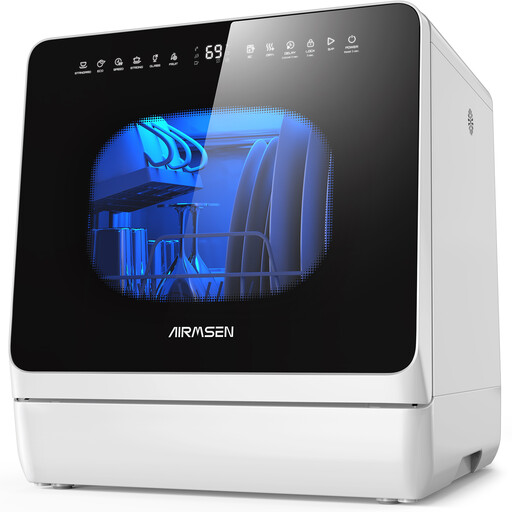 Image unavailable
The product name describes it as suitable for use at home, in flats and in motorhomes. Before buying, check how the water supply and drainage will work in your chosen spot.
The product name lists 8 wash programmes, an integrated water softener, delay start and a child lock.
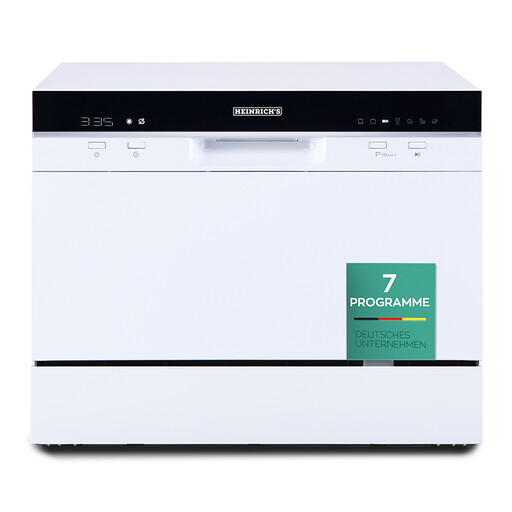 Image unavailable
This tabletop model is an option if you want to wash more everyday dishes as well as cutlery. Check that the interior layout suits your plates and cutlery.
The product name lists six place settings, seven programmes, 47 dB, energy rating D, a digital display, a 24-hour delay start, automatic door opening and drying, and a water softener. The listed inlet hose is 1500 mm and the drain hose is 1720 mm.
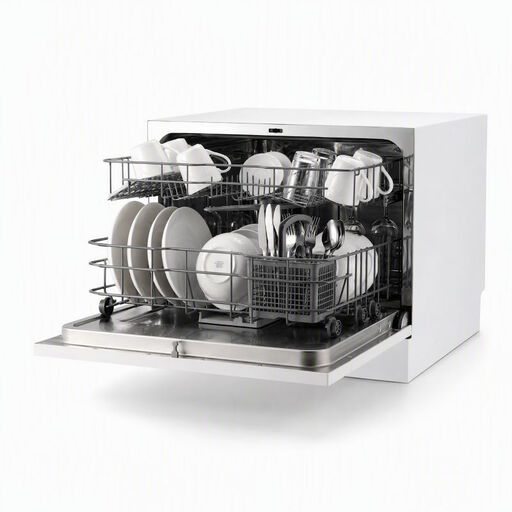 Image unavailable
The product name describes a compact tabletop model. Check that its cutlery layout suits what you want to wash in one go.
The product name lists six standard place settings, a 30-minute quick wash programme, a 24-hour delay start and eight functions.
No. A water tank doesn’t remove the need for a drain. Daan Tech describes Bob as being filled by hand via its integrated tank, and also specifies a drain hose. Check how other models drain their waste water.
Scrape large food scraps off your dishes instead of rinsing them under the tap first. Follow the model’s manual and clean the filter regularly. The Consumers’ Association also recommends using salt and rinse aid according to the manual and your local water hardness.
Also compare consumption in kWh per 100 eco cycles, litres per eco cycle and the number of place settings on the energy label. These label figures are based on the eco programme; you’ll need separate model information for other programmes.
According to the Dutch Government, consumers are entitled to a product that works as it should, and the retailer is the point of contact if something goes wrong. There is no fixed statutory two-year warranty period in the Netherlands. The Dutch Government also states that household appliances such as dishwashers have an energy label. This helps you compare energy and water use, but doesn’t tell you whether an appliance will fit on your worktop.