Start with the plates, bowls, glasses and cutlery you use per wash cycle: the number of place settings alone doesn’t tell you whether your crockery or cookware will fit. A larger countertop model may work if you want to wash more standard crockery per cycle and have room for the machine and its connections. A smaller model may suit a more limited space, but a smaller load could mean extra cycles. Milieu Centraal advises against compact mini dishwashers on environmental grounds, so factor in the total number of cycles you’ll need too.
Who is a countertop dishwasher suitable for?
Organisers with lots of crockery per cycle
You want to know whether plates, bowls, glasses and cutlery will fit in the machine between workshop sessions. A place setting is the standard crockery for one person; measure larger plates and check cookware separately. Consumentenbond and Inventum highlight these points when discussing compact dishwashers.
Organisers without a permanent dishwasher connection
You’re looking for a flexible solution, but you’ll need to check the water supply, drainage and power supply for each model and location. Connections can vary by model; Consumentenbond highlights a water connection and drain as points to consider when setting up a dishwasher.
Organisers with limited worktop space
You’ll need to weigh up the space required for the machine and loading it against the amount of washing-up per cycle. A smaller model may take less crockery at a time, which could mean extra cycles. Consumentenbond describes compact dishwashers as smaller models with a single rack.
What should you look for when choosing one?
First, count the items you need to wash per cycle and measure your largest pieces of crockery. Then check whether the machine will fit in the intended spot and how you’ll connect it to water and power.
| What to consider |
What to look for when buying |
Who this matters to |
| Crockery per cycle |
Count plates, bowls, glasses and cutlery; measure your largest plates and check the rack layout. |
If I want to wash as much everyday crockery as possible between workshop sessions, I’ll prioritise the load per cycle; around 36% of consumers give sufficient crockery per cycle top priority. |
| Water supply and drainage |
Check the manual for the exact model to find out how water is supplied and drained, and what type of power connection is needed. |
I want to know in advance whether the machine can be connected at my workshop venue and where the waste water will go; around 29% of consumers put a suitable connection at the top of their list. |
| Worktop space |
Measure the available space and check the external dimensions, door clearance and room for hoses and drawers. |
If the machine needs to fit next to the preparation area, I’ll weigh up its size against the usable rack space; around 21% of consumers give available worktop space top priority. |
| Consumption over multiple cycles |
Compare kWh per 100 eco cycles and water per eco cycle on the energy label, taking into account the number of cycles you’ll need. |
If I’m mainly weighing up the water and electricity used across repeated cycles, I’ll look beyond a single cycle; around 14% of consumers prioritise running costs. The European Commission explains the information shown on the energy label. |
Buying pitfalls
-
Assuming six place settings will fit all your cookware
A place setting refers to standard crockery for one person. It doesn’t automatically include a large serving dish, pan or your full workshop load.
Before buying, list what you need to wash per cycle and measure the largest items. Compare them with the stated capacity and rack.
-
Taking ‘no permanent connection’ to mean ‘no tap or drain needed’
The water supply and waste water drainage are separate considerations. The Klarstein Amazonia Nano product description says both that it has no permanent water connection and that it connects to a tap, so the exact water supply method is unclear.
Check the manual for the exact model to find out how water is supplied and drained before choosing where to put it.
-
Assuming low consumption per cycle means low consumption for the whole workshop
If the same amount of washing-up takes several cycles, the consumption across all those cycles adds up. Eco programme label figures don’t necessarily tell you what another programme will use.
Compare the label figures on the same eco basis and factor in the number of loads you expect to need.
Brands to consider
Inventum
The VVW5520 is a compact freestanding model worth considering if you’re looking for a stated capacity of six place settings.
- Inventum lists six place settings, a hygiene programme, 47 dB and 6,5 litres of water per wash for the VVW5520.
- Inventum doesn’t list a half-load option. These figures come from the manufacturer and aren’t an independent test of washing performance.
Klarstein
The Amazonia range includes the smaller Nano countertop model and the Amazonia 6. Compare the size, load capacity and connection method of each model.
- Klarstein lists six place settings and 49 dB for the Amazonia 6.
- The Amazonia Nano product description doesn’t make the water supply method clear. Check the manual rather than assuming the model works without a tap.
Product picks on Joybuy
This selection of Joybuy products includes tabletop and countertop dishwashers for everyday workshop washing-up. Compare the load capacity, available space and water supply method for each model.
 No image available
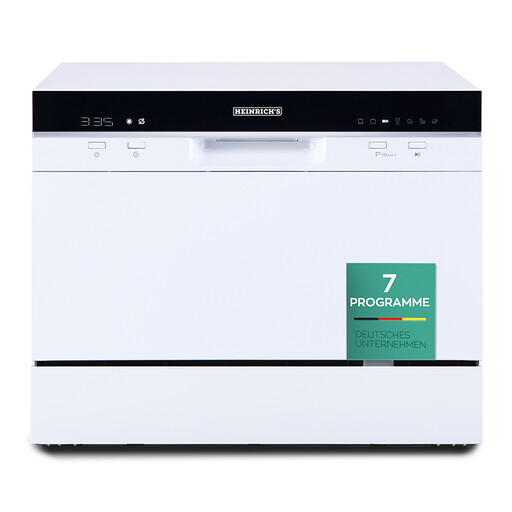
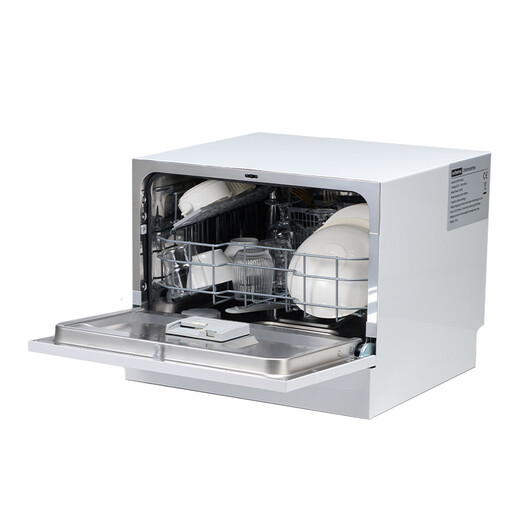
Heinrich's HTG 8840 Weiss tabletop dishwasher
An option to compare if you want to wash several place settings per cycle and have room for the stated connections.
The product information lists six place settings, seven programmes and a water connection with a 1500 mm inlet hose and a 1720 mm drain hose.
The product title lists 47 dB. Check that the hoses and connections will fit in your chosen location.
Joybuy
 No image available
ochama countertop dishwasher, six standard place settings
This model is worth comparing if six standard place settings and a short programme suit your washing-up routine.
The product information lists six standard place settings and a 30-minute quick programme. The product title mentions a delay start of up to 24 hours and eight functions.
Check the dimensions and connection method in the product information for the place where you plan to use the machine.
Joybuy
 No image available
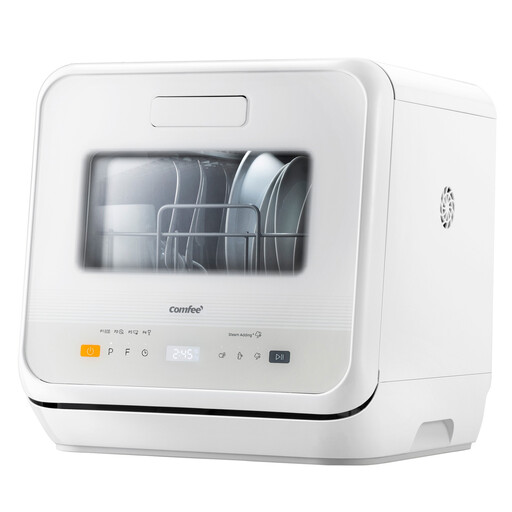
Comfee' CDWMTO201D(W) countertop dishwasher
Worth considering if you’d rather add water manually at your chosen location than rely solely on a permanent water supply.
The product title lists a built-in 5-litre water tank and 6+3 programmes. The product information mentions both manual filling and a tap connection.
Bear in mind that the tank needs to be filled by hand. Also check how the machine will be connected and drained at your chosen location.
Joybuy
 No image available
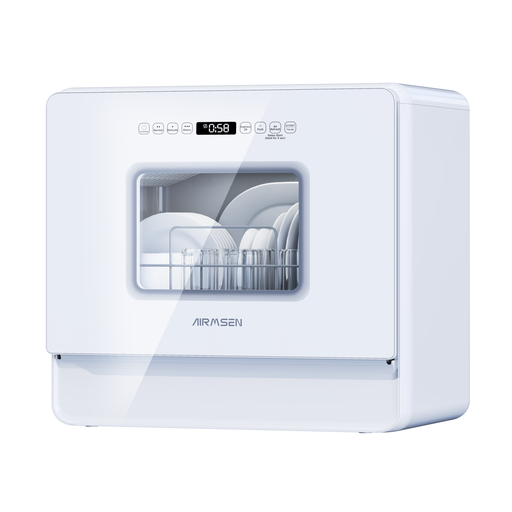
AIRMSEN A01 slim countertop dishwasher
This model may suit you if you’re looking for a slim tabletop dishwasher and a capacity of five place settings works for your washing-up routine.
The product information lists a built-in 5-litre water tank and room for plates up to 300 mm when the upper rack is removed.
The maximum plate size therefore depends on the rack layout. Check that removing the upper rack works for the items you want to load.
Joybuy
 No image available
AIRMSEN portable countertop dishwasher, four place settings
A smaller load may suit you if you have only a little everyday crockery to wash per cycle and a built-in tank is important to you.
The product information lists four place settings and a built-in 5-litre water tank. In tank mode, the waste water drains through a hose into a container, according to the product information.
So plan not only for the water supply, but also for a suitable place for the container.
Joybuy
Frequently asked questions
Is the number of place settings enough to tell whether your workshop washing-up will fit?
No. The number of place settings doesn’t tell you whether your larger crockery or cookware will fit in the rack. Inventum recommends measuring the diameter of your plates. Also count bowls, glasses and cutlery per cycle, and check larger items separately.
Can you use a countertop dishwasher without a permanent water connection?
It depends on the exact model. Check the manual to find out how clean water is supplied and where waste water drains. The Klarstein Amazonia Nano product description isn’t clear enough to confirm that it can be used without a tap.
Is a mini dishwasher automatically cheaper to run?
No. Compare the energy label consumption with the number of cycles you’ll need for your load. The European Commission explains the label information for eco programmes; Milieu Centraal advises against compact mini dishwashers on environmental grounds.
How can you keep the machine suitable for repeated use during a workshop?
Scrape off food scraps, don’t stack crockery and keep the spray arms clear. Consumentenbond offers these tips and says pre-rinsing is usually unnecessary. Check the manual for filter cleaning and maintenance.
Do food safety rules apply to a cookery workshop?
If you prepare, process or sell food as a food business, the NVWA says you must follow an HACCP food safety plan or an applicable approved hygiene code. The term ‘cookery workshop’ alone doesn’t make it clear whether your activity falls under these rules. A dishwasher or a programme labelled ‘hygiene’ doesn’t by itself show that such a plan is being followed.


