
Space planner
You want to wash breakfast bowls every day and need to check whether the appliance, its open door and the hoses will fit on your worktop.


First, measure the available space, room for the door to open and your own bowls; then choose based on the water supply and drainage. A model with a water reservoir can work without a fixed water supply, but you’ll need to fill it by hand and find a way to dispose of the wastewater. If you want to wash more dishes at once, a tabletop model with a capacity of six place settings might suit you, but Inventum and Tomado don’t guarantee that your bowls will fit in the rack. For just a few bowls, handwashing with a small amount of hot water is another option, as Milieu Centraal points out.
You want to wash breakfast bowls every day and need to check whether the appliance, its open door and the hoses will fit on your worktop.
You’re looking for a way to fill the machine by hand and want to work out in advance where the wastewater can be safely drained.
You’d rather wash bowls, cups and cutlery together, and have the space and connections for a tabletop model.
First, measure your worktop, the space needed for the door to open and your own bowls. Then compare how the machine is filled, its usable capacity and its consumption based on the amount of washing-up you actually do.
| What to consider | What to look for | Who should pay particular attention? |
|---|---|---|
| External dimensions and fit | Measure the space, room for the door to open and your bowls; check the rack layout and the dimensions of the crockery for the exact model. | If worktop space is limited, you’ll want to know whether both the machine and your bowls will fit. Around 36% of consumers put fit first. |
| Water supply and drainage | Check how the machine is filled, which hoses are needed and where you can safely drain the wastewater. | If you don’t have a fixed water supply, manual filling may be important, but you’ll also need to arrange the drainage. Around 29% of consumers make installation their main priority. |
| How much washing-up will fit in each load? | Count the bowls, cups and cutlery you want to load together; don’t treat the place-setting capacity as a guarantee that they’ll fit. | If you want to wash several sets of breakfast dishes in one load, focus on the rack and capacity. Around 21% of consumers prioritise the amount of washing-up per load. |
| Consumption for small loads | Compare the EU energy label figures, including kWh per 100 eco cycles, water per cycle, capacity and programme duration; take your own load size into account. | If you only have a few bowls to wash, you’ll want to know whether running the machine is worthwhile compared with washing by hand using a small amount of hot water. Running costs are the main concern for around 14% of consumers. |
The European Commission explains that the EU energy label provides information including energy consumption per 100 eco cycles, water consumption per cycle, capacity and programme duration. These figures don’t tell you exactly how much a half-load of your breakfast bowls will use. Milieu Centraal says that handwashing is usually more economical if you use a small amount of hot water and don’t leave the tap running.
A stated place-setting capacity doesn’t guarantee that wide or deep bowls will fit in the rack.
Measure your bowls and check the rack layout. A stated maximum plate diameter doesn’t guarantee that bowls will fit.
A model with a water reservoir can be filled by hand, but the wastewater still needs to go somewhere after the wash.
Before you buy, plan both how you’ll fill the machine and a safe route for the drain hose.
A compact machine that’s often run for just a few bowls isn’t automatically the most economical choice. Milieu Centraal says that handwashing is usually more economical if you use a small amount of hot water and don’t leave the tap running.
Compare machine figures on the same eco-cycle basis and think about how full you usually load the machine; washing by hand in a washing-up bowl can be an alternative for a small amount of washing-up.
The VVW5520 is a tabletop model for anyone looking for a permanent set-up and a rated capacity of six place settings.
The TDW5501W is designed for a set-up with a fixed water supply and drainage.
The R01 is a model with a water reservoir for anyone who doesn’t want to use a fixed water supply.
These Joybuy products are countertop or tabletop dishwashers designed for compact set-ups. Several product titles mention a built-in water tank; check how each model is filled, how it drains and how much space is available.
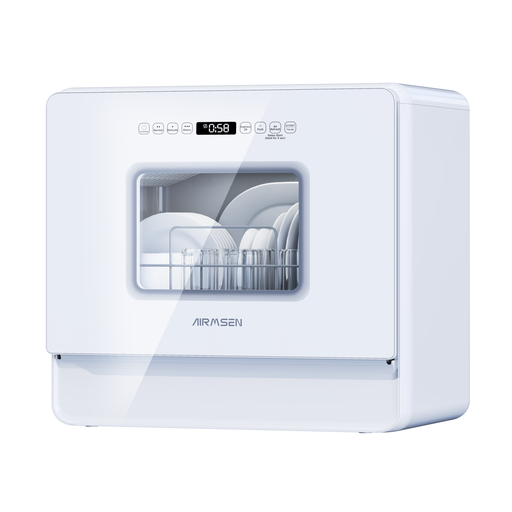 No image available
A built-in tank and a two-level rack are features worth comparing if you want to wash dishes on your worktop; check whether your bowls will fit in the rack.
The product title mentions a 5 L tank, two rack levels and five wash programmes.
 No image available
The product title mentions a built-in tank and no need for plumbing; check where the wastewater can go and whether the machine will fit on your worktop.
The title lists a 5 L tank, 5+1 wash cycles and a double-tempered-glass door.
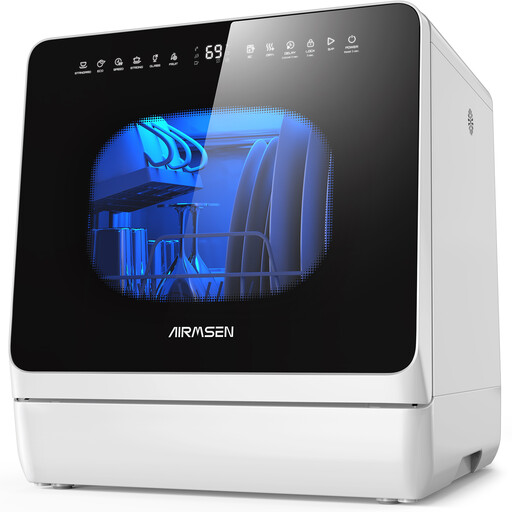 No image available
The product title says no connection is needed; check how to fill the machine and where it can drain in your kitchen.
The title lists eight wash programmes, an integrated water softener, a delay start and a child lock.
 No image available
The stated width can help you compare the available worktop space; also measure the depth and the space needed for the door to open.
The product title mentions a 5 L tank, nine wash programmes and dimensions of 37 × 50 cm. The title lists energy class D.
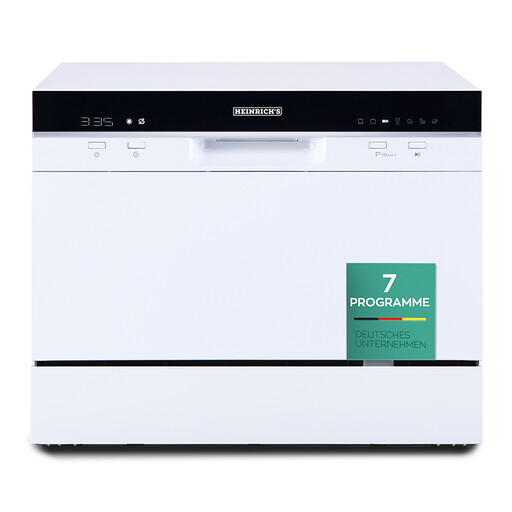 No image available
This model is worth comparing if you’d rather wash your dishes in a larger load; check whether your bowls will fit in the rack and what kind of water supply it needs.
The product title lists six place settings, seven programmes, a delay start of up to 24 hours, automatic door opening, 47 dB and energy class D.
Yes, if you choose a model that can be filled by hand and have a safe place to drain the wastewater. HAVA lists a built-in 5 L tank for the R01; Tomado says the TDW5501W connects to a fixed water supply and drain.
Not necessarily. A place setting is a standard amount of crockery; measure your bowls and check the rack layout of the exact model. Tomado’s stated Ø 25 cm measurement applies to plates and doesn’t guarantee that deep bowls will fit.
Scrape food scraps off the dishes, and check and clean the filter regularly. Consumentenbond also recommends cleaning the spray arms if they become blocked; follow your model’s manual for instructions on removing and cleaning them.
No. Milieu Centraal says handwashing is usually more economical if you use a small amount of hot water and don’t leave the tap running. Compare machine figures on the same eco-cycle basis and take into account how full you actually load the machine.
According to the Dutch government, there is no set statutory guarantee period in the Netherlands; you are, however, entitled to a product that meets the terms of your purchase. If a product is faulty, the retailer is your point of contact, even if a separate manufacturer’s guarantee has expired.