
Workshop leader with lots of breakfast bowls
You want to wash several bowls after a group breakfast or cooking session. So look at the usable rack space and how many loads you’ll need, rather than focusing only on the number of place settings.


Start by working out how many bowls need to be clean before the next workshop session, then check whether they actually fit in the loaded rack. Six-place-setting countertop models are worth comparing if you have fixed water connections; a tank model offers a different placement option, but you’ll need to fill it by hand and arrange a way to drain the water. A stated place-setting capacity or short cycle doesn’t prove how many of your bowls will be clean and dry in the time available.
You want to wash several bowls after a group breakfast or cooking session. So look at the usable rack space and how many loads you’ll need, rather than focusing only on the number of place settings.
You can’t necessarily rely on a fixed water supply, and you’ll also need to decide where the waste water can be drained safely. A tank model needs to be placed differently from one with fixed connections.
Check how your bowls fit in the rack of the model you’re considering. A stated plate size or place-setting capacity alone won’t tell you whether your breakfast bowls will fit.
Choose this option: if there’s a suitable water supply and drain, and you want to wash several bowls per session. Inventum and Tomado list six place settings for their respective models.
Bear in mind: the connections limit where you can place the dishwasher, and the place-setting figure doesn’t guarantee that deep bowls will fit.
Choose this option: if there’s no fixed water supply at the workshop venue and you can plan for smaller loads. Daan Tech lists an integrated 3,9-litre tank and capacity for three place settings for Bob.
Bear in mind: you’ll need to fill the tank yourself and still arrange a suitable way to drain the used water.
| What to consider | What should you check? | Who this matters most to |
|---|---|---|
| Usable capacity | Count the bowls, cups and cutlery you need for each session, then try arranging them in the rack. Inventum and Tomado list six place settings; Daan Tech lists three for Bob. A place-setting figure doesn’t mean that the same number of deep bowls will fit. | I want to fit enough bowls in at once before the next workshop session; around 36% of consumers prioritise usable capacity per load. |
| Water and placement | Check the available water supply, drain, surface and power socket against the instructions. Tomado specifies fixed water inlet and drainage connections for the TDW5501B; with the Daan Tech Bob, the tank replaces the fixed water supply, but not the drain. | At a venue without obvious connections, I want to know how filling and draining will work in practice; around 29% of consumers prioritise the connections available. |
| How well the bowls fit | Measure the diameter and height of your bowls, then check that they fit in the loaded rack without touching each other or obstructing the spray arm. Tomado lists Ø 25 cm for plates; this doesn’t confirm that deep bowls will fit. | If my bowls are large or deep, I want to check that they fit in the rack before buying; around 21% of consumers choose mainly based on how well their own bowls fit. |
| Turnaround time and consumption | Compare programme duration and consumption on a like-for-like basis, and allow for the number of loads you’ll need. The EU energy label includes consumption per eco cycle and programme duration; a short cycle doesn’t prove that your dishes will be clean and dry in time. | When I need the bowls again quickly, I weigh up the wait against the consumption of all the cycles needed; around 14% of consumers focus mainly on how soon items are ready to use again and consumption per usable load. |
A place setting refers to a standard set of tableware. The shape and height of your bowls also affect how many will actually fit in the rack.
Try your workshop bowls in the actual rack rather than comparing place-setting figures alone.
A tank can replace a fixed water supply, but you’ll still need to drain the used water safely.
Before you buy, decide where you’ll fill the tank and where the drain hose can release the water.
Eco programme figures and short-cycle figures aren’t necessarily comparable on a like-for-like basis. The number of loads also affects total waiting time and consumption.
Compare programme figures on the same basis and allow for the number of cycles your workshop load will need. The EU energy label includes information about eco programmes.
The VVW5520 is a freestanding model with capacity for six place settings. It’s worth comparing if you want to fit several items from your workshop in a countertop dishwasher.
The TDW5501B is a countertop model for six place settings that needs a fixed water supply and drain.
Bob is a compact tank model for smaller loads when there’s no fixed water supply.
The Amazonia 6 is another six-place-setting model to compare for rack space and placement.
These countertop dishwashers with built-in water tanks may suit workshop venues without a fixed water supply. Check how you’ll need to arrange drainage and any water connections for each model at your venue.
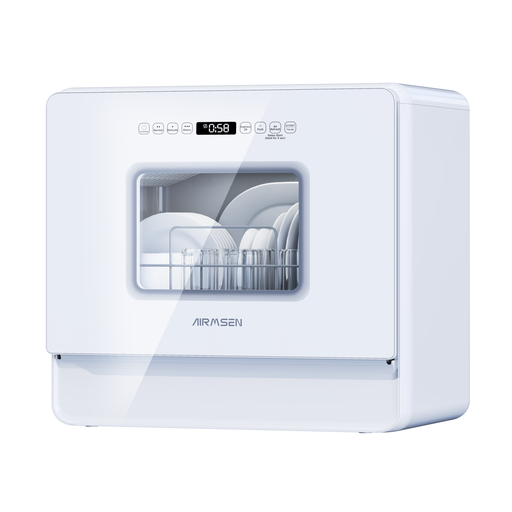 No image available
The tank version is an option for workshop venues without a fixed water supply; check how you’ll arrange drainage on site.
Built-in 5 l water tank; 2-level rack; 3 spray arms; 12-hour delay start.
 No image available
The built-in tank lets you fill the dishwasher when there’s no fixed water supply; check where the waste water can drain.
Built-in 5 l water tank; 5+1 wash programmes; double-tempered-glass door.
 No image available
The built-in tank is useful when there’s no direct water supply at your workshop venue; check the drainage requirements and whether your bowls will fit.
9 wash programmes; stated dimensions: 37 × 50 cm; built-in 5 l water tank.
 No image available
The stated capacity is three place settings, so check how many loads your workshop will need using your own bowls. The product information lists both a tank and a direct water connection.
7 programmes; delay start of up to 24 hours; stated noise level 56,3 dB; energy class C.
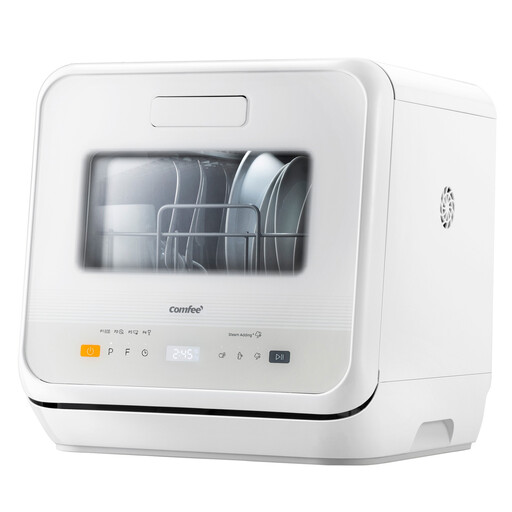 No image available
The product name mentions a built-in tank and a tap connection. Check which connection method suits your workshop venue, and secure the drain hose as instructed.
Built-in 5 l water tank; 6+3 programmes; energy class D.
Measure their diameter and height, then check them in the loaded rack of the exact model. A place-setting figure refers to standard tableware; Tomado’s stated Ø 25 cm applies to plates and doesn’t confirm that deep bowls will fit.
It depends on the model: Daan Tech describes Bob as a model you fill using its built-in tank, while the Tomado TDW5501B is designed for fixed water inlet and drainage connections. Even with a tank model, you’ll need to arrange a suitable way to drain the used water.
Follow the instructions for the exact model. For the TDW5501B, Tomado specifies, among other things, a sturdy, level surface and warns against using an extension lead or multiway adaptor. Remove food scraps; Milieu Centraal says this helps prevent the filter from clogging and that pre-rinsing is generally unnecessary.
For household dishwashers, compare the EU label figures for kWh per 100 eco cycles, water per eco cycle and programme duration. Also allow for the number of loads your workshop needs: consumption per cycle alone doesn’t determine total consumption.
No. A programme name doesn’t prove that a particular household appliance is suitable for a commercial food process. If the workshop involves food preparation, processing or sales as a food business, the NVWA requires you to work with an HACCP food safety plan or an applicable approved hygiene code. This commercial requirement doesn’t necessarily apply to a workshop that is purely private.