
If you iron several heavily creased garments
After a weekend away, you regularly iron several cotton garments and would rather not keep topping up the water.


A steam generator could be a good fit if you regularly tackle several creased, ironable cotton garments after a trip and have room for a base unit. For the occasional waistcoat, a standard steam iron may be more practical; the Consumentenbond lists having little ironing to do and limited storage space as reasons to consider one. Always check the care label for the entire waistcoat: a cotton outer fabric doesn’t mean the lining or details can be ironed or steamed too.
After a weekend away, you regularly iron several cotton garments and would rather not keep topping up the water.
You want to tidy up the cotton outer fabric, but first check whether the care label allows you to iron or steam the lining and details.
You usually iron just one garment, so you’ll want to weigh the extra steam from a generator against the time it takes to set up and the storage space it needs. The Consumentenbond lists having little ironing to do and limited storage space as reasons to consider a standard steam iron.
Choose this if: you regularly iron several garments or tackle stubborn creases, and have room for a base unit.
Bear in mind: it’s a larger appliance, needs more storage space and takes time to set up.
Choose this if: you usually iron one or a few waistcoats and want a handheld appliance that’s easier to store.
Bear in mind: the water tank is smaller, so you may need to refill it more often when ironing several garments.
Choose this if: you mainly want to freshen up a hanging garment and the care label allows steaming.
Bear in mind: steaming isn’t a proven alternative to pressing in a sharp shape or tackling stubborn creases in cotton.
| What to consider | What to look for | Who will find this important? |
|---|---|---|
| Creases in cotton | Compare the continuous steam output with the steam boost; the latter doesn’t describe steam production throughout the whole ironing session. | If getting stubborn creases out is my priority, I compare both figures before choosing a model. Around 36% of consumers prioritise crease removal. |
| Lining and details | Check the garment’s care label before choosing a temperature or using steam; an automatic setting doesn’t replace this check. | If my waistcoat has a lining or details, I want to know what treatment the whole garment can withstand. Around 29% of consumers prioritise protecting the fabric. |
| Quick ironing and storage | Compare the stated heat-up time and dimensions with the space you have for ironing and storage. | If I usually only touch up one waistcoat after getting home, I don’t want any more set-up than necessary. Around 21% of consumers prioritise speed and compact storage. |
| Descaling | Check the care instructions for the exact model and make sure its recommended routine suits you. | I want to know in advance what descaling steps the model requires and whether they’re easy to carry out. Around 14% of consumers prioritise easy maintenance. |
A steam boost isn’t the same as the continuous steam output during ironing. If you only use the appliance occasionally, heat-up time and the size of the appliance matter too.
Compare continuous steam, steam boost and the space the base unit takes up separately.
The care label may rule out ironing or steaming, even if the waistcoat’s outer fabric is cotton.
Read the care label for the entire garment before using heat or steam.
According to ACM ConsuWijzer, a manufacturer’s or seller’s warranty is in addition to your statutory rights.
Keep your proof of purchase and contact the seller if there’s a fault.
The models mentioned have different steam specifications and maintenance features. Always compare the exact model and the space its base unit requires.
The CareStyle 7 Pro IS7286BK and the more compactly described UpStyle 2 IS2735GR are different models to weigh up in terms of space and use.
Philips describes the PerfectCare 8000 Series, including the PSG8300/80, as having automatic steam control that responds to movement and OptimalTEMP for ironable fabrics.
These steam generators are worth comparing for ironing creased cotton garments. Check your waistcoat’s care label and compare the features with your ironing routine.
 No image available
A model to compare if you’re looking for a steam generator for creased, ironable garments.
The product name lists a power rating of 2400 W, a steam boost of 350 g and a 1,4-litre water tank.
Check the care label for the entire waistcoat before ironing or steaming it.
 No image available
A steam generator to compare if you want to tackle creased cotton garments after a trip.
Check that this model’s features and dimensions suit your ironing space and storage area.
Follow the care label for the whole waistcoat, including its lining and details.
 No image available
This model is worth comparing if you’re considering a steam generator for tackling creases.
Check the model’s instructions for use and maintenance before adding the base unit to your routine.
Only iron or steam the waistcoat if the care label allows it.
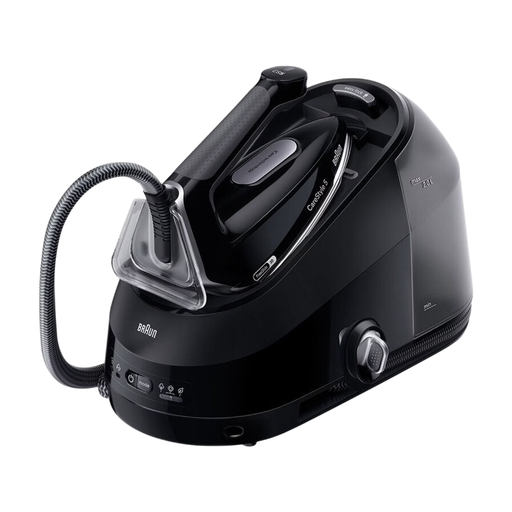 No image available
A model to compare if you’re looking for a steam generator to tackle more stubborn creases in ironable garments.
Check the exact model’s manual for operating and maintenance instructions.
The garment’s care label determines how the entire waistcoat can be treated.
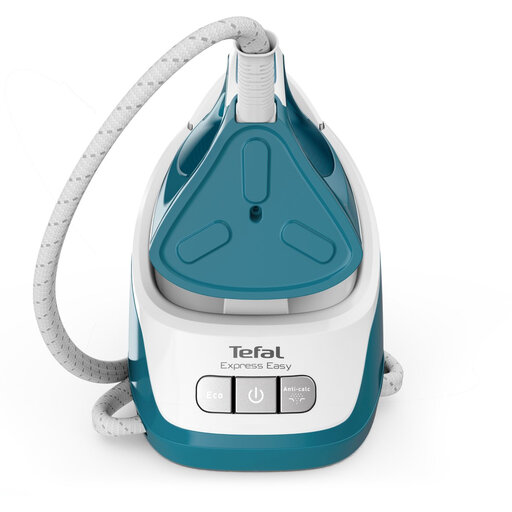 No image available
This steam generator is worth comparing if you regularly iron several garments.
The product name lists 2400 W, a steam boost of 350 g and a removable 1,7-litre tank.
Check that you have room for the base unit and follow the care label for the entire waistcoat.
Don’t assume you can just because the outer fabric is cotton. First check the care label for the entire garment: it may say that ironing or steaming isn’t allowed. Don’t treat a delicate lining or embellishment as though it has the same care instructions as the outer fabric.
Place the appliance on a suitable, stable surface and follow the instructions for the exact model when filling it, heating it up and choosing settings. Also compare the dimensions of the base unit with your ironing and storage space.
No, the descaling method varies by model. Tefal, for example, describes a procedure for models with a scale collector; follow your appliance’s manual rather than using a generic method.
Yes. According to ACM ConsuWijzer, statutory rights apply in addition to a seller’s or manufacturer’s warranty. If a product breaks sooner than you could reasonably expect under normal use, the seller must resolve the issue in line with the applicable rules; there isn’t one fixed time limit that applies to every appliance in the Netherlands.
For appliances covered by the relevant EU product rules, the manufacturer uses a CE mark to declare that the product meets those requirements. According to the Dutch government’s Ondernemersplein and the European Union’s Your Europe, the mark doesn’t tell you how well an appliance irons cotton waistcoats.