If you only press a few waistcoats now and then and storage space is limited, a nimble steam iron is an obvious choice. Look for a pointed soleplate that lets you work around seams, lapels and buttons. A steam generator is better suited to long, regular ironing sessions if you have room for the base and a suitable ironing board. Always follow the care label on each waistcoat, and take the lining and interfacing into account too.
Which type is right for you?
A waistcoat with delicate details
You want to keep seams and lapels neat, and may also need to take account of a lining or interfacing made from a different material. GINETEX explains that ironing instructions depend on the garment care label; Sewing & Craft Alliance describes how to press pieces with interfacing carefully.
Occasional pressing with limited space
You press a few waistcoats at a time and want an appliance that’s easy to set up and put away. The Consumers’ Association recommends a steam iron if you do little ironing or have limited storage space.
Regular, lengthy ironing sessions
You press other laundry as well as waistcoats and want to refill the water less often, with space for a larger set-up. The Consumers’ Association discusses a steam generator as an option for longer ironing sessions.
What should you look for when choosing?
Standard steam iron
Choose this if: you press a few waistcoats at a time, have limited storage space or want to work precisely around lapels, buttons and seams.
Bear in mind: the water tank is in the handle, which can make it heavier and mean you need to refill it sooner during long sessions.
Steam generator
Choose this if: you regularly press lots of waistcoats or other laundry in one go, and have room for the base.
Bear in mind: the complete set-up takes up more space and may require a suitable, sturdy ironing board. Extra steam doesn’t change the limitations of the lining or interfacing.
| What to consider |
What should you look for? |
Who is this important for? |
| Shape and delicate details |
Read the care label for the whole garment; check the heat and steam settings and whether the soleplate tip can reach narrow details. |
If I want to protect seams, lapels or a delicate lining, I need to be able to adjust how I treat the whole waistcoat. Around 36% of consumers are most concerned with preserving shape and fabric. |
| Compact use |
Measure the space available for storage and set-up, then compare the handle weight and tank size. |
For a few waistcoats, I want to be able to grab the appliance quickly and put it away neatly afterwards. Around 29% of consumers prioritise short sessions and limited space. |
| Long sessions |
Check the tank capacity, space for the base and whether your ironing board is suitable. |
If I press a lot of laundry in one go, I want to take fewer breaks to refill the water. Around 21% of consumers prioritise long sessions. |
| Limescale and maintenance |
Find the manual for the exact model and see how its cleaning or limescale-collection function works. |
I want to know in advance what maintenance the appliance needs and how to do it. Around 14% of consumers make ease of maintenance their top priority. |
Common mistakes when choosing
-
Treating every part as if it were made from the same fabric
A cotton outer fabric doesn’t tell you what treatment the lining, interfacing or decorative details can withstand. Follow the care label for the whole waistcoat.
Start gently on an inconspicuous area and press shaped details locally by lifting and lowering the iron. For interfaced areas, Sewing & Craft Alliance recommends using a suitable pressing cloth and following the manufacturer’s instructions.
-
Choosing a steam generator just for its steam output
For a few waistcoats, the larger base and the space it needs may matter more than having to refill less often.
First decide how long you iron for in each session, then check that the base and ironing board will fit in your utility room.
-
Assuming a maintenance function means maintenance-free use
Cleaning steps vary by model and appliance type. Instructions for a steam iron aren’t necessarily suitable for a steam generator.
Before buying, check the manual for the exact model and follow its instructions for cleaning and descaling.
Brands to compare
Philips
Azur steam irons are an all-in-one option, while PerfectCare steam generators are designed for those with room for a separate base.
- Philips says the Azur DST8070/80 has one temperature setting and automatic steam. For the PerfectCare PSG8300/80, Philips lists a 1,4-litre tank.
- These model specifications don’t show which appliance works best on a waistcoat with a particular lining or interfacing.
Tefal
Smart Protect Plus is an all-in-one iron, while Freemove Power is an option if you’re looking for a cordless iron.
- Tefal lists up to 40 g/min of continuous steam and automatic shut-off for the FV6870E0.
- The cordless FV6670E0 needs to be used with its base, which also takes up space.
Braun
The TexStyle range includes all-in-one steam irons with features such as iCare and turbo mode.
- Braun lists 60 g/min of steam, a limescale collector and automatic shut-off for the SI9682DB.
- A Braun comparison of the limescale collector relates to a different Braun model and doesn’t prove a benefit for all waistcoats.
Rowenta
Steamforce is another option to consider if you’re comparing conventional steam irons with targeted steam functions.
- The Dutch manufacturer’s page identifies model DW9240D1 and provides a manual and maintenance information.
- Before choosing, check the instructions for the exact model and the treatment allowed by the waistcoat care label.
Joybuy products
This selection includes steam generators for longer ironing sessions and a handheld steam iron for smaller or more targeted tasks. Follow the care label on each waistcoat.
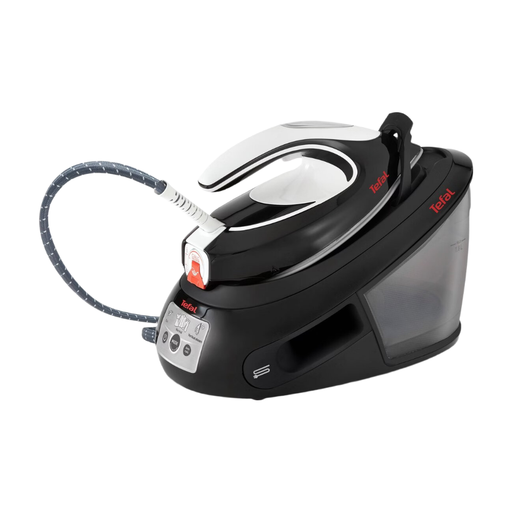 Image unavailable
Tefal SV8055 Express Anti-Calc steam generator
A steam generator for regular, longer ironing sessions; make sure you have room for the base.
The product name lists a pressure of 6,5 bar.
View at Joybuy
 Image unavailable
Philips PerfectCare Compact Essential GC6842/30
A steam generator for longer sessions; check that you have room for the base.
The product information lists a 1,4-litre tank and a temperature setting to suit the garment label. ECO mode is listed for up to one hour of use.
View at Joybuy
 Image unavailable
Tefal SV8026 steam generator
A steam generator for pressing lots of laundry in one go; bear in mind the space needed for the base.
View at Joybuy
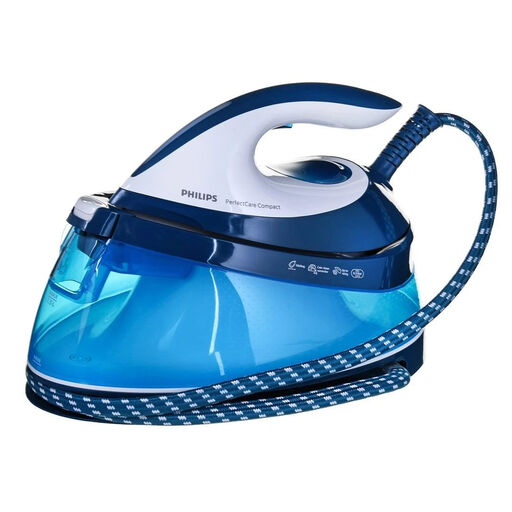 Image unavailable
Philips GC7840/20 PerfectCare steam generator
A steam generator for longer sessions; check in advance that you have space for the base.
The product name lists 2400 W, a 400 g steam boost and a 1,5-litre water tank. The product information mentions vertical steaming and OptimalTemp.
View at Joybuy
 Image unavailable
Xiaomi handheld steam iron BHR9034EU
A handheld steam iron for those who want to control heat and steam manually; check that the settings suit the garment care label.
The product information lists a weight of 0,77 kg and a vertical steaming function.
View at Joybuy
Frequently asked questions
Can I automatically press a cotton waistcoat on the highest cotton setting?
No. Don’t base the setting on the outer fabric alone. Follow the care label for the whole garment and take the lining and interfacing into account. GINETEX distinguishes between ironing symbols for a maximum of 200 °C, 150 °C and 110 °C; when the label shows 110 °C, iron without steam.
How can I press seams and curved areas without flattening their shape?
Lift and lower the iron onto each area instead of sliding it back and forth with pressure. First test the heat and moisture carefully on an inconspicuous area; a suitable pressing aid can help with curved seams.
How do I maintain a steam iron?
Follow the manual for the exact model. Philips describes different cleaning procedures for its steam irons; don’t automatically apply them to a steam generator or an appliance from another brand.
Is the manufacturer’s warranty the only protection if the iron breaks?
No. In the Netherlands, statutory guarantee rights apply alongside any manufacturer’s warranty, and the retailer is your point of contact if a product is faulty. There is no fixed statutory warranty period of two years; what you can expect depends, among other things, on the product and the circumstances.


