What should you look for when choosing?
For a single ironing session, a compact steam iron is often more practical. A steam generator is better suited to longer sessions if you have room for the separate tank and ironing set-up.
Steam iron
Choose this if: your ironing sessions are short and you want to store the appliance away easily.
Keep in mind: the water tank is inside the iron and is smaller than a steam generator’s, so you’ll need to refill it sooner during longer sessions.
Steam generator
Choose this if: you regularly iron a larger pile of clothes or lots of stubbornly creased fabric, and have room for the separate tank.
Keep in mind: the tank and appliance take up more space. Also check that your ironing board can support the complete set-up.
Garment steamer
Choose this if: you mainly want to freshen clothes and a crisp, smooth finish isn’t your main priority.
Keep in mind: according to tests by the Consumers' Association, some garment steamers don’t smooth cotton effectively. This compares types of appliance; it isn’t a verdict on every model.
| What to consider |
What to look for |
Who is this relevant to? |
| Smoothing cotton |
Compare adjustable continuous steam and a steam boost separately. Check whether you can also iron without steam. |
I mainly want to remove creases from my cotton waistcoat and match the treatment to its care label. Around 36% of consumers prioritise a smooth finish. |
| Space and capacity |
Measure the space where you store your appliance and ironing board. Compare the built-in or separate tank with how long you iron at a time. |
I usually iron one or a few items of clothing and have little room to store an appliance. Around 29% of consumers prioritise space and shorter ironing sessions. |
| Protecting the waistcoat and its finish |
Follow the ironing symbol for the whole garment. GINETEX lists symbols for a maximum of 200 °C, 150 °C and 110 °C without steam. |
I want to take the lining, buttons and finish of my waistcoat into account, not just the cotton outer fabric. Around 21% of consumers prioritise this kind of protection. |
| Safe use and care |
Check whether each model has an automatic shut-off function and follow the care instructions in the manual. Don’t connect extension leads to one another or overload a multi-socket extension lead. |
I share my living space and want to use and care for my iron responsibly. Around 14% of consumers prioritise safe use in shared spaces. |
Steam irons at Joybuy
These Joybuy products are steam irons for anyone ironing a cotton waistcoat. Follow the care label for the whole garment with every model.
 No image available
2400 W handheld steam iron
A handheld steam iron for ironing a waistcoat; first check which treatments the garment’s care label allows.
The product name lists a non-stick soleplate, automatic cleaning and an anti-drip system.
View at Joybuy
 No image available
Tefal Easygliss Plus FV5736
A steam iron to consider for a waistcoat whose care label allows steam ironing.
Check the instructions for the whole garment before setting the temperature or steam.
View at Joybuy
 No image available
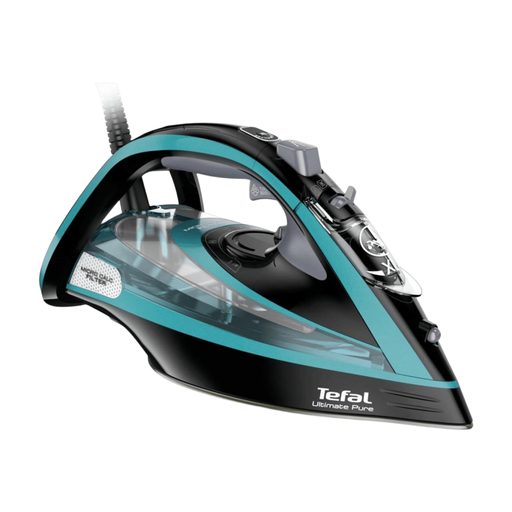
Tefal Ultimate Pure FV9844
A steam iron for anyone who wants to take care when ironing around the seams and details of a waistcoat; the care label determines which treatments are allowed.
Only use steam if the care symbol for the whole garment allows it.
View at Joybuy
 No image available
Philips 1000 Series DST1030/20, 2000 W
A steam iron to consider if you want to compare the settings for ironing with or without steam against the instructions on your waistcoat’s care label.
The stated power is 2000 W.
View at Joybuy
 No image available
Braun FreeStyle 5 SI5037
A steam iron to compare if you’re looking for a model to iron a waistcoat with detailed features.
Check the model instructions and care label before using steam.
View at Joybuy
Frequently asked questions
Can I iron every cotton waistcoat on the highest setting?
No. Follow the ironing symbol for the whole garment, not just the fibre name of the outer fabric. GINETEX lists symbols for a maximum of 200 °C, 150 °C or 110 °C without steam; a crossed-out iron symbol means ironing isn’t allowed.
How can I stop my waistcoat staying damp after steam ironing?
Only use steam if the care label allows it, then finish ironing without steam to dry the garment. The Consumers' Association recommends leaving the garment to cool while dry; too much steam can make the fabric and ironing board damp.
What water should I use, and what maintenance is needed?
The Consumers' Association says steam irons and steam generators are designed for tap water, but follow the instructions for the exact model, particularly if you have softened water. Descale the appliance as directed; anti-scale features don’t eliminate the need for maintenance. Don’t use water containing perfume or other additives.
What should I bear in mind when using an iron in shared student accommodation?
Don’t connect extension leads to one another or overload a multi-socket extension lead. This is advice from the Fire Service; also follow the safety instructions for the iron you choose.
If my iron breaks, do I need to contact the manufacturer myself?
For a claim under the Dutch statutory guarantee, contact the seller if the product is faulty. According to the Dutch government, there is no fixed statutory guarantee period of two years: what you can expect depends, among other things, on the product, its price and how it is used. A manufacturer’s guarantee is in addition to this.


