
Someone with space for just one appliance
You want to wash and machine-dry your clothes, but don’t have room for two appliances. That makes the external dimensions and required installation space important.


If you only have space for one appliance and want to machine-dry cotton underwear, a washer-dryer could suit your space constraints. If you can dry it on a washing line, a separate washing machine is still a serious option. First compare the appliance’s external dimensions and installation requirements with its drying capacity. Then check the care label, along with the figures and programme duration for both washing and the full wash-and-dry cycle.
You want to wash and machine-dry your clothes, but don’t have room for two appliances. That makes the external dimensions and required installation space important.
You mainly wash cotton underwear and want to choose a programme that matches the care label, without assuming that the fabric type alone determines a fixed temperature or whether it is suitable for tumble-drying.
You have limited drying space and expect to use a complete wash-and-dry cycle often. Drying capacity, programme duration and energy and water figures are then important points to compare.
A good fit if: you have space for one appliance and want to machine-dry your underwear within the model’s drying capacity.
Trade-off: Consumentenbond notes that a standard washer-dryer can use relatively large amounts of energy and extra water when drying. Compare the figures for the specific model.
A good fit if: you machine-dry your clothes regularly and can fit a suitable model into your available space.
Trade-off: According to Consumentenbond, heat-pump washer-dryers use virtually no extra water for drying. The AEG LWR9506BN4 has a stated maximum depth of 660 mm, so check your available space carefully.
A good fit if: you have a suitable place to hang your underwear and don’t need to machine-dry it.
Trade-off: You’ll need a suitable place to dry your washing after the cycle and will have to hang it up; the washing machine still takes up floor space.
A good fit if: you have suitable space for two appliances and regularly machine-dry larger loads.
Trade-off: Milieu Centraal recommends a separate washing machine and tumble dryer because their combined energy use is lower than that of a washer-dryer. Check that your chosen models can be installed safely and are suitable for your space.
| What to consider | What should you check? | Who is this most important to? |
|---|---|---|
| Will the appliance fit? | Measure the width, height and depth, including the space needed for connections and opening the door. Compare these measurements with the dimensions and installation instructions for the exact model variant. | If you only have one space available, you’ll want to know in advance whether the appliance will actually fit there. Around 31% of consumers give placement their highest priority. |
| A suitable cotton programme | Check the underwear’s care label for washing and drying, and review the programmes on the exact model. | If you mainly wash cotton, you’ll want to choose a programme that suits the care label and level of soiling. Around 25% of consumers prioritise suitability for cotton laundry. |
| Drying capacity | Compare your usual load with the stated drying capacity and check how long a full wash-and-dry cycle takes. | If you want to wash and dry a typical load in one go, drying capacity matters too – not just the maximum washing capacity. Around 25% of consumers mainly choose a washer-dryer to machine-dry clothes without needing a second appliance. |
| Energy and water use, and programme duration | For the same cycle, compare energy use per 100 cycles, water use per cycle, capacity and duration on the label for the exact model variant. | If you often use the dryer, you’ll want to know what a complete cycle uses. If you dry clothes on a washing line, the figures for washing alone are more relevant. Around 19% of consumers give energy and water use their highest priority. |
For the Bosch WNA13400NL, Bosch states a washing capacity of 8 kg and a maximum of 5 kg for a complete wash-and-dry cycle. So a load that fits the washing capacity won’t necessarily fit the drying capacity too.
Choose a load size that matches the stated drying capacity of the exact model variant.
A smaller drying load may mean taking some of the washing out or planning an extra drying cycle.
The EU energy label distinguishes between washing only and a complete wash-and-dry cycle. Consumentenbond points out that a short programme for small loads is not the same as a full cotton wash-and-dry cycle.
Compare the same cycle, capacity and programme duration for the exact models.
Published appliance dimensions vary by model. Connections and installation instructions also affect how much space you’ll need.
Measure the space and check the installation diagram for your chosen model variant before buying.
Bosch lists the WNA13400NL and WNA13400EU as separate model codes. A similar name doesn’t prove that they are the same version.
Check the full model code and the specifications for the model being offered.
The BM5DFT4841A is a freestanding option if you’re looking for a relatively shallow appliance. Beko Netherlands states dimensions of 60 cm wide and 57 cm deep, with a washing capacity of 8 kg and drying capacity of 5 kg.
For the WNA13400NL, Bosch Netherlands states external dimensions of 848 × 598 × 590 mm, with a washing capacity of 8 kg and a drying capacity of 5 kg.
For the GD3R509S0, LG Netherlands states a washing capacity of 9 kg and a drying capacity of 6 kg.
For the LWR9506BN4 heat-pump washer-dryer, AEG states a washing capacity of 10 kg, a drying capacity of 6 kg and external dimensions of 870 × 597 × up to 660 mm.
This selection includes freestanding washer-dryers and compact mini washing machines with a drying function. The mini washing machines are described as suitable for small loads. Before choosing, compare what they’re designed for with the washer-dryers’ capacities in kg.
 No image available
A freestanding washer-dryer that combines washing and drying in one appliance; check whether its drying capacity suits your usual load.
The product name lists a washing capacity of 9 kg, a drying capacity of 5 kg and 1400 rpm.
The drying capacity is lower than the washing capacity.
 No image available
A freestanding washer-dryer for combining washing and machine-drying in one place; make sure your load is within the drying capacity.
The product name lists a washing capacity of 9 kg, a drying capacity of 5 kg and 1400 rpm.
The drying capacity is lower than the washing capacity.
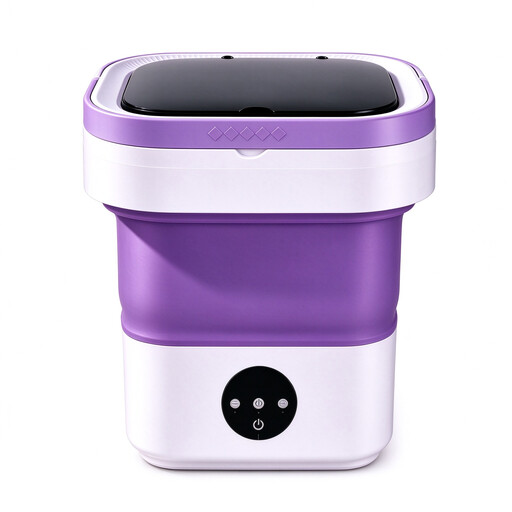 No image available
A compact option for small loads, including underwear according to the product listing; check that its size suits what you want to wash.
The product name lists a capacity of 12 l and a portable drying function.
The air outlet can become hot. Don’t cover it or leave the appliance running unattended.
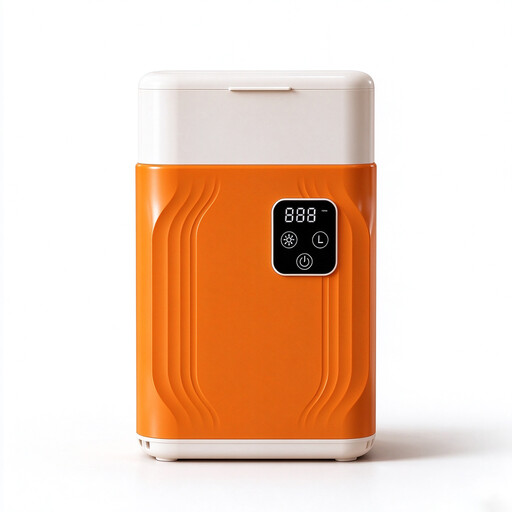 No image available
A compact option for small loads, including underwear according to the product listing; check that it’s suitable for the laundry you have in mind.
The product name lists a foldable mini washing machine with a drying function.
The air outlet can become hot. Don’t cover it or leave the appliance running unattended.
 No image available
A washer-dryer for washing and drying in one place; check the full model specifications and programmes for your cotton laundry.
The product name lists a washing capacity of 8 kg, a drying capacity of 6 kg and 1400 rpm.
No, not just because it’s cotton: choose a programme based on the care label and the level of soiling. Milieu Centraal recommends 60 °C in certain specific hygiene situations, such as when someone in the household has an infectious illness; it’s not a general requirement for all underwear. The eco 40-60 programme is designed for normally soiled cotton that can be washed at 40 °C or 60 °C according to its care label.
Compare the weight of your usual load with the stated drying capacity for the exact model variant. This may be lower than the washing capacity, so don’t rely only on the maximum washing weight.
Follow the manual for your chosen model. Consumentenbond recommends, among other things, a firm, level surface, removing the transit bolts, connecting the water supply and drain correctly, levelling the appliance and using an earthed socket.
Compare the figures for the cycle you’ll actually use: washing only or a complete wash-and-dry cycle. The European Commission says the energy label includes information such as energy use per 100 cycles, water use per cycle, programme duration and noise; check the exact model variant for each figure.
A washer-dryer could suit you if you have space for one appliance and want to machine-dry your washing. If you can dry your underwear on a washing line, a separate washing machine is also an option; you’ll need suitable space for two appliances if you choose separate machines. Milieu Centraal recommends a separate washing machine and tumble dryer because their combined energy use is lower than that of a washer-dryer.