An iron is only suitable if the care instructions for the entire tie allow it to be ironed; the cotton outer fabric alone doesn’t determine this. To reduce creases without creating a sharp crease, you can hang the tie up or steam it gently, if the care instructions allow this. A steam generator is worth considering mainly if you also regularly iron large amounts of other laundry and have space for the appliance.
Who is this choice for?
The cautious tie owner
Wants to remove creases from cotton ties without damaging their shape or potentially delicate lining. Start with the care instructions and compare ironing with steaming without pressure. The Tie Bar recommends steaming rather than ironing its ties to tackle deep creases; this advice doesn’t automatically apply to every tie.
The precision ironer
Wants to adjust the temperature and steam around narrow sections and seams, if ironing is allowed. The appliance can also be used for other items that need ironing. GINETEX explains the maximum treatment allowed by the symbols on the care label.
The ironer with limited storage space
Doesn’t want to store a large setup in the utility room for occasional use, so is comparing a standard steam iron with a compact hand steamer. The Consumers’ Association of the Netherlands (Consumentenbond) cites limited storage space and small amounts of ironing as reasons to consider a standard steam iron.
What should you look for when choosing?
Steam iron with adjustable settings
Choose this option: if the label allows ironing and you also want to treat other items that need ironing with precision.
Bear in mind: pressure from the iron can affect a tie’s shape; a powerful steam boost doesn’t automatically make ironing suitable.
Hang it up or use a hand steamer
Choose this option: if you want to preserve the tie’s rounded shape and don’t need a sharp crease, provided the care instructions allow steaming.
Bear in mind: a hand steamer won’t create a sharp crease, and the care instructions should always take precedence.
Steam generator
Choose this option: if you regularly iron large amounts of other laundry as well as ties, and have room for a separate water tank.
Bear in mind: this larger setup takes up more space and doesn’t remove the risk of damaging a tie with pressure from the iron.
| What to consider |
What should you check? |
Who is this important for? |
| Shape of the tie |
Read the care instructions for the entire tie; check whether ironing and steaming are allowed. |
If I want to preserve the shape and lining, that matters more than creating a sharp crease. Around 36% of consumers give preserving the tie their highest priority. |
| Adjustable settings |
Check the temperature and steam settings for the exact model, and match them to the care label. |
If ironing is allowed, I want to be able to adjust the temperature and steam precisely for narrow sections. Around 29% of consumers prioritise being able to iron precisely. |
| Space and use |
Decide whether you need a sharp crease and how much room you have for the appliance, ironing board and storage. |
For occasional use in a small utility room, I’d rather not store a large setup. Around 21% of consumers prioritise space and convenience. |
| Safety and aftercare |
Check the instructions and features of the exact model, find out who the seller is and check the warranty terms. |
If I want to use the appliance carefully and know who to contact if it develops a fault, safety features and aftercare matter. Around 14% of consumers put these points first. |
Common buying mistakes
-
Choosing the cotton setting based only on the outer fabric
The care instructions apply to the finished tie, not just the outer fabric. The Tie Bar recommends steaming rather than ironing its ties to tackle deep creases.
Read the label before choosing or using an iron. If ironing isn’t allowed, don’t rely on the cotton setting.
-
Assuming a powerful steam boost is safe for every tie
A stated steam boost is a feature of the appliance and, on its own, says nothing about how a tie’s construction will respond to it.
Give priority to the care instructions and the ability to adjust the temperature and steam. Compare steam output mainly if you also iron other laundry.
-
Buying a steam generator just to care for ties occasionally
The Consumers’ Association of the Netherlands (Consumentenbond) associates steam generators more with frequent ironing. If you only have a few ties, the larger setup may take up unnecessary space.
Consider everything you iron, and if you don’t use an iron often, compare hanging the tie up or using a hand steamer too.
-
Assuming a two-year manufacturer’s warranty covers all your rights
According to ACM ConsuWijzer, statutory consumer rights in the Netherlands apply alongside a manufacturer’s or seller’s warranty; there isn’t one fixed statutory end date for every product.
Keep your proof of purchase and contact the seller if there’s a fault to discuss an appropriate solution.
Brands to consider
Braun
The TexStyle 3 SI 3054 is an example of a steam iron with manual temperature control and a precision tip.
- Braun lists a thermostat dial, automatic shut-off, a 270 ml tank and 45 g/min in Turbo mode for the SI 3054.
- These model specifications don’t show that the appliance is suitable for ironing every cotton tie; the care label should always take precedence.
Tefal
The Easygliss Plus FV5736 is an example of a steam iron for anyone who also wants to iron other laundry.
- Tefal lists a continuous steam output of 45 g/min, a steam boost of 220 g/min, an anti-drip feature and automatic shut-off for the FV5736E0.
- The stated steam boost doesn’t prove that ironing is suitable for every tie; check the garment’s care instructions.
Philips
The refurbished STH3020/10R1 hand steamer is an example of an option that doesn’t need an ironing board, for anyone considering steaming without pressure.
- Philips describes this specific model as foldable, with a continuous steam output of up to 20 g/min, and suitable for use without an ironing board.
- A hand steamer won’t create a sharp crease. These specifications apply to the model listed, not automatically to other models in the range.
Rowenta
The Autosteam DW4020D1 is worth considering if you’re looking for a precision tip and ironing is allowed.
- Rowenta lists a precision tip, anti-drip feature, 2300 W power and a 130 g steam boost for the DW4020D1.
- These model specifications don’t establish how the iron will perform on a cotton tie; follow the tie’s care label.
Products on Joybuy
These product options focus on irons and hand steamers for caring for cotton ties. Only use an iron on a tie if its care instructions allow it.
 No image available
2400 W hand steam iron
A handheld model to consider if you’re looking for an iron for home or travel; only use it on a tie if the label allows ironing.
2400 W; non-stick soleplate, automatic cleaning function and anti-drip feature.
View at Joybuy
 No image available
Tefal Easygliss Plus FV5736
Worth considering if you’re looking for a steam iron that you can also use for other laundry; let the tie’s care instructions determine whether ironing is allowed.
Check the temperature and steam settings for the exact model before using the appliance on a tie.
View at Joybuy
 No image available
Xiaomi BHR9034EU hand steamer
A compact handheld model to consider if you’re looking for a smaller appliance; always care for a tie in accordance with its own instructions.
The product name states that it has a lightweight design and dual voltage.
View at Joybuy
 No image available
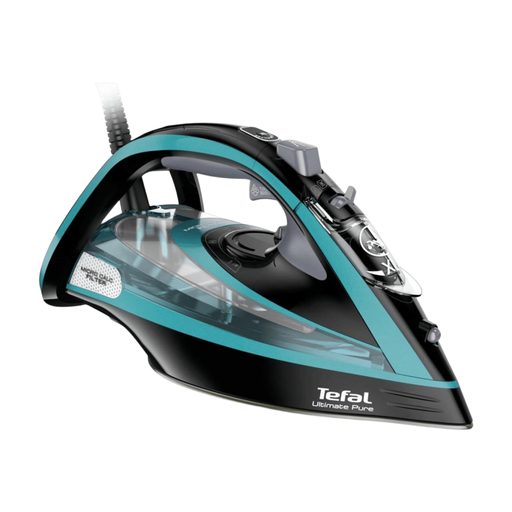
Tefal Ultimate Pure FV9844
Worth considering if you’re looking for a steam iron for more than just ties; always follow the garment’s instructions when treating a tie.
Check the settings and instructions for this model before using the appliance on delicate fabrics.
View at Joybuy
 No image available
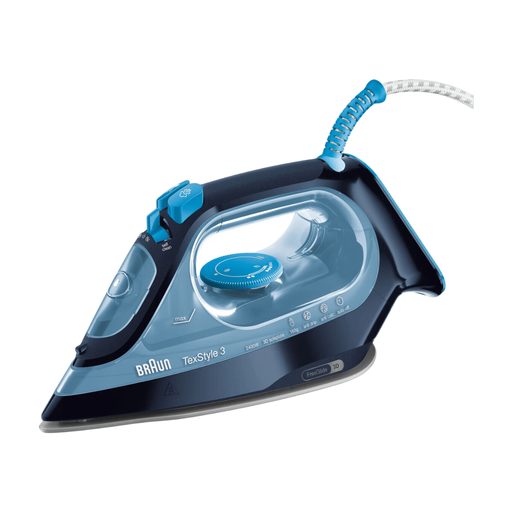
Braun TexStyle 3 SI3050, blue
Worth considering if you’re looking for a steam iron for precise work on narrow sections; first check that the tie’s label allows ironing.
Check the temperature and steam settings for model SI3050 in the product information for this version.
View at Joybuy
Frequently asked questions
Can I iron a cotton tie on the cotton setting?
Not just because the outer fabric is cotton. Follow the instructions for the entire tie: GINETEX explains the maximum treatment allowed. The Tie Bar recommends steaming rather than ironing its ties to tackle deep creases; this brand’s advice doesn’t automatically apply to other ties.
What do the dots on the iron symbol mean?
According to GINETEX, one, two and three dots indicate a maximum of 110 °C without steam, 150 °C and 200 °C at the soleplate respectively. Don’t automatically choose the highest setting just because the outer fabric is cotton; the label on the finished tie sets the upper limit.
How should I store a steam iron after use?
Follow the instructions for the exact model. The usage warning for the Tefal model reviewed says to unplug the appliance and let it cool down completely before cleaning or refilling it; don’t leave an appliance unattended while it’s plugged in.
Does a two-year manufacturer’s warranty mark the end of my rights?
No. According to ACM ConsuWijzer, statutory consumer rights in the Netherlands apply alongside a manufacturer’s or seller’s warranty. If a product breaks during normal use earlier than you could reasonably expect, the seller is responsible for providing an appropriate solution; there isn’t one fixed statutory warranty period for every product.
How long is the cooling-off period for an online purchase in the Netherlands?
According to ACM ConsuWijzer, the statutory cooling-off period for an online purchase of a product usually ends 14 days after delivery. Check the applicable exceptions and the returns policy too.


