
Careful tie owner
You want to freshen up a cotton tie without relying on the outer fabric alone: the care label determines which treatment is allowed. GINETEX explains how to read ironing symbols.


Check the care label first: a cotton outer fabric doesn’t determine which ironing treatment is permitted. If the label allows it, an adjustable steam iron is suitable for pressing a specific area; for light creases, a handheld steamer may be an alternative if steaming is permitted. A steam generator is worth considering mainly if you also iron a lot of other laundry.
You want to freshen up a cotton tie without relying on the outer fabric alone: the care label determines which treatment is allowed. GINETEX explains how to read ironing symbols.
You want to tackle a permitted crease on a narrow garment with precision, so you’re looking for an adjustable temperature and an easy-to-handle soleplate tip. Braun lists these features for the SI 3030.
You mainly want to tackle light creases with minimal preparation, and are weighing up a compact handheld steamer against an iron. Philips says the STH1000/10 can be used without an ironing board.
Choose this if: the care label allows pressing and you want to tackle a crease in a specific area.
Bear in mind: pressing a lined tie requires care; a stated steam output doesn’t prove that the treatment is suitable.
Choose this if: you want to freshen up light creases without pressing the tie with a soleplate, and the label allows steaming.
Bear in mind: steaming doesn’t provide the same focused pressure as pressing for a sharp crease.
Choose this if: ties make up only a small part of a larger weekly ironing load.
Bear in mind: the higher steam output and separate water tank are mainly useful for larger loads. The Consumentenbond says this option is more expensive than a traditional steam iron.
GINETEX advises checking the care label to find the maximum ironing temperature, rather than relying on the fibre name alone. Use the table to weigh up what matters most for your needs.
| What to consider | What to look for | Who should prioritise this? |
|---|---|---|
| Label and shape retention | Check the ironing symbol and any instructions about steam, then choose a treatment accordingly. | If my main concern is avoiding the wrong treatment for the tie, I start with the label and its shape. Around 36% of consumers prioritise the label and shape retention. |
| Precise pressing | Look at the shape of the soleplate tip and check whether temperature and steam can be adjusted separately. | If I want to tackle a permitted crease on a narrow section, precise control matters more to me. Around 29% of consumers make targeted pressing their top priority. |
| Quick touch-ups | Decide whether you need pressure to create a crease or just want to tackle light creases; check that the label allows steaming. | If I mainly want to freshen up my tie shortly before the working week, I want minimal preparation. Around 21% of consumers prioritise quick touch-ups. |
| Other laundry | Consider your weekly ironing load, storage space, water tank and maintenance. | If I mainly iron other textiles at home and want to include my tie, I look at how I’ll use the appliance overall. Around 14% of consumers make larger weekly ironing loads their top priority. |
The care label, not just the outer fabric, determines which ironing treatment is allowed.
Check the ironing symbol before applying heat, steam or pressing pressure.
An appliance’s steam output doesn’t tell you whether its treatment is suitable for the care label and shape of the tie.
If pressing is permitted, look for adjustable settings and precise control. For light creases, consider steaming without pressing, but only if the care instructions allow it.
The higher steam output and separate tank are mainly useful for larger ironing loads.
Consider how much other laundry you iron each week before choosing a steam generator.
The TexStyle 3 SI 3030 is an example of an adjustable steam iron with a precision tip for targeted ironing.
The Easygliss Plus FV5736 is an example of a steam iron that may also be worth considering for other weekly ironing.
The STH1000/10 handheld steamer is an alternative for light creases if steaming the tie is permitted.
These product picks are adjustable steam irons to consider for targeted touch-ups, provided the care label allows the treatment for your tie.
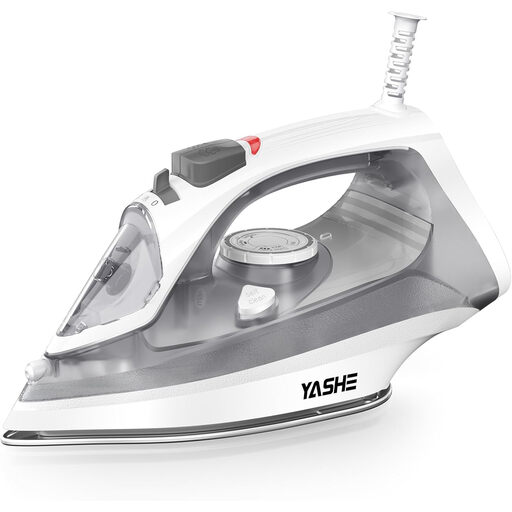 No image available
The adjustable thermostat makes this model worth considering if you need to select a temperature for an ironing treatment that’s allowed.
2300 W; 300 ml water tank; non-stick soleplate; continuous steam at 25 g/min; self-cleaning and anti-drip system.
Follow the care label; for a maximum of 110 °C, GINETEX specifies ironing without steam.
 No image available
A steam iron may be suitable if you only want to press a tie when the label allows it; check the appropriate temperature and steam setting before use.
2400 W; non-stick soleplate; automatic cleaning function and anti-drip system.
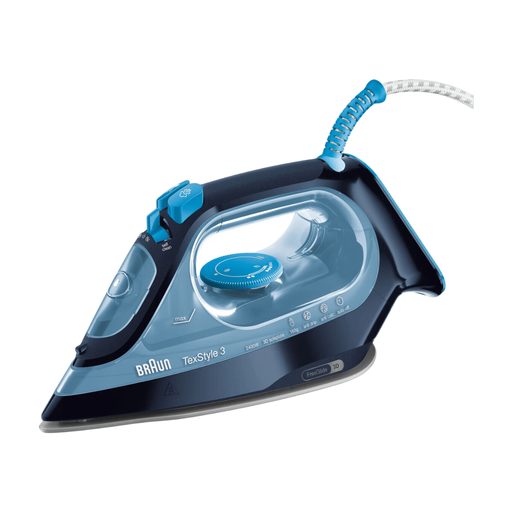 No image available
Consider this steam iron if you want to freshen up a tie in a specific area, and check that the settings suit the treatment shown on the label.
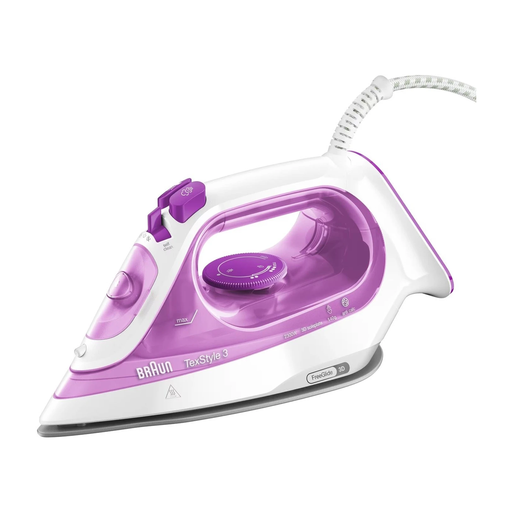 No image available
The thermostat dial and triangular precision tip listed by Braun for the SI 3030 are useful if you want to carry out a permitted treatment with precision.
Braun also lists a self-cleaning function for this model.
Follow the care label; for a maximum of 110 °C, GINETEX specifies ironing without steam.
 No image available
Consider this steam iron if you iron other textiles as well as ties; always choose a treatment for the tie based on its care label.
No. GINETEX advises choosing the ironing temperature based on the care label, not just the fibre name. If the symbol specifies a maximum of 110 °C, you should iron without steam.
Use a pressing cloth only if the label allows pressing; clothing care brand Neakasa recommends placing a clean cloth between the soleplate and the tie. For light creases, steaming without pressing may be an alternative, but check your tie’s instructions first.
Follow the maintenance instructions for the exact model. Philips says descaling may be necessary and that the Calc-Clean procedure varies by model.
For a purchase by a Dutch consumer, the seller must offer a solution if the product doesn’t meet what you can reasonably expect from it, according to the Rijksoverheid; a manufacturer’s warranty is in addition to your statutory rights. For distance purchases, you’ll also usually have a 14-day cooling-off period, although there are exceptions.
The Nederlandse Voedsel- en Warenautoriteit says CE marking is compulsory for electrical products. CE marking is not an independent quality or suitability test for pressing a tie; check the details of the specific appliance.