Start with the care label for the whole tie: cotton on the outside doesn’t, on its own, determine the permitted temperature or treatment, as GINETEX points out. For short ironing sessions and limited storage space, a standard steam iron is usually more practical than a steam generator, according to the Consumentenbond. If pressing directly could affect the tie’s shape, steaming without the soleplate touching it may be a better option. The Tie Bar recommends steaming its own ties to remove creases and warns against ironing them directly; that brand’s advice doesn’t automatically apply to every tie.
Who is this advice for?
Careful tie owner
You want to reduce creases without affecting the shape of your tie with unsuitable heat or direct pressing. GINETEX advises following the maximum temperature on the care label, rather than relying on the fibre alone; The Tie Bar warns against ironing its own ties directly.
Shared laundry room user
You iron for a short time and want to be able to let the appliance cool safely before putting it away. The Consumentenbond lists limited storage space as a reason to consider a standard steam iron; Brandweer Nederland stresses the importance of handling electrical appliances carefully.
For ties and family laundry
You’re looking for one appliance for both precise work and everyday laundry. The Consumentenbond describes a standard steam iron as an option if you don’t do much ironing or have limited storage space; a steam generator takes up more room.
What should you consider when choosing?
| What to consider |
What to look for |
Who is this important for? |
| Tie care |
Read the care label; check the temperature and steam settings, or consider steaming without direct contact with the soleplate. |
If you mainly want to preserve the shape of your tie, start with the care label and avoid pressing it directly if the instructions don’t allow it; around 33% of consumers prioritise keeping their ties in good condition. |
| Space and storage |
Compare appliance types and their storage requirements; consider where the appliance can cool down safely. |
If you use a shared laundry room, you’ll want to be able to put the appliance away easily after a short ironing session; around 25% of consumers prioritise limited space and being able to tidy away quickly. |
| Safe shared use |
Check the automatic shut-off and the stability of the resting position on the exact model; follow the instructions. |
If others use the same space, you’ll want to switch off and put away the hot appliance carefully; around 25% of consumers prioritise safe shared use. |
| Larger ironing sessions |
Compare continuous steam output in g/min separately from the steam boost, and check whether there’s room for a separate base. |
If you also iron a lot of everyday laundry in one go, consider steam output and tank capacity; around 17% of consumers prioritise larger ironing sessions. |
Common buying mistakes
-
Relying on the cotton setting alone
The outer fibre doesn’t, by itself, determine which treatment is suitable for the whole tie. Direct ironing can also affect its shape; The Tie Bar warns against this for its own ties.
Read the care label first and follow the instructions for your specific tie before choosing a temperature or steam setting.
-
Assuming a stronger steam boost is better for precise ironing
A steam boost is different from continuous steam output. For precise work, the tip of the soleplate and how easily you can adjust the settings may also matter.
Compare the g/min figure for continuous steam separately from the steam boost, and check the controls on the exact model.
-
Choosing a steam generator for just a few ties
According to the Consumentenbond, a generator has a separate base that takes up more storage space than a standard steam iron. This can be inconvenient in a shared space.
Think about how much everyday laundry you actually iron in one go, and whether you have room for the base and a suitable ironing board.
-
Comparing shop details without checking the model
Tefal Nederland lists a 270 ml tank capacity for the Tefal Easygliss Plus FV5736, while the Joybuy product information states 200 ml.
If details differ, check the full model number and the manufacturer’s information before making tank capacity a deciding factor.
Brands to compare
Philips
According to Philips Nederland, the 3000 Series DST3031/20 is a standard steam iron with a ceramic soleplate and a 300 ml tank.
- Philips describes the tank as suitable for ironing smaller loads without having to refill it midway.
- Tank capacity alone doesn’t tell you which treatment is suitable for a specific tie.
Tefal
According to Tefal Nederland, the Easygliss Plus FV5736 has a precision tip and automatic shut-off; Tefal also offers a separate dry iron.
- Tefal lists continuous steam output of 45 g/min and a 220 g steam boost for the FV5736.
- These figures don’t tell you whether direct pressing is suitable for a particular tie.
Braun
According to Braun, the TexStyle 3 SI 3030 has a manual thermostat and a precision tip. It’s an option if you want one iron for both precise work and everyday laundry.
- Braun lists a 270 ml tank and steam output of 45 g/min in turbo mode.
- The stated turbo steam output doesn’t mean you can press a tie directly.
Rowenta
According to Rowenta, the Autosteam DW4020D1 has automatic steam control and a precision tip.
- Automatic control may suit you if you also use the appliance for everyday laundry.
- Check whether the controls give you enough control over heat and steam for the specific tie you’re treating.
Joybuy product picks
The product picks below include appliances for steaming and ironing, from handheld models to steam generators. For a tie, consider first whether the care label allows direct ironing and how much space you have for the appliance.
 No image available
Xiaomi Handheld Steam Iron BHR9034EU
Manual temperature and steam controls give you options for adjusting the treatment to suit the care label.
The product name states dual voltage.
View on Joybuy
 No image available
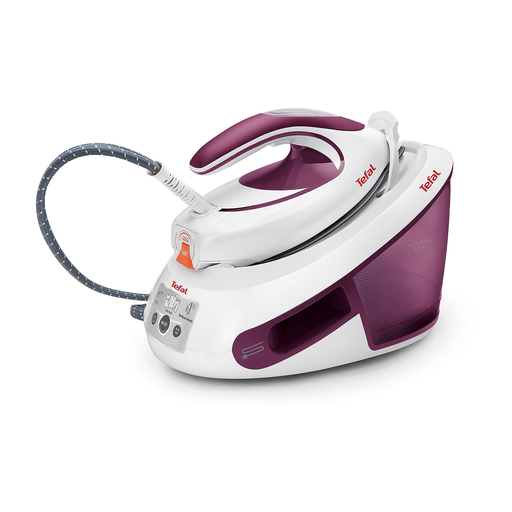
Tefal Express Anti-Calc SV8054
An option to compare if you want to tackle larger loads as well as ties; check that you have enough space for the appliance.
The product name states 2800 W, a 1,8 l tank and a Durilium soleplate.
View on Joybuy
 No image available
Philips 3000 Series steam generator PSG3000/20
A steam generator to consider if you also iron larger loads of laundry; the Consumentenbond notes that the separate base takes up more storage space than a standard steam iron.
The product name states 2400 W, a 1,4 l tank, vertical ironing and a 350 g steam boost.
View on Joybuy
 No image available
Tefal SV8026 Express Power steam generator
A steam generator if you also want to use the appliance for larger laundry loads; remember to allow enough storage space for the separate base.
View on Joybuy
 No image available
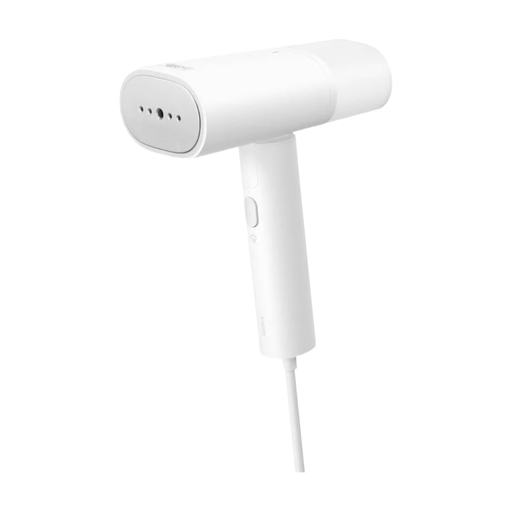
Xiaomi Handheld Garment Steamer
A handheld steamer to consider if you want to reduce creases without placing the soleplate directly on the tie; steaming won’t necessarily give you a sharp crease.
The product name states a 160 ml tank and a 30-second heat-up time.
View on Joybuy
Frequently asked questions
Can you iron any cotton tie on the cotton setting?
No. Cotton alone doesn’t determine the permitted treatment for the whole tie. GINETEX advises following the maximum temperature on the care label. The Tie Bar recommends steaming its own ties to remove creases and warns against ironing them directly; that advice doesn’t automatically apply to every tie.
What should you do after ironing in a shared space?
Don’t leave a hot iron plugged in and unattended. Follow the instructions for your exact model on switching it off, unplugging it, letting it cool and putting it away; automatic shut-off doesn’t replace these steps.
How can you prevent limescale problems in a steam iron?
Follow the descaling method for your exact model. Tefal Nederland warns that the method varies by type and that descaling products or vinegar can damage the steam tank.
Does an electric iron have to carry a CE mark in the Netherlands?
A CE mark is required for electrical equipment covered by the Warenwetbesluit elektrisch materiaal, according to the Nederlandse Voedsel- en Warenautoriteit. A product listing in a shop doesn’t, on its own, prove that all applicable requirements have been met.
Are you always entitled to exactly two years’ statutory guarantee in the Netherlands?
No. According to the Dutch government, the Netherlands doesn’t have a fixed statutory guarantee period: products must be of satisfactory quality, and their expected lifespan is one of the factors taken into account. If something goes wrong, contact the retailer; a manufacturer’s guarantee is additional.


