What should you look for when choosing?
Start with the tie’s care label, then consider how much storage space and ironing capacity you need.
| Concern |
What to look for |
Who is this important for? |
| Preserving the fabric and shape |
Check the permitted temperature on the care label and whether the heat and steam can be adjusted. If ironing is allowed, use a clean cotton cloth and apply light pressure. |
I want to press my tie without damaging the fabric or changing its shape. Around 31% of consumers prioritise preserving the fabric and shape. |
| Storage and positioning |
Compare the dimensions and check whether the handle folds down. During use, make sure you have a stable, heat-resistant surface. |
I want to store an iron in a small home without taking up unnecessary cupboard space. Around 25% of consumers cite storage space as their main concern. |
| Ironing other laundry too |
Compare the reservoir capacity and the available temperature and steam settings; check whether dry ironing is possible if you need it. |
If I also iron shirts or other cotton laundry, I want a model that suits my whole ironing routine. Around 25% of consumers prioritise versatility for ties and everyday laundry. |
| Care and safe use |
Check the care instructions and features such as self-cleaning or automatic switch-off. Even with automatic switch-off, follow the safety instructions. |
I want to know how to maintain the appliance and let it cool down safely before putting it away. Around 19% of consumers put care and safe use first. |
Irons at Joybuy
These Joybuy products offer options if you want to press a tie carefully and may also iron other laundry. Always check the tie’s care label before use.
 No image available
Xiaomi BHR9034EU handheld steam iron
An option if you want to control the temperature and steam manually, with the option to iron dry too.
Dimensions: 25 × 7,5 × 13,5 cm; weight: 0,77 kg; reservoir: 0,15 l. The product name mentions dual voltage.
View at Joybuy
 No image available
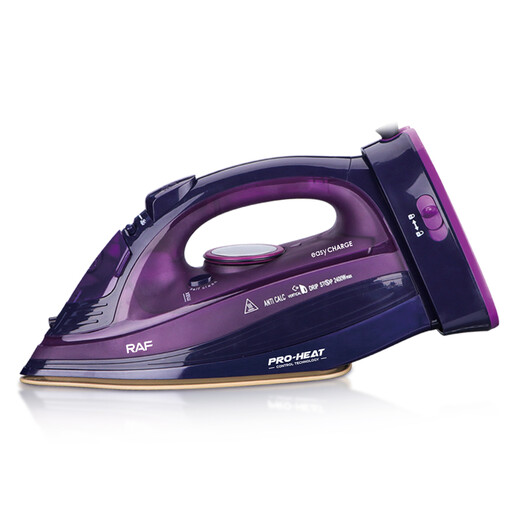
RAF R.1210B cordless steam iron, purple
A cordless model to compare if you value freedom of movement around your ironing area; the product description mentions a charging base.
Reservoir: 320 ml; power: 2400 W; steam output: 15–25 g/min. The product name mentions a ceramic soleplate and self-cleaning function.
View at Joybuy
 No image available
Philips 1000 Series DST1030/20 steam iron
A standard steam iron to compare if you want to adjust the temperature and have the option to iron dry.
The product description mentions a temperature dial, variable steam setting, precision tip and a no-steam setting. Reservoir: 350 ml; dimensions: 260 × 111 × 136 mm; cord: 1,6 m. The product name mentions 2000 W.
View at Joybuy
 No image available
Braun FreeStyle 5 SI5037 steam iron
A standard steam iron to compare if you have larger ironing loads as well as ties.
The product description mentions a precision tip, steam boost function and automatic switch-off. Reservoir: 300 ml.
View at Joybuy
 No image available
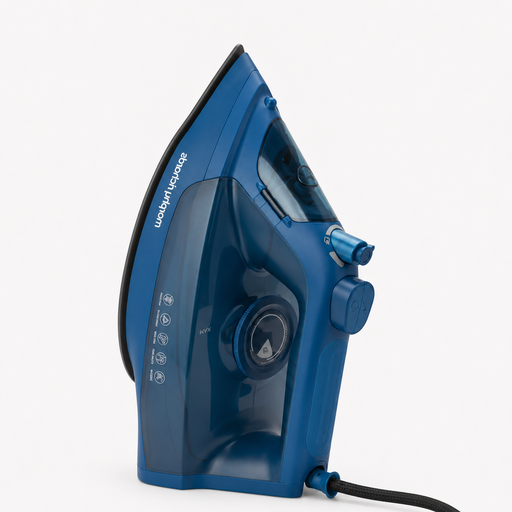
Morphy Richards Crystal Clear MDH-IRK4V steam iron
A standard steam iron to compare if you’re looking for an adjustable steam setting and a precision tip.
The product name mentions 2800 W and a ceramic soleplate. The product description mentions variable steam, a precision tip, a 350 ml reservoir and dimensions of 30 × 13 × 15,5 cm.
View at Joybuy
Frequently asked questions
Can I automatically iron a cotton tie on the highest cotton setting?
No. Don’t choose the highest setting based solely on the outer fabric. Check the tie’s ironing symbol; according to the Consumentenbond, excessive heat can damage fabric or make it shiny. A cotton cloth and light pressure may help when pressing carefully, but they don’t make ironing permissible if the care label says not to.
Do I need a large ironing board or a steam generator for one tie?
Not just for one tie. However, you do need a stable, heat-resistant surface. According to the Consumentenbond, a standard steam iron is more suitable for shorter sessions or limited storage space; a steam generator is more suited to people who iron frequently and in large quantities.
How should I put an iron away after use?
Follow the model’s instructions, unplug the iron and let it cool down completely before cleaning or storing it. Don’t leave a plugged-in iron unattended.
What if an iron bought in the Netherlands turns out to be faulty during normal use?
According to the Dutch Government, you’re entitled to a product that works properly, and the seller must provide a solution if it develops a fault. The Netherlands has no fixed statutory guarantee period of exactly two years; what you can expect depends, among other things, on the product and the sales information. A manufacturer’s guarantee is in addition to your statutory rights.


