
Ironing a skirt at the last minute
If you want to freshen up one or a few cotton skirts, a steam iron can be a practical choice. Check the care label first; GINETEX advises basing the maximum temperature on the label.


For one or a few cotton skirts, a standard steam iron is usually the most suitable choice. It is more compact than a steam generator and ideal for a short ironing session, as the Consumentenbond also points out. A steam generator is mainly worth considering for larger, regular ironing sessions; a handheld steamer is better suited to light creases on a hanger than to sharply pressed pleats. Always follow the skirt’s care label: GINETEX advises basing the maximum ironing temperature on the label, not just on the fibre composition.
If you want to freshen up one or a few cotton skirts, a steam iron can be a practical choice. Check the care label first; GINETEX advises basing the maximum temperature on the label.
If you regularly iron a larger pile of laundry as well as the skirt, a steam generator with a larger tank may be worth considering. The Consumentenbond lists a steam generator as an option for larger quantities of ironing.
A handheld steamer can be suitable for light creases in clothes hanging on a hanger. Philips notes that thick cotton often smooths out faster with a steam iron, so a handheld steamer is not necessarily the right choice for sharp pleats.
Choose this if: you want to iron one or a few skirts flat and store the appliance away compactly afterwards.
Bear in mind: it has a smaller water tank and produces less steam than a steam generator for longer ironing sessions.
Choose this if: you often iron larger loads of laundry and have room for a separate tank.
Bear in mind: on 11 June 2026, the Consumentenbond reported category averages of around 100 g/min for steam generators and around 35 g/min for standard steam irons; these are not results for every individual model.
Choose this if: you mainly want to remove light creases from clothes on a hanger and the care label allows steaming.
Bear in mind: Philips says that thick cotton often smooths out faster with a steam iron. A handheld steamer is therefore not necessarily an equivalent choice for sharply pressed seams or pleats.
Before you head out, the main things to consider are the finish you want, the size of your ironing load, the care label and maintenance.
| What to consider | What should you check? | Who is this for? |
|---|---|---|
| Smoothing the skirt | Check whether the steam settings are adjustable, the shape of the soleplate and whether its tip can reach seams and pleats. | I want to smooth the skirt and finish the pleats neatly. Around 33% of consumers prioritise a smooth finish. |
| Quick, compact use | Compare the size of the appliance and its water tank; consider whether you usually iron one skirt or a whole pile. | For a quick ironing session before heading out, I don’t want to store a large appliance. Quick, compact use is the top buying priority for around 27% of consumers. |
| Fabric care | Read the care label and set the temperature and steam according to the instructions for this skirt. | I want to avoid damaging the skirt with the wrong setting, so I follow the label. Around 20% of consumers give fabric care top priority. |
| Maintenance with repeated use | Check the descaling method for the exact model and follow the relevant instructions. | I want to know in advance how to maintain the appliance with repeated use. Maintenance is the top buying priority for around 20% of consumers. |
The fibre composition alone does not tell you the maximum permitted temperature. GINETEX advises using the care label as your guide.
Check the skirt’s ironing symbol and adjust the temperature and steam accordingly.
The larger tank and higher average steam output are mainly useful for large loads or difficult fabrics. For a short ironing session, the larger appliance may take up more space than necessary.
Think about how much you usually iron in one go, not just how creased this particular skirt is.
A handheld steamer can be handy for clothes on a hanger, but Philips notes that thick cotton often smooths out faster with a steam iron.
Choose flat ironing if you want to finish sharp seams or pleats.
A different model number may refer to another version, which could have different features or accessories.
Compare the full model number on the appliance, packaging and product information before ordering.
Philips’ Dutch product information for the 5000 Series DST5020/30R0 describes a standard steam iron with adjustable steam and a SteamGlide Plus soleplate.
The Tefal Ultragliss Anti-Calc Plus FV6830E0 has a removable scale collector, a maintenance feature to consider if easy access during descaling is important to you.
The Dutch manufacturer’s page describes the TexStyle 5 SI5256BL as having a precision tip, adjustable steam and a self-cleaning function.
These product choices are aimed at flat ironing, with adjustable steam or an ironing soleplate, including compact models. Check the CE marking and the relevant product information for the specific appliance.
 Image unavailable
According to the product description, this 2-in-1 model has both a steaming function and an ironing function, for those who want to iron clothes flat while keeping the appliance compact.
The description lists a heated ceramic soleplate, 20 g/min of steam and a heat-up time of around 60 seconds.
 Image unavailable
The temperature and steam controls described may be useful if you want to adjust the settings yourself when ironing clothes flat.
The product description lists manual temperature and steam controls, a steam boost, a weight of 0.77 kg and a heat-up time of 30 seconds.
 Image unavailable
The variable steam settings and temperature selection are useful if you want to follow the instructions on the care label.
The product description lists a 90 g/min steam boost, a pointed soleplate tip and a 1.6 m cord.
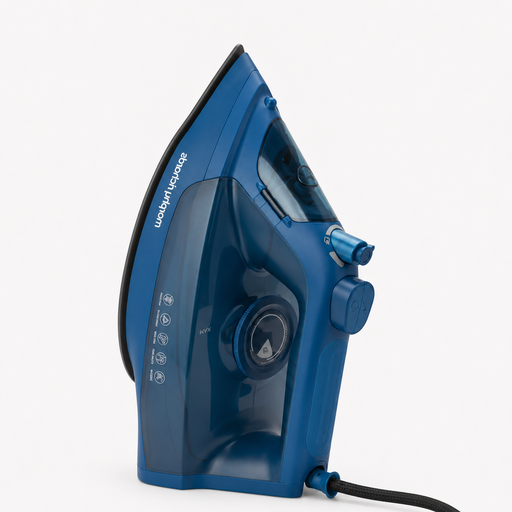 Image unavailable
The product description mentions a precision tip and variable steam, features to consider if you want to iron carefully around seams.
Features listed include a ceramic soleplate, 50 g/min of steam, a 350 ml water tank and a 2 m cord.
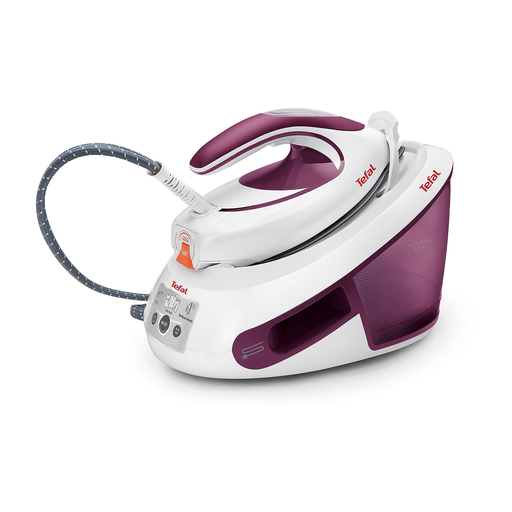 Image unavailable
The adjustable steam settings and precision tip mentioned may be useful if you want to iron around pleats or seams.
The product information lists a maximum steam output of 50 g/min, a 1.8 l tank and an anti-scale and self-cleaning system.
No. Choose the maximum temperature based on the care label for the specific skirt, not just the fibre name. Also follow any instructions that prohibit ironing or restrict the use of steam.
Follow the instructions for the exact model. Philips describes different descaling procedures for different model ranges; a removable scale collector, such as the one on the Tefal FV6830E0, needs a different approach from a built-in cleaning function.
No. ACM ConsuWijzer explains that the statutory guarantee applies alongside any manufacturer’s or seller’s guarantee, and depends on what you could reasonably expect from the product. If there is a problem, the seller is responsible for providing a solution.
Check the CE marking and product information for the specific appliance. RVO and the Dutch government list electrical products as a category covered by relevant EU rules and CE marking requirements.