
If you iron a few pairs of shorts
You want to get a small load of ironing done without setting up a separate base unit. Philips describes the DST3031/20 as an iron for smaller loads.


For one or a few pairs of cotton shorts, a regular steam iron is usually the best option. A steam generator with a separate tank is more suitable if you regularly iron large loads of laundry too. The Consumers’ Association says a steam generator is handy for tackling a lot of ironing and stubborn creases, but the care label should always guide the temperature you use on your shorts.
You want to get a small load of ironing done without setting up a separate base unit. Philips describes the DST3031/20 as an iron for smaller loads.
You iron other laundry in longer sessions too, and want to top up the water less often. The Consumers’ Association describes a steam generator as handy for tackling a lot of ironing.
Your shorts may have a lining or panels made from a different fabric, so you want to follow the care label when choosing the settings. GINETEX emphasises that the label specifies the maximum ironing temperature.
Start by thinking about how much laundry you iron in one go. Then compare how easy it is to set the temperature according to the care label, and how much space you have for the appliance.
| What matters | What to look for | Who should prioritise this? |
|---|---|---|
| Smoothing cotton | Check the cotton ironing results for the exact model and consider how easy it is to handle. A stated steam boost alone doesn’t prove that an iron will give you better results. | If I mainly iron a few pairs of cotton shorts, I want an appliance suited to a short ironing session. Around 39% of consumers prioritise this kind of small cotton load when buying. |
| Long ironing sessions | Compare the tank capacity and how much space a separate base unit takes up. | If I iron a full laundry basket as well as shorts, I want to stop less often to refill the water. Around 23% of consumers prioritise longer ironing sessions. |
| Fabrics and details | Follow the ironing symbol and compare the temperature controls and the shape of the tip for areas around pockets and seams. | If my shorts have panels made from different fabrics, I want to be able to match the settings to the care label. Around 23% of consumers focus mainly on fabric types and tricky details. |
| Care and storage | Check the descaling instructions for the exact model and measure the space available for using and storing it. | If I have limited space in my utility room, I want to know in advance how the appliance is maintained and stored. Around 15% of consumers prioritise care and available space when buying. |
Steam boost, measured in grams, and continuous steam, measured in grams per minute, are different specifications. Neither one on its own shows how well a model irons cotton.
For the exact model, also check its assessed results on cotton, ease of use and lifespan.
A separate tank is most useful when you have a lot of ironing to do in one go. For a small load, the extra set-up may be unnecessary.
Think about how many garments you usually iron in one session, and check whether the base unit will fit in your utility room.
According to GINETEX, the care label specifies the maximum ironing temperature; it isn’t determined by the fibre content alone.
Check the ironing symbol before ironing your shorts, pockets or seams.
Philips offers regular steam irons as well as steam generators with a separate tank.
The Ultimate Pure FV9844 is a regular steam iron with steam settings specified by Tefal and a Micro-Calc filter.
The TexStyle 7 Pro SI 7181 is a regular steam iron with manual temperature settings.
Rowenta offers models such as the Steamforce DW9240D1, as well as a parts finder for specific models.
These Joybuy products are options to compare for ironing clothes, including cotton shorts. For each model, consider the type of appliance, the settings listed and how much space it needs.
 No image available
A compact model to compare if you don’t want to set up a separate base unit.
The product name lists 2400 W, a non-stick soleplate, an automatic cleaning function and anti-drip technology.
 No image available
Philips presents this model, with its 300 ml reservoir, as suitable for smaller loads of ironing.
The product information lists continuous steam of 40 g/min and a steam boost of 180 g. These are model specifications, not an independent assessment of the ironing results.
 No image available
An option to consider if you’re looking for a handheld model with manual settings.
The product name describes a compact, lightweight model with dual voltage. Check the supplied information for details on how to use it and whether it’s suitable for your shorts.
 No image available
An option to compare if you want to set the temperature according to the garment care label.
The product name lists 2000 W. Check the product information for details of the settings, and follow the care label on your shorts when ironing.
 No image available
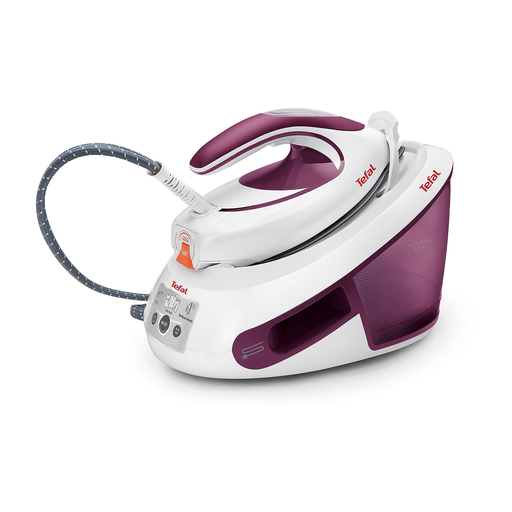
Compare this model if the stated tank capacity and precision tip match what you’re looking for.
The product name lists 2800 W, 1.8 l and a Durilium soleplate. Check how the appliance is designed and how much space it will need in your utility room.
No. Choose the maximum temperature according to the garment’s ironing symbol, not just its fibre type. If the care label says not to iron the garment, don’t iron the shorts.
Follow the descaling instructions for the exact model. Philips warns that limescale can reduce steam output, and its support information distinguishes between regular steam irons and steam generators.
In the Netherlands, you can contact the seller if a product doesn’t perform as you could reasonably expect under normal use; any manufacturer’s warranty is separate. For a typical online purchase, you’ll generally also have up to 14 days after delivery to change your mind, subject to legal exceptions. This is different from a remedy for a product that is faulty, damaged or inaccurately described.
The EU Low Voltage Directive applies to household electrical equipment within its scope, operating at 50–1,000 V AC. Where CE marking is mandatory, the product must meet the relevant requirements; a statement on a sales page alone doesn’t prove that an individual item complies.