
Drying indoors and managing damp
You dry your washing in an upstairs flat and want to prevent damp air from lingering. Milieu Centraal describes ventilation as bringing fresh air in and removing stale air.


A heated airer could suit you if you want extra warmth and have enough space to hang your shorts with room between them. A compact, unheated airer is a practical choice if storage space and electricity use matter more. Heating does not guarantee faster drying, and good ventilation is still important when drying clothes indoors. Measure the space available, follow the care label and, if you choose an electric model, check the instructions and applicable product safety requirements.
You dry your washing in an upstairs flat and want to prevent damp air from lingering. Milieu Centraal describes ventilation as bringing fresh air in and removing stale air.
You’re looking for an airer that fits without blocking a walkway and can be put away after use. Consider the available floor space, where you’ll store it and whether wall mounting is an option.
You want to give your shorts enough space and weigh up whether extra warmth suits the way you use an airer. Follow the care label and the instructions for your chosen airer.
First, check how you’ll remove damp air from the room. Milieu Centraal recommends ventilation that brings fresh air in and removes air from the home. Then compare the space you need, the hanging options and the electricity use.
| What to consider | What should you check? | Who is this important to? |
|---|---|---|
| Removing damp air | Check the air intake and outlet in the room where you dry your washing. With mechanical ventilation, the right setting may depend on the system in your home. | If I dry clothes indoors, I want to know how damp air can be removed. Around 31% of consumers say managing damp is their main concern when buying. |
| Fitting and storage | Measure the floor space, walkways and storage area. DOMO lists the dimensions of the DO7117DR as 52,5 × 36,5 × 90 cm; Leifheit lists the Pegasus 150 Solid Slim as 55 cm wide. | I want to be able to put the airer up without blocking a walkway, then put it away afterwards. For around 25% of consumers, fitting and storage are the top priorities. |
| Hanging shorts | Check the layout of the rails and follow the care label. The adjustable wings on the Brabantia HangOn 20 meter White offer different hanging heights; the stated drying length does not tell you how far apart garments will hang. | If I dry several pairs of shorts at once, I want to hang them with enough space between them. Around 25% of consumers say usable hanging space is their main concern when buying. |
| Electricity use | Compare the stated power with how long you’ll use the airer. DOMO lists 150 W for the DO7117DR; Joybuy lists 230 W for the folding electric airer. Use kW × hours to estimate electricity use, not drying time. | I want to weigh up whether the extra warmth is worth the electricity use. Around 19% of consumers say this is their top consideration. |
Heating won’t automatically remove evaporated water vapour from your home. Without suitable ventilation, damp air can linger indoors.
Check how air enters and leaves the room, and make sure your ventilation suits the system in your home.
These figures alone don’t show how quickly cotton shorts will dry. The washing itself, the room and how you hang the shorts all make a difference too.
Leave space between garments and follow the care label and instructions. Estimate electricity use using the stated power and how long you use the airer; the result is not a measured figure for electricity use or drying time.
Similar uses don’t mean the brand, model, specifications or conditions of use are the same.
Check the full model name and its product documentation before assessing a purchase or replacement.
DOMO says the DO7117DR is a compact electric clothes airer that can be used freestanding or wall-mounted.
The MEQ-EL8980/002 is described as an electric towel rail that can be used freestanding or wall-mounted.
The Pegasus 150 Solid Slim is an unheated alternative for anyone looking for a narrow, folding airer.
The HangOn 20 meter White is an unheated, folding airer with adjustable wings.
This Joybuy selection includes heated and unheated clothes airers, including folding options for anyone looking to free up floor or storage space.
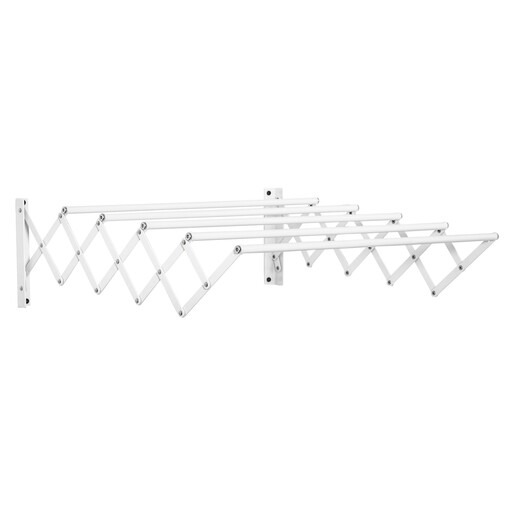 No image available
An unheated option if you want to keep floor space clear and can mount the airer on a wall.
Stated dimensions: 63,5 × 60 × 20 cm. The product description lists five rails, a maximum of 2 kg per rail and a total load of up to 10 kg.
 No image available
A heated option if you want to hang washing with space between garments and have room for the airer when it’s fully opened.
Stated dimensions: 144 × 53 × 91 cm. The product description mentions a central drying section and two side wings. Use indoors on a stable, level surface, with ventilation and at least 31 cm clearance from walls. Before buying, check the instructions and applicable product safety requirements for the specific item.
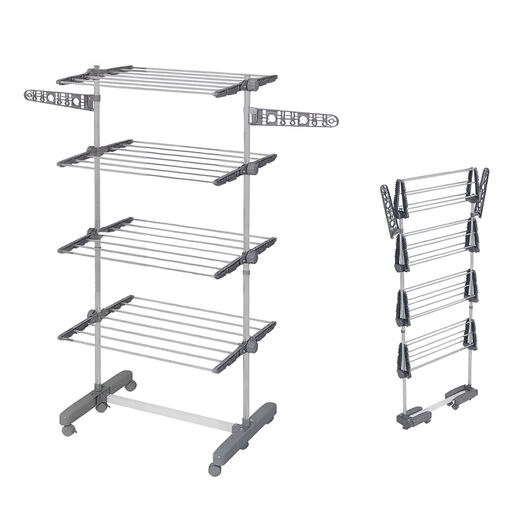 No image available
An unheated airer with adjustable tiers and wheels for moving it around.
The product description lists four adjustable tiers, six wheels and a folded depth of 13 cm.
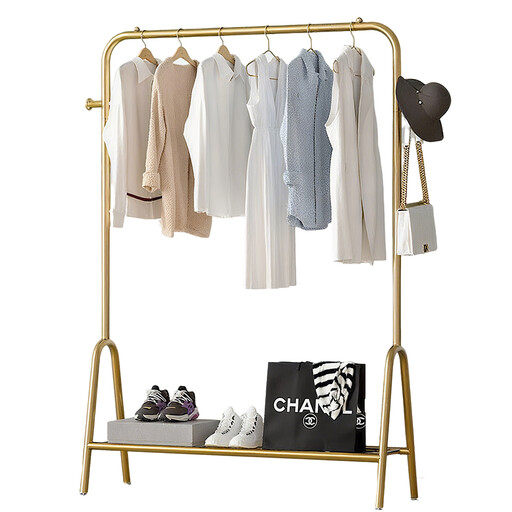 No image available
An unheated, freestanding rail for air-drying clothes without mounting anything on the wall.
The product title lists a width of 100 cm and a single rail.
Make sure fresh air can enter and damp air can leave. Milieu Centraal recommends extra ventilation during activities that release moisture. For mechanical ventilation, the organisation advises using a higher setting when washing is drying indoors. Follow the instructions for the ventilation system in your home.
CE marking is required for electrical equipment covered by the Dutch Commodities Act Decree on Electrical Equipment. The NVWA includes equipment with a rated AC voltage between 50 V and 1000 V among the products covered. A product listing or IP rating alone does not show that a specific item meets all applicable requirements.
Multiply the power in kilowatts by the number of hours you use the airer to get a calculated estimate of electricity use. Multiply that figure by your own rate per kWh to estimate the cost. Actual usage time and any controls on the heating element will affect the result.
Follow the care label on your shorts and the airer’s instructions. GINETEX says that if there is no tumble-drying symbol, the washing and ironing symbols provide guidance on drying.
For an ordinary online consumer purchase, you generally have a 14-day cooling-off period after delivery, although there are exceptions. ACM ConsuWijzer explains how this period works. If a product is faulty, you also have statutory rights, and the seller is your point of contact. The Dutch government says there is no fixed statutory warranty period in the Netherlands.