
Quick, small ironing jobs
You iron a few handkerchiefs at a time and want an appliance that takes up little space and is easy to get out. The Consumers' Association cites limited storage space as a reason to consider a standard iron.


If you only have a few cotton handkerchiefs to iron and little storage space, a compact dry or steam iron is usually the most practical type to compare. Steam can help with stubborn creases, while a steam generator is mainly worth considering for longer ironing sessions with more laundry. Its larger base takes up extra space and is harder to move. Always follow the care label for the correct temperature, and check features such as automatic shut-off on each model.
You iron a few handkerchiefs at a time and want an appliance that takes up little space and is easy to get out. The Consumers' Association cites limited storage space as a reason to consider a standard iron.
You iron cotton regularly and want to choose between heat and steam, while keeping the soleplate clean and maintaining the appliance properly. GINETEX stresses that the care label—not just the fibre name—sets the maximum temperature.
You iron your handkerchiefs along with plenty of other laundry. A lighter iron and a larger tank may then be worth the extra space the base takes up.
Choose this if: you iron a few handkerchiefs, have little storage space and don’t need built-in steam.
Trade-off: without a steam function, stubborn creases can be harder to smooth out. Severin lists a net weight of 680 g and no steam output for the BA 3211.
Choose this if: you regularly iron folded cotton and want a compact appliance with built-in steam.
Trade-off: check the temperature control, steam settings, maintenance requirements and weight when full. Automatic shut-off varies by model.
Choose this if: you often iron larger loads of laundry in one go, as well as your handkerchiefs.
Trade-off: the separate tank base makes the complete appliance larger and harder to move or store. Also check that your ironing board has room for it.
| What to consider | What should you look for? | Who should give this more thought? |
|---|---|---|
| Storage and carrying | Compare the weight of the complete appliance and measure the available storage space. | If I only iron a few handkerchiefs and need to carry the appliance upstairs, I want something that’s easy to store. Around 33% of consumers give compact storage and portability top priority. |
| Creases and temperature | Follow the care label and compare the temperature control, steam settings and soleplate of the exact model. | If I want to smooth out my cotton handkerchiefs without exceeding the permitted heat, the care label is my starting point. Around 33% of consumers put the results on cotton at the top of their list. |
| Safe use | Check whether the exact model has automatic shut-off, and use a stable, heat-resistant surface. | If I sometimes take a break while ironing, I want to know what shut-off function the model has. Around 25% of consumers make safe use their top priority when choosing. |
| Maintenance | Compare the descaling method and check whether any parts need replacing. | If I iron clean handkerchiefs, I want to prevent limescale and stains without complicated maintenance. Around 9% of consumers give low-maintenance use top priority. |
With a steam generator, the larger tank sits in a separate base. The iron may feel light, but the complete set takes up more space and is harder to carry upstairs.
Compare the weight and dimensions of the complete set, and check that you have room for it on your ironing board and in your cupboard.
These are different features. Tefal states that the FV2838E0 does not have automatic shut-off.
Check the specifications for the exact model to see whether it has a shut-off function.
The Consumers' Association warns that perfumed water and other additives can cause problems such as stains or blockages.
Follow the manual for advice on the right water to use and how to descale the model.
The BA 3211 and BA 3261 show the difference between dry ironing and ironing with steam.
The Express Steam FV2838E0 is a standard steam iron with adjustable settings.
The TexStyle 3 SI 3054GY is a steam iron with manual temperature control.
The DST3041/80 and GC6842/30 are examples of an iron with a built-in tank and a steam generator with a separate base.
This selection includes portable irons, standard steam irons and steam generators for anything from quick touch-ups to longer ironing sessions.
 No image available
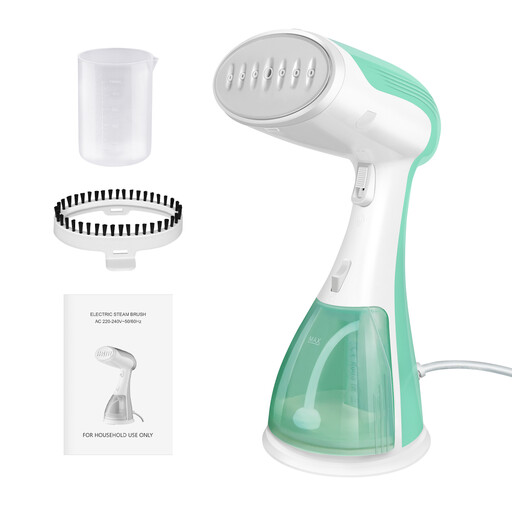
A portable option for quick ironing jobs when you also want to iron on a flat surface.
Power: 1500 W.
 No image available
For quick ironing jobs when you want to switch between dry ironing and steaming.
Manual temperature and steam control; removable 0,15 L tank.
Weight: 0,77 kg; dimensions: 25 × 7,50 × 13,50 cm. The product information lists automatic shut-off and Dual Voltage.
 No image available
A standard steam iron to compare if you’re looking for steam and a shut-off function.
Tank: 300 ml; with precision tip and continuous steam.
The product information states that it switches off automatically after 8 minutes upright or 30 seconds horizontally.
 No image available
A steam generator to compare for longer ironing sessions with larger loads of laundry.
Removable tank: 1,4 L. The product information lists continuous steam, a steam boost, vertical steaming and automatic shut-off.
The stated dimensions are 35,5 × 19,2 × 27,5 cm; allow extra room for the base.
 No image available
A steam generator to compare if you iron larger loads of laundry as well as handkerchiefs.
Tank: 1,3 L. The product information lists continuous steam, a steam boost and automatic shut-off.
Philips lists OptimalTEMP for ironing without temperature settings; the generator base requires extra storage space.
Follow the handkerchief’s care label, rather than relying only on the word ‘cotton’. GINETEX lists maximum temperatures of 200 °C, 150 °C or 110 °C; the symbol for 110 °C means you should iron without steam.
For a few handkerchiefs, a compact dry or steam iron is usually the more practical type to start with. A generator is mainly worth considering if you iron a lot of other laundry at the same time; bear in mind the larger base and the storage space you’ll need.
Follow the manual for the exact model for advice on water and descaling. The Consumers' Association says tap water is generally suitable and advises against perfumed ironing water and other additives. If you use softened water, it’s a good idea to check the instructions for your specific model.
Mains-powered appliances covered by the relevant electrical equipment regulations must carry a CE mark. The Netherlands Food and Consumer Product Safety Authority and Business.gov.nl explain that the manufacturer uses it to declare conformity; it is not a test result for the ironing performance of an individual model.
Online purchases generally come with a statutory 14-day cooling-off period from the date you receive the item, subject to legal exceptions. ACM ConsuWijzer also notes that you have a statutory warranty if a product does not meet what you could reasonably expect when used normally; this warranty does not have a fixed two-year duration for every iron.