What should you look for when choosing?
First decide whether a smoothly pressed cotton dress matters more to you than quickly touching up a hanging garment. Then choose an appliance to suit your ironing surface, storage space and maintenance routine. The NVWA states that electrical products placed on the Dutch market must carry CE marking; CE marking alone is not proof of an independent inspection.
| What to consider |
What to look for |
Who is this important for? |
| Smooth cotton |
Check whether the appliance has a heated soleplate and can be used for ironing on a flat surface; follow the maximum treatment indicated on the garment care label. |
If I want to get sturdy cotton dresses properly smooth, the finished result matters more than simply freshening them up quickly. Around 36% of consumers put smooth cotton first. |
| Ironing and storage space |
Measure the space where you’ll use and store the appliance. Check whether an ironing mat is included, or whether steaming clothes while they’re hanging will give you the finish you want. |
If I don’t have room for a conventional ironing board, I’m looking for a solution that fits the space I have. Around 29% of consumers prioritise saving space. |
| Quick touch-ups |
Check whether the exact model can steam vertically and whether you can hang the dress safely. |
If I mainly want to quickly touch up one hanging dress, convenience may matter more than a crisp pressed finish. Around 21% of consumers prioritise a quick touch-up. |
| Maintenance |
Check the maintenance instructions for the exact model, and don’t assume the procedure for a steam iron also applies to a steam generator. |
If I’m choosing an appliance I’ll use regularly, I want to know in advance what maintenance it requires. Around 14% of consumers put ease of maintenance first. |
Joybuy products for cotton dresses
These Joybuy products suit different needs when choosing an ironing solution for cotton dresses, with models for ironing on a flat surface and for making the most of limited space.
 No image available
Philips 3000 Series Steam Iron DST3031/20
Suitable if you want to iron cotton garments on a flat surface and also touch up a dress while it’s hanging.
Steam shot: 180 g; continuous steam output: 40 g/min; water tank: 300 ml.
Ironing on a flat surface requires a suitable, heat-resistant area. Follow the garment care label.
Check the product information and CE marking for the specific appliance.
View at Joybuy
 No image available
Russell Hobbs Steam Genie 2in1 (28370-56)
An option to compare if you’re looking for one appliance that can both iron and steam clothes.
Ironing on a flat surface still requires a suitable, heat-resistant area. Follow the garment care label.
Check the product information and CE marking for the specific appliance.
View at Joybuy
 No image available
Xiaomi Handheld Steam Iron BHR9034EU
A compact option if you have limited storage space and want manual temperature and steam controls.
The product name mentions dual voltage; check that this suits how you intend to use it.
Ironing on a flat surface requires a suitable, heat-resistant area. Follow the garment care label.
Check the product information and CE marking for the specific appliance.
View at Joybuy
 No image available
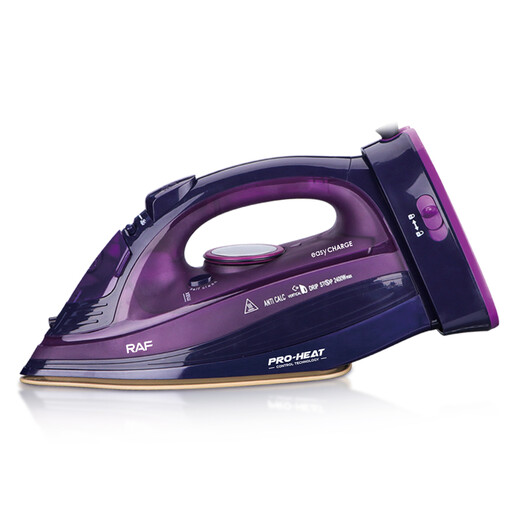
RAF Cordless Steam Iron R.1210B
A cordless model to consider if you’d like to move around freely while ironing.
Water tank: 320 ml; steam output: 15–25 g/min; ceramic soleplate.
Ironing on a flat surface requires a suitable, heat-resistant area. Follow the garment care label.
Check the product information and CE marking for the specific appliance.
View at Joybuy
 No image available
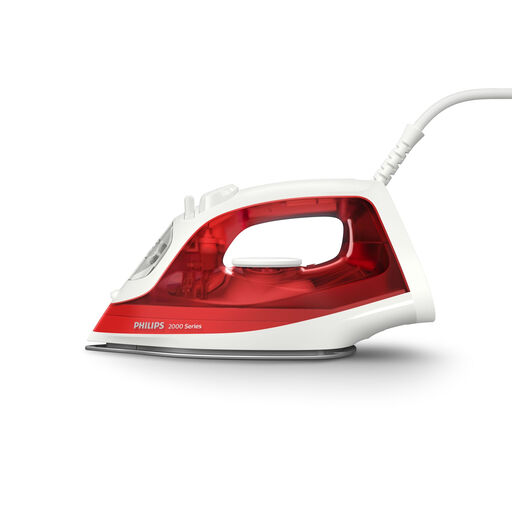
Philips 2000 Series Steam Iron DST2010/40
A conventional steam iron to consider if you want to iron cotton garments on a flat surface.
Continuous steam output: 25 g/min; water tank: 250 ml; non-stick soleplate.
Ironing on a flat surface requires a suitable, heat-resistant area. Follow the garment care label.
Check the product information and CE marking for the specific appliance.
View at Joybuy
Frequently asked questions
Is a handheld steamer enough for a cotton dress?
A handheld steamer may be enough to lightly freshen up a hanging dress. Don’t expect sturdy cotton to come out as smooth as it would from ironing on a flat surface: the Consumentenbond reported that the garment steamers it tested couldn’t smooth cotton or heavier fabrics.
Can I always iron cotton on the highest setting?
No. Follow the care label on the specific dress, even if it’s made from cotton or a cotton blend. GINETEX gives maximum soleplate temperatures of 200 °C, 150 °C and 110 °C for ironing symbols; the 110 °C symbol means no steam.
How do I maintain a steam iron?
Follow the instructions for the exact model. Philips describes descaling procedures for its steam irons and states that the instructions in question don’t apply to steam generators.
How long does the statutory guarantee last in the Netherlands?
In the Netherlands, there isn’t a fixed guarantee period for every appliance that ends after two years. ACM ConsuWijzer explains that, when used normally, a product must meet what you could reasonably expect from it. If it develops a fault too soon, the seller must provide an appropriate solution free of charge.
Is CE marking compulsory for an electric iron in the Netherlands?
Yes. According to the NVWA, electrical products placed on the Dutch market must carry CE marking. This alone is not proof of an independent product inspection, so check the CE marking and safety information for the specific appliance.


