For one or a few dresses, a steam iron is usually a practical choice. If you regularly have a large pile of ironing or stubborn creases to tackle, a steam generator iron may be a better fit. Always follow the care label on the whole dress for temperature and steam: GINETEX bases the maximum ironing temperature on the garment, not just the fibre type. Then compare how easy the models are to use, handle and maintain.
Who are these ironing options suitable for?
Occasional dress ironer
You want to smooth out one or a few dresses before a visit and would rather have a compact appliance than a large ironing setup. The Consumentenbond recommends a steam iron if you don’t iron many items in one go or have limited storage space.
Mixed-clothing ironer
As well as cotton dresses, you iron clothes made from other fabrics, with linings or different finishes, and want to follow the care label carefully when choosing the settings. GINETEX states that the garment care label, not just the fibre type, determines the maximum temperature.
Regular bulk ironer
You often work through a large amount of laundry or tackle stubborn creases in one go, so tank capacity, ease of handling and maintenance matter more. The Consumentenbond lists a steam generator iron as an option for people who do a lot of ironing and often come across stubborn creases.
What should you look for in an iron?
Steam iron
Best for: a short ironing session with one or a few dresses, especially if storage space is limited.
Bear in mind: during longer sessions, the smaller tank may need refilling more often. The Consumentenbond recommends this type mainly for people who don’t iron many items in one go.
Steam generator iron
Best for: regularly ironing a lot of clothes and tackling stubborn creases.
Bear in mind: the larger setup takes up more space, and you may need a suitable ironing board.
Handheld garment steamer
Best for: quickly freshening up a hanging dress when setting up an ironing board is impractical and the care label allows it.
Bear in mind: the available product information doesn’t show that a handheld garment steamer gives the same sharp creases or smooth finish as an iron with a soleplate.
GINETEX recommends following the garment care label when choosing a temperature. The Consumentenbond bases the choice between a steam iron and a steam generator iron mainly on how many items you iron in one go.
| What to consider |
What to look for |
Who should pay extra attention? |
| Smoothing out creases |
Compare adjustable steam, any steam boost and the shape of the soleplate; a stated steam boost alone doesn’t prove how well an iron performs. |
If I want to get one dress looking smart before heading out, I’ll focus on the soleplate and steam settings. Around 36% of consumers prioritise a smooth finish. |
| Protecting fabric and finish |
Check the ironing symbol and make sure you can set a suitable temperature and steam level. |
If a dress has a delicate finish, I want to be able to follow the care label, even if the fabric contains cotton. Around 29% of consumers prioritise fabric protection. |
| Quick setup and storage |
Compare the dimensions, weight, tank and filling opening; a larger separate tank also takes up space. |
If I’m only doing a short ironing session before a visit, I don’t want to set up a large appliance. Around 21% of consumers prioritise compactness and quick use. |
| Long-term maintenance |
Check the descaling method for the exact model and follow the instructions. |
If I use the appliance regularly, I want a maintenance routine I can stick to. Around 14% of consumers consider ease of maintenance their top priority. |
Common mistakes when choosing
-
Automatically ironing cotton on the highest setting
The care label takes the garment and its finish into account; the fibre name alone doesn’t tell you what maximum treatment is safe.
Before ironing, check the ironing symbol and adjust the temperature and steam use accordingly, as GINETEX recommends.
-
Choosing a large steam generator iron for one dress
A larger tank and more steam are most useful when you have a lot of ironing or stubborn creases to tackle; for an occasional dress, the bigger setup may be unnecessary.
First consider how many clothes you usually iron in one go and how much space you have to store the appliance.
-
Assuming a handheld garment steamer is an equivalent replacement
The available product information doesn’t show that a handheld garment steamer gives the same results on every cotton dress as an iron with a soleplate.
Choose a handheld garment steamer for a quick freshen-up when it’s suitable. Use an iron with a soleplate when you want to smooth out creases precisely and the garment care label allows it.
-
Looking only at the steam specifications
Limescale can affect steam performance, and the maintenance method varies from one appliance to another.
Check the descaling method for the exact model and follow the instructions. The Consumentenbond also recommends emptying the water tank after ironing.
Brands to consider
Philips
The 3000 Series DST3031/20 is one example of a steam iron with a ceramic soleplate and a 300 ml tank.
- Philips says the tank capacity is suitable for shorter ironing sessions without needing a refill.
- These model specifications alone don’t tell you how well it smooths creases or anything about other Philips models.
Tefal
The FV6830E0 is a steam iron, while the SV8110 Express Power is an example of a steam generator iron.
- Tefal lists a maximum continuous steam output of 50 g/min for the FV6830E0 and mentions a removable scale collector. The Consumentenbond describes the SV8110 as having a removable 1,7 l tank.
- The stated steam figures come from the manufacturer and aren’t comparative measurements of ironing performance.
Braun
The TexStyle 7 Pro SI 7149 is worth considering if you want to set the temperature manually.
- Braun lists self-cleaning, automatic shut-off and continuous steam of 50 g/min for this model.
- The stated steam figures don’t prove how well it smooths creases; follow the care label when treating the dress.
Irons at Joybuy
These Joybuy picks are steam irons for home use. Check that the settings on each model are suitable for the dress’s care label.
 No image available
Philips 3000 Series DST3031/20 steam iron
Adjustable temperature and steam are useful if you want to follow the garment care label when ironing.
Tank: 300 ml; continuous steam: 40 g/min; steam boost: 180 g; heat-up time: 35 seconds. Also listed: vertical steaming and an anti-drip system.
View at Joybuy
 No image available
Xiaomi BHR9034EU handheld steam iron, dual voltage
Manual temperature and steam controls, plus a dry ironing function, give you options to assess for each garment.
Removable tank: 0,15 l; weight: 0,77 kg; heat-up time: 30 seconds. The model also features vertical steaming and automatic shut-off.
View at Joybuy
 No image available
Philips 1000 Series DST1030/20 steam iron
The narrow tip of the soleplate is useful if you want to iron around seams and buttons.
Power: 2000 W; tank: 350 ml; continuous steam: 20 g/min; steam boost: 90 g/min. Cord: 1,6 m.
View at Joybuy
 No image available
Braun FreeStyle 5 SI5037 steam iron
The soleplate has a precision tip, which can be useful for reaching trickier areas of a dress.
Continuous steam: 50 g/min; tank: 300 ml. Also listed: a ceramic soleplate, self-cleaning and automatic shut-off.
View at Joybuy
 No image available
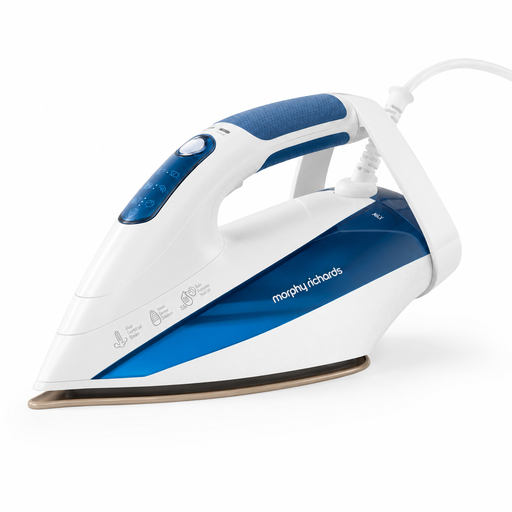
Morphy Richards MDH-IRB4E steam iron
The variable steam settings and precision tip are worth considering if you iron different parts of a dress.
Power: 2400–2800 W; tank: 350 ml; six steam settings. Also listed: a ceramic soleplate, anti-drip system, self-cleaning, a 2 m cord and a cord clip.
View at Joybuy
Frequently asked questions
Can I iron every cotton dress on the highest setting?
No. According to GINETEX, the ironing symbol sets the maximum temperature, not just the fibre type. The symbols indicate maximum temperatures of 200 °C, 150 °C and 110 °C; the 110 °C setting means ironing without steam.
How do I maintain a steam iron?
Follow the descaling method and schedule in the instructions for your exact model. The Consumentenbond recommends emptying the water tank after ironing. After descaling, you can first iron an old cloth to catch any loose limescale.
In the Netherlands, am I only entitled to the stated manufacturer’s warranty?
No. According to the Dutch government, you’re also entitled to a statutory guarantee and can contact the seller if a product is faulty. The Netherlands doesn’t have a fixed statutory guarantee period of two years.
Can I return an iron bought online within 14 days?
For online purchases, ACM ConsuWijzer says you generally have a statutory cooling-off period of up to 14 days after delivery. Check which exceptions apply and the returns terms for your purchase.
What does CE marking mean for an electric iron?
CE marking is the manufacturer’s declaration that the product meets the applicable EU requirements; it isn’t an independent quality certificate or proof of good ironing performance. Your Europe lists electrical and electronic equipment among the product groups covered by CE rules.


