
For crisp results on cotton dresses
If you want a smooth finish after washing, choose based on how well the appliance handles cotton and what the care label says. The Consumentenbond recommends following the care instructions.


For a few cotton dresses per session, a standard steam iron is usually the practical choice. If you have a lot to iron in one go, a steam generator may be a good fit, provided you have enough space. A garment steamer is better suited to quick touch-ups: according to the Consumentenbond, some of the garment steamers it tested did not smooth cotton. Follow the care label, and check the CE marking on the specific appliance before buying.
If you want a smooth finish after washing, choose based on how well the appliance handles cotton and what the care label says. The Consumentenbond recommends following the care instructions.
If you regularly iron several dresses one after another, you may want to refill less often, provided you have room for a steam generator. The Consumentenbond identifies the larger tank as one difference between this type of appliance and a standard steam iron.
If you do shorter ironing sessions, look for an appliance that is easy to store without compromising on results on cotton. The Consumentenbond notes that limited storage space is one reason to consider a steam iron.
Start with the finish you want on cotton and the space you have available, then consider session length and maintenance. The Consumentenbond distinguishes cotton from lighter fabrics and recommends following the care label on each garment.
| What to consider | What to look for | Who should pay extra attention? |
|---|---|---|
| Results on cotton | Compare results on cotton where possible; check for adjustable steam and a steam boost. Follow the care label. | If I want my cotton dresses as smooth as possible, I put results on this fabric first. Around 36% of consumers give a smooth finish on cotton their highest priority. |
| Long ironing sessions | Check the tank capacity and how often you need to refill. Make sure you have room for the generator and that your ironing board is suitable. | If I have several dresses to iron in one go, I want to stop less often to refill. Around 29% of consumers prioritise being able to keep ironing through several changes. |
| Storage and short sessions | Check the dimensions, cord storage and available space; a smaller appliance will generally have a smaller water tank. | If I only iron a few dresses and have limited space, easy storage matters more than a large tank. Around 21% of consumers put compact storage first. |
| Maintenance and terms | Check the descaling method in the manual and the terms of sale and warranty that apply to your purchase. | I want to be able to maintain the appliance and know in advance which terms apply to my purchase. Around 14% of consumers prioritise maintenance and clarity about the terms. |
According to the Consumentenbond, some of the garment steamers it tested did not smooth cotton. A steamer is therefore not necessarily a substitute if you want a crisp, pressed finish.
Choose a steamer mainly for quick touch-ups, and check whether it gives the results you expect on the type of dress you own.
If the dress is not smooth enough, you may still need to iron it, which takes extra time.
A stated power rating or maximum steam output does not prove how well a particular model will iron cotton dresses.
Assess results on cotton, steam control and how the appliance feels in your hand separately.
A steam generator takes up more room than a standard steam iron and may be too large or heavy for a regular ironing board, according to the Consumentenbond.
Measure your working and storage space, and check that your ironing board can support the complete setup.
You may need a suitable ironing board and extra storage space.
The statutory 14-day cooling-off period for consumers does not automatically apply if you buy as a business. Your status as a buyer is what matters.
Before paying, check the contract and the applicable returns and warranty terms. Using an appliance in a holiday home does not, by itself, make the purchase a business purchase.
Without an agreed returns option, you may have fewer ways to return an order without giving a reason.
Tefal’s range includes both conventional steam irons and garment steamers, with the models mentioned here illustrating different uses.
The PerfectCare PSG7200/20 is an example of a steam generator for longer ironing sessions.
The TexStyle 9 SI 9188 E BK is an example of a steam iron designed to handle hard-to-reach areas of clothing.
This selection includes steam generators for longer sessions and compact ironing appliances for smaller jobs. Before buying, check the CE marking on the specific appliance, and always follow the care label when ironing cotton dresses.
 No image available
The removable tank may suit longer ironing sessions; make sure you have enough space for the generator.
The product description lists a 1.4-litre tank, 2400 W and a 350 g steam boost. It also mentions a temperature setting based on the garment label; this is not an independently measured result on cotton.
 No image available
This model may suit longer ironing sessions; bear in mind the space a steam generator takes up.
The product description lists a 1.3-litre tank, a steam boost and vertical steam. These features are not an independent assessment of its results on cotton.
 No image available
A steam generator may suit regular ironing, provided you have room for the larger setup.
The product description lists continuous steam, a steam boost and Calc Clear maintenance. These features alone do not show how well the appliance irons cotton dresses.
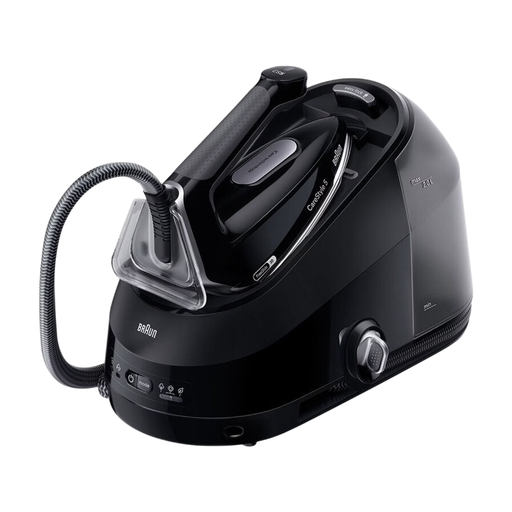 No image available
The removable tank may suit longer sessions; check that the complete setup fits in your working and storage space.
The product description lists a removable 2-litre tank and an automatic programme function. It also mentions continuous steam and a steam boost; no independent measurement of results on cotton is given.
 No image available
This compact appliance may suit short sessions and limited storage space; for longer sessions, its small tank may need refilling more often.
The product information lists a 0.15-litre tank, dual voltage and manual temperature control. It also mentions a steam boost on the cotton and linen setting. Follow the care label on each dress.
Follow the care label on the specific dress, rather than relying on the cotton setting alone. The lining, finish or a blended fibre may affect how the garment can be treated. Ironing symbols include maximum temperatures of 110 °C, 150 °C and 200 °C; do not iron if the label says not to.
Only use steam if the care label allows it, and if necessary, leave the dress to dry and cool without steam after ironing. The Consumentenbond recommends emptying the water tank after use; follow the manual for descaling your chosen appliance.
That depends on the capacity in which you are buying. According to Ondernemersplein, the statutory 14-day cooling-off period for consumers does not automatically apply to a business purchase. Check the contract and terms before ordering; using the appliance in a holiday home does not, in itself, make the purchase a business purchase.
For electrical appliances placed on the market in the Netherlands, Ondernemersplein outlines the applicable European safety requirements and CE marking. Check the marking and product information for the specific appliance; a model name alone does not confirm that every item offered meets all the requirements.