
Ironing several cotton aprons
You want to get through a batch of aprons without frequent refills, so look for continuous steam and a tank that’s easy to refill. The Consumentenbond says a larger tank is useful if you do a lot of ironing.


If you have several cotton aprons to iron one after another, or stubborn creases to tackle, a steam generator is worth considering. For a small ironing job and limited storage space, a standard steam iron may be more practical. The Consumentenbond points to a large amount of ironing and stubborn creases as reasons to choose a generator. Also compare continuous steam output, refilling and the space you’ll need, and always follow the apron’s care label.
You want to get through a batch of aprons without frequent refills, so look for continuous steam and a tank that’s easy to refill. The Consumentenbond says a larger tank is useful if you do a lot of ironing.
You want your cotton aprons to come out smooth, so look beyond a high pressure figure alone. The Consumentenbond notes that ordinary cotton is harder to smooth out than lightweight synthetic fabrics.
You need to be able to move the appliance and put it away once you’ve finished. The Consumentenbond points out that a steam generator takes up more space and can be harder to move than a standard iron.
Best for: ironing several aprons one after another or tackling stubborn creases in cotton.
Bear in mind: the base unit takes up more space and can be harder to move.
Best for: a small ironing job, limited storage space or getting started quickly.
Bear in mind: a smaller tank may need refilling more often, and stubborn creases in cotton may take more ironing.
The percentages below refer to consumers choosing an appliance for this apron-ironing job; each figure represents their main buying concern.
| What matters | What to look for | Most relevant to |
|---|---|---|
| Smoothing out cotton | Compare continuous steam in g/min separately from the steam boost; check whether you can adjust or switch off the steam. | If my cotton aprons have stubborn creases, I want to smooth them out without soaking the ironing board. Around 36% of consumers prioritise results on cotton. |
| Getting through a batch of ironing | Check the tank capacity and whether the tank is removable; follow the instructions when refilling. | When I have a whole pile of aprons, I want to keep ironing without constantly topping up the water. For around 29% of consumers, getting through a batch with few interruptions is the main priority. |
| Moving and storing the appliance | Measure the available space on the ironing board and in the cupboard; check the dimensions and total weight. | When changing rooms, I want to move the appliance easily and put it away afterwards. Space and portability are the main priorities for around 21% of consumers. |
| Protecting fabric and details | Follow the care label and check the temperature and steam settings, especially around seams or details. | If my aprons have seams or other details, I want to match the heat and moisture to the care label. This is the main priority for around 14% of consumers. |
Continuous steam in g/min and a separate steam boost measure different things. Too much steam can leave your apron and ironing board wet.
Compare continuous steam and whether you can adjust it. Use steam where needed to tackle creases, then iron without steam to dry the fabric, if the care label allows.
With a steam generator, you also need space for the larger base unit and to move and store it. It may also be too large or heavy for a standard ironing board.
Before buying, check that you have space for the whole unit, the ironing board and storage around the room change.
According to the Dutch government, a manufacturer’s warranty or an additional warranty you’ve bought is separate from your statutory rights. If there’s a problem, contact the seller.
Before deciding, read what additional cover is offered and compare it with your existing statutory rights.
The PSG3000/20 and PerfectCare 7000 PSG7200/20 are models to compare individually for steam output, tank capacity and size.
The Express Protect SV9202E0 and Express Power SV8110E0 are models to compare for stated steam output and maintenance features.
The CareStyle 3 IS3255BL is worth considering if you also want to take the soleplate shape into account when ironing aprons with seams and pockets.
This selection includes four steam generators and one standard steam iron, so you can weigh up a batch of cotton aprons against a more compact option when changing rooms. Before buying, check the CE mark on the specific model you’re considering.
 No image available
Suitable for a batch of cotton aprons when you want to weigh up continuous steam and tank capacity.
Stated continuous steam output: 120 g/min; tank: 1,4 l. The tank is removable, and the description mentions an ECO mode and a transport lock.
Before buying, check the CE mark on this specific model.
 No image available
An option to compare if you’re looking for a compact steam generator for a batch of aprons.
Stated continuous steam output: 120 g/min; tank: 1,3 l. The description mentions vertical steam, automatic shut-off and a transport lock.
Before buying, check the CE mark on this specific model.
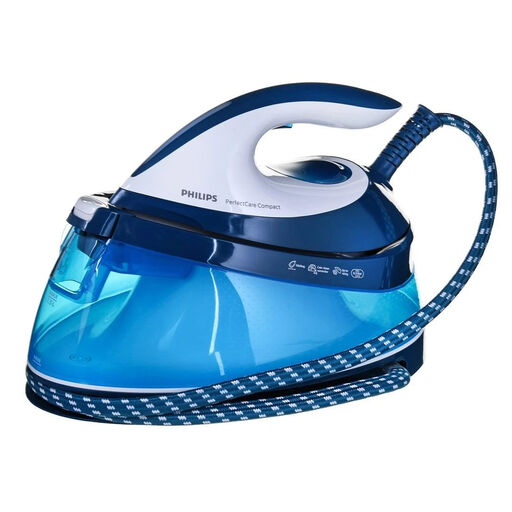 No image available
Suitable if you want to compare tank capacity and continuous steam for a batch of ironing.
Stated continuous steam output: 120 g/min; tank: 1,5 l; steam boost: 400 g. The description mentions automatic temperature and steam settings, plus a transport lock.
Before buying, check the CE mark on this specific model.
 No image available
An option to compare if you want a removable tank for ironing a batch of aprons.
Tank: 1,8 l; maximum steam: 120 g and 70 g in ECO mode; pump pressure: 6 bar. The description mentions a self-cleaning function, automatic shut-off and an iron lock.
Before buying, check the CE mark on this specific model.
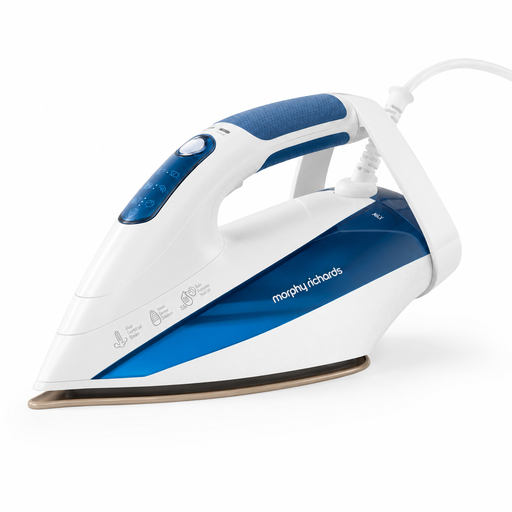 No image available
This standard steam iron is a more compact option to consider if you only iron a few aprons or have limited storage space.
Stated steam output: 50 g/min; water tank: 350 ml. The description mentions variable steam, six settings and a 2 m cord.
Before buying, check the CE mark on this specific model.
Not necessarily. The Consumentenbond says a standard steam iron suits a small amount of ironing or limited storage space. A steam generator is mainly worth considering if you do a lot of ironing or have stubborn creases.
Start by following the apron’s care label. Use only as much steam as you need, then iron without steam to dry the fabric if the care label allows. Constantly adding more steam can leave the fabric and ironing board wet.
Follow the instructions for your exact model. Philips generally recommends descaling its steam generators every 1–2 months and describes different procedures for each range. Don’t assume the same timing or procedure applies to another brand.
No. According to the Dutch government, there is no fixed statutory guarantee period in the Netherlands: the product must meet what you can reasonably expect from it. If there’s a problem, contact the seller; a manufacturer’s warranty or an additional warranty you’ve bought is separate from this.
Yes. The Dutch government states that electrical appliances in the EU must carry a CE mark. Check the mark on the specific model; don’t assume it’s present based only on a product title or sales page.