Which appliance is right for you?

For occasional ironing and a small cupboard

If you occasionally iron a few cotton aprons and want to store your appliance easily, a standard steam iron should suit your needs. The Consumers' Association describes this type as compact and suitable for people who do little ironing.

For ironing lots of aprons

If you regularly work through a large pile, a steam generator with a separate water tank may suit longer sessions. Bear in mind that you will also need room to store the base unit; the Consumers' Association describes this type as suitable for people who do a lot of ironing.

For quick touch-ups

If you want to quickly freshen up an apron while it is hanging and do not need to press it flat, a foldable handheld steamer may suit your preference for compact storage. Philips describes the refurbished STH3020/70R1 as having a foldable design; this alone says nothing about how well it presses fabric flat.

What should you look for when choosing?

Standard steam iron

Choose this if: you want to iron a few cotton aprons flat and have limited storage space.

The trade-off: during a longer ironing session, you may need to refill an iron with a built-in reservoir more often.

Steam generator

Choose this if: you often iron larger loads and have extra room to store the base unit.

The trade-off: the separate water tank can be handy for a longer session, but the complete set takes up space.

Foldable handheld steamer

Choose this if: you mainly want to freshen up a hanging apron and do not necessarily need a smooth, pressed finish.

The trade-off: a foldable design does not prove that a handheld steamer presses cotton as smooth as an iron.

What to consider What should you check? Who is this important for?
Finish on cotton Where possible, look for an assessment of the results on cotton. Also check that the temperature and steam settings are suitable for the care label. I want my cotton aprons to be smooth, not just an appliance with a high steam output; around 30% of consumers put results on cotton first.
Storage space Measure your cupboard and compare its dimensions with those of the complete appliance, including the base unit and the ironing surface you will need. I want to be able to put the appliance away easily after a small ironing load; around 40% of consumers give minimising storage space the highest priority.
Longer sessions Compare the tank capacity with the amount of space taken up by the complete appliance. I often iron lots of aprons one after another and want to minimise stops to refill the tank; around 20% of consumers prioritise longer ironing sessions.
Quick touch-ups Decide whether a quick freshen-up while the apron is hanging is enough, or whether you need a smooth, pressed finish. I only want to quickly freshen up an apron and do not need to press it flat; around 10% of consumers prioritise this use.

Common buying mistakes

  • ‘Compact’ does not automatically mean it will fit in your cupboard

    A steam generator has a separate base unit, even when the model is described as compact. This means the complete set may need more space than you would expect from looking at the iron alone.

    Measure your storage space and compare it with the dimensions of the complete set, not just the iron itself.

  • A steam output figure does not prove how well an iron works on cotton

    The Consumers' Association notes that cotton is harder to smooth out than lightweight synthetic fabrics. A stated steam output is not the same as an independent assessment of the results on cotton aprons.

    Use steam figures to compare models, and look specifically for an assessment on cotton if you want to judge performance.

  • A handheld steamer is not automatically suitable for pressing fabric flat

    A foldable design can make an appliance easier to store, but it does not show that a handheld steamer will give the same results as an iron with a soleplate.

    Choose this approach if a quick touch-up is enough; if you want to press fabric flat, compare standard steam irons too.

Brands to compare

Philips

Philips sells both standard steam irons and handheld steamers. The refurbished STH3020/70R1 is a separate product and is not necessarily the same as a new one.

  • Philips lists a ceramic soleplate and a 300 ml reservoir for the DST3031/20.
  • These product specifications are not an independent assessment of how well it irons cotton.

Tefal

The Easygliss Plus FV5736 is a standard steam iron worth comparing if you are looking for a flat soleplate.

  • Tefal lists a power rating of 2500 W and a continuous steam output of 45 g/min for the FV5736.
  • A manufacturer's claims about creases are not independent test results for cotton aprons.

Braun

Braun sells standard steam irons, such as the TexStyle 7 Pro, and steam generators, such as the CareStyle Compact Pro.

  • Braun describes the TexStyle 7 Pro as having a soleplate that can glide backwards around obstacles. For the CareStyle Compact Pro, Braun lists a removable 1.5-litre reservoir.
  • The word ‘compact’ does not prove that the generator and its base unit will fit in your cupboard.

Rowenta

Rowenta is worth considering if you also want to check model-specific parts and maintenance for a steam iron.

  • Rowenta offers a parts search by article number.
  • Check the exact model; the search does not confirm that every part is available for every model.

Steam irons for a smooth finish

These product picks are standard steam irons for ironing fabric flat, making them suitable for cotton aprons and limited storage space. Compare the stated dimensions with your cupboard. For a specific electrical appliance, also check the CE marking and relevant product information; according to the European Commission, the EU Low Voltage Directive applies to equipment within the applicable voltage limits.

2400 W steam iron with non-stick soleplate

2400 W steam iron with non-stick soleplate

The stated dry and steam settings let you choose between dry and steam ironing for smooth aprons.

Power: 2400 W. The description lists five temperature settings, a 350 ml reservoir and adjustable steam.

The product name mentions a non-stick soleplate, automatic cleaning and an anti-drip system.

View at Joybuy

Philips 3000 Series steam iron DST3031/20

Philips 3000 Series DST3031/20

This standard steam iron is suitable if you want to iron a few cotton aprons flat; Philips describes the model as intended for smaller loads.

Ceramic soleplate, 300 ml reservoir and continuous steam output of 40 g/min. The product information lists settings for cotton and adjustable steam.

Compare its dimensions with your available storage space.

View at Joybuy

Xiaomi compact handheld steamer BHR9034EU

Xiaomi handheld steamer BHR9034EU

The description mentions both dry and steam ironing; check whether this suits the smooth finish you want for your aprons.

Reservoir: 0,15 l. Dimensions: 25 × 7,5 × 13,5 cm; weight: 0,77 kg. The product information lists manual temperature and steam controls and a maximum steam output of 22 g/min.

Compare the dimensions with your cupboard; they do not guarantee that the appliance will fit in your storage space.

View at Joybuy

Philips 1000 Series steam iron DST1030/20

Philips 1000 Series DST1030/20

The stated dry setting and temperature settings for cotton and linen suit anyone who wants to iron fabric flat and adjust the approach to the apron.

Power: 2000 W. Non-stick soleplate, continuous steam output of 20 g/min and steam boost of 90 g/min. Dimensions: 260 × 111 × 136 mm.

Compare the stated dimensions with your storage space.

View at Joybuy
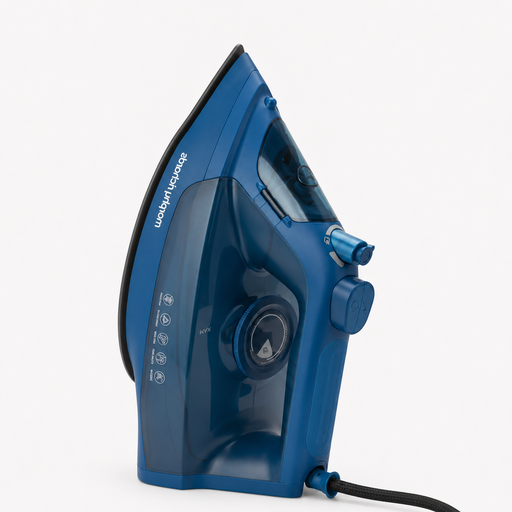
Morphy Richards Crystal Clear steam iron MDH-IRK4V

Morphy Richards Crystal Clear MDH-IRK4V

This standard steam iron has a soleplate; compare the overall dimensions with your storage space before choosing.

Power: 2800 W. Ceramic soleplate, steam output of 50 g/min and 350 ml reservoir. The product information lists a 2 m cord.

The description mentions temperature and steam controls, plus a steam boost for creases in fabrics including heavyweight cotton.

View at Joybuy

Frequently asked questions

Where should you start if you only iron cotton aprons occasionally?

Start with a standard steam iron if you have little laundry to iron and want to press your aprons flat. The Consumers' Association describes this type as compact and suitable for people who do little ironing; also check its storage dimensions and, where possible, look for an independent assessment of its performance on cotton.

Can you turn off the steam if you want to dry-iron an apron?

Not on every appliance. Check whether you can adjust the steam output on your chosen model and switch it off completely, and follow the care label on the apron. The Consumers' Association points out that the option to turn off the steam varies between appliances.

How should you descale your iron?

First, find the exact model number and follow the relevant maintenance instructions. Philips distinguishes between steam irons and steam generators in its descaling information, so do not automatically use the instructions for one type on the other.

What are your rights if an iron bought online is unsuitable or breaks too quickly?

For a standard online consumer purchase, you generally have a statutory 14-day cooling-off period after delivery, subject to legal exceptions. ACM ConsuWijzer also distinguishes between the cooling-off period and the statutory guarantee: if a product does not do what you could reasonably expect under normal use, the seller must offer a suitable solution.

Can any electric iron be sold on the Dutch market without further checks?

No. Electrical equipment covered by the EU Low Voltage Directive must meet safety requirements and CE marking obligations. The European Commission gives limits of 50–1.000 V AC and 75–1.500 V DC, among others; check the information for the specific product.
