Who is this choice relevant to?

Cortado maker with limited worktop space

You want to combine espresso and hot milk without the full setup taking up too much worktop space. So measure the depth too, and allow room for a milk jug or separate milk frother. The Consumers’ Association lists available space as a factor when choosing.

Quick coffee maker

You want to make espresso with minimal effort and are happy to prepare the hot milk separately if that solution works better in your kitchen. Pod machines and espresso machines differ in how they operate and prepare milk.

Daily coffee drinker

You make coffee regularly and want to choose between beans and capsules to suit your routine. The Consumers’ Association lists the number of cups you make and your preferred coffee drinks as factors to consider.

What should you consider when choosing?

Espresso machine with a steam wand

A good fit if: you want to prepare and measure the espresso and a small amount of milk yourself.

Consider: you prepare the espresso and milk manually, and need worktop space for steaming and cleaning.

Pod machine with separate milk preparation

A good fit if: quick espresso and simple operation are your priorities.

Consider: a separate milk frother or other way to prepare milk takes up extra space next to the machine.

Bean-to-cup machine with a milk function

A good fit if: you make coffee often and prefer to prepare espresso with fewer steps.

Consider: check that the milk function can handle a small serving for your cortado, and that the machine and cleaning routine suit your kitchen.

What to consider What should you check? Who is this important for?
Space for the complete setup Measure the machine’s width, depth and height, and leave room for a milk jug or separate milk frother. I want to prepare milk without blocking the worktop. Around 36% of consumers give the overall worktop space the highest priority.
Speed and ease of use Check how many steps are involved in preparing espresso and milk, and whether you need to prepare or measure the milk separately. I want to make espresso quickly and am happy to take an extra step for the milk only if it fits my routine. Around 29% of consumers prioritise having fewer steps.
Cleaning Find out which parts need cleaning after using milk and how to descale the model. I want to know how much maintenance the milk and coffee components need with regular use. Around 21% of consumers consider easy maintenance their main priority.
Coffee format for regular use Check whether you want to use beans or a particular capsule system, and which capsules are compatible with the machine. I want to choose a coffee format that suits the way I make coffee at home. Around 14% of consumers prioritise choosing beans or compatible pods.

Avoid common buying mistakes

  • Measuring only the machine’s width

    Even a slim machine can take up a lot of space if you also need a milk jug, separate frother or coffee grinder.

    Plan the complete setup and check the depth, accessibility and space you’ll need while preparing the milk.

    A grinder, milk jug or separate milk frother can take up extra worktop space.

  • Assuming a milk programme lets you adjust the amount of milk for a cortado

    A button for cappuccino or latte doesn’t automatically mean you can dispense a small amount of hot milk separately.

    Check whether the exact model lets you prepare or adjust the espresso and milk separately.

Brands to compare

De’Longhi

The Dedica Style EC685.M EX:4 is a slim espresso machine for anyone who wants to prepare espresso and milk manually.

  • De’Longhi Netherlands lists this version as 15 cm wide, with a cappuccino system that switches between steamed milk and foam.
  • Measure the depth too, and allow for manual milk preparation and space for a milk jug.

Sage

The Bambino, listed by Sage Netherlands as SES450BSS4EEU1, is an option for preparing espresso and milk manually.

  • Sage lists a portafilter and a manual steam wand.
  • Check that the complete setup fits in your kitchen and whether you’d also like to use a coffee grinder.

Nespresso

The Essenza Mini is a compact Original pod machine for espresso; how you prepare the milk depends on the version or bundle you choose.

  • Nespresso lists an espresso setting of 40 ml and dimensions of 8.4 × 20.4 × 33 cm for the Essenza Mini.
  • A separate way to prepare milk takes up extra space. Check which accessories are included with each version or bundle.

Philips

The 2200 Series offers a fully automatic bean-to-cup option; the exact model determines how the milk is prepared.

  • Philips lists a classic milk frother with a steam wand and a removable brew group for the refurbished EP2223/40R1.
  • Don’t assume every 2200 Series model has an automatic milk programme; check how the exact model operates.

Joybuy products for espresso and milk preparation

This selection includes espresso machines for preparing espresso and milk yourself, as well as bean-to-cup machines with a milk function. Check that the milk preparation method, dimensions and cleaning routine of each model suit your kitchen and your cortado.
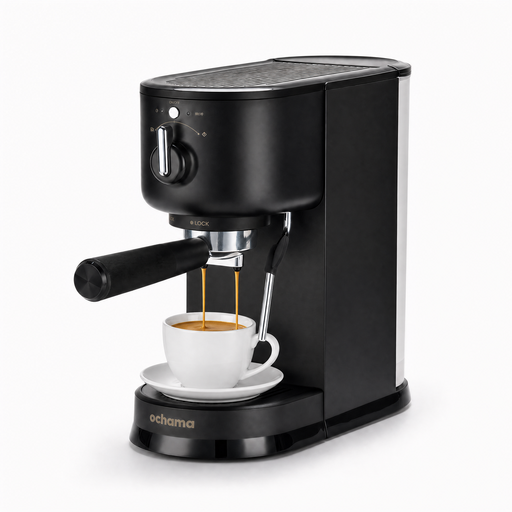
Ochama semi-automatic espresso machine with steam milk frother

Ochama semi-automatic espresso machine, 15 bar, 1,25 l

An option for anyone who wants to prepare espresso and milk manually using a steam milk frother.

The product name lists 15-bar espresso extraction, a 1.25 l water tank and a plastic housing.

View at Joybuy
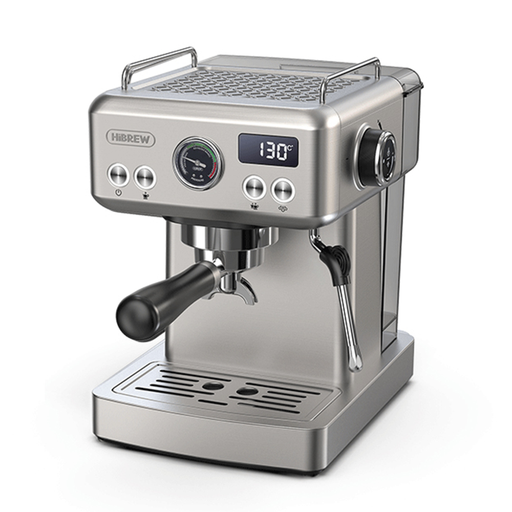
HiBREW H10A espresso machine with stainless steel housing and portafilter

HiBREW H10A espresso machine

The product name mentions temperature control for coffee and steam; check how the exact model prepares milk before choosing it for cortados.

The listed features include a pressure gauge, adjustable temperature, a stainless steel housing and a 58 mm stainless steel portafilter.

View at Joybuy

IAGREEA 20Bar espresso machine with steam wand

IAGREEA 20Bar espresso machine with steam wand

A good fit if you want to prepare the milk yourself and choose the amount of espresso for each serving.

The product name lists a steam wand, a removable 1.1 l water tank, a pressure gauge and single or double shot preparation.

View at Joybuy

De’Longhi Rivelia EXAM440.55.G bean-to-cup espresso machine with LatteCrema

De’Longhi Rivelia EXAM440.55.G

A bean-to-cup option for anyone who wants to make espresso and milk-based drinks with less hands-on preparation.

The product name mentions a LatteCrema Hot Milk Frother and a bean-switching system.

View at Joybuy

Philips 5500 Series EP5547/90 LatteGo coffee machine

Philips 5500 Series EP5547/90 LatteGo

Worth considering if you’re looking for a bean-to-cup machine with LatteGo; check whether you can adjust the amount of milk to suit your cortado.

View at Joybuy

Frequently asked questions

Does an espresso machine need a cortado button?

No, as long as you can prepare and measure the espresso and a small amount of hot milk separately. Nespresso gives 40 ml of espresso with 10–20 ml of hot milk and a little foam as its branded recipe. This isn’t a fixed definition, nor does it guarantee that every machine has a matching setting.

How can I check whether a machine and milk accessory will fit in my small kitchen?

Measure the complete setup, including its depth, access to the water tank and space for a milk jug or separate frother. Compare the space available with the dimensions and instructions for the exact model, rather than relying on the description ‘compact’ alone.

What should I clean after preparing milk?

Clean the parts that come into contact with milk, and follow the model’s instructions for descaling. The Consumers’ Association notes that programmes and intervals can vary between machines, so there’s no single maintenance interval that applies to them all.

Will a bean-to-cup machine always make a cortado automatically?

No, it depends on the milk function and settings of the exact model. Check whether you can adjust or combine espresso and a small serving of milk separately, and which parts need cleaning afterwards.

What electrical safety information should I check for an espresso machine?

Electrical equipment designed for 50–1,000 V AC or 75–1,500 V DC is subject to the relevant requirements of the EU Low Voltage Directive, including CE marking. Check the marking and safety information for the exact model; a model name or product description alone doesn’t confirm that a particular item meets the requirements.
