
Quick breakfast, with fibre in mind
You want a breakfast cereal that takes little preparation and compare the fibre content per 100 g. The product name or a stated serving size won’t tell you how two packs compare on a like-for-like basis.


If you’re looking for a quick breakfast that’s high in fibre, don’t judge by the name ‘cornflakes’: according to Kellogg’s Netherlands, regular Kellogg’s Corn Flakes contain 3.0 g of fibre per 100 g, while Jumbo lists Kellogg’s All-Bran Fibre Plus at 26 g per 100 g. All-Bran is a bran cereal, not cornflakes. You should also compare the sugar content per 100 g and check the ingredients of your chosen variety if you have an allergy.
You want a breakfast cereal that takes little preparation and compare the fibre content per 100 g. The product name or a stated serving size won’t tell you how two packs compare on a like-for-like basis.
You’re looking for low-sugar cornflakes, but also want to know how much fibre they contain. An unsweetened variety isn’t necessarily high in fibre.
You check the ingredients and allergen information before buying, especially if you need to avoid wheat or barley. This is important with bran cereals too.
Bran cereal, fruit varieties and cornflakes can all work for a quick breakfast, but they differ in the nutritional information and ingredients that may influence your choice.
Choose this if: fibre is your priority; Jumbo lists Kellogg's All-Bran Fibre Plus at 26 g of fibre per 100 g.
Bear in mind: this variety contains wheat and barley and isn’t a cornflake cereal.
Choose this if: you’re looking for a fruit variety and want to weigh up both fibre and sugar on the label.
Bear in mind: Jumbo lists Kellogg's All-Bran Fruit'n Fibre at 8.8 g of fibre and 23 g of sugar per 100 g.
Choose these if: you specifically want cornflakes; Jumbo lists Smaakt Bio Cornflakes Ongezoet at 1.0 g of sugar per 100 g.
Bear in mind: this Smaakt variety contains 3.1 g of fibre per 100 g. That’s below the 6 g per 100 g threshold for the EU ‘high fibre’ claim.
| What to consider | What to check before buying | Who is this most important for? |
|---|---|---|
| Fibre | Compare fibre per 100 g. If a product claims to be ‘high fibre’, check the applicable EU threshold too. | I want to choose a breakfast cereal that puts fibre first, without lengthy preparation; for around 42% of consumers, this is their top purchasing priority. |
| Sugar | Compare both sugar and fibre per 100 g; don’t judge a fruit variety by its name alone. | For a quick breakfast, I mainly want to keep an eye on the sugar content, without automatically calling an unsweetened cornflake cereal high in fibre. Sugar is the top priority for around 33% of consumers. |
| Allergens | Read the ingredients and allergen information on the current packaging, especially for products containing wheat or barley. | If I need to avoid wheat or barley, the label determines which breakfast cereals I can choose; for around 25% of consumers, checking allergens is the top priority. |
Kellogg’s Netherlands lists regular Kellogg’s Corn Flakes at 3.0 g of fibre per 100 g. Under EU Regulation (EC) No 1924/2006, the ‘high fibre’ claim requires at least 6 g of fibre per 100 g or 3 g per 100 kcal.
Check the nutritional information for the specific variety instead of relying on the category as a guide.
Jumbo lists Kellogg's All-Bran Fruit'n Fibre at 8.8 g of fibre and 23 g of sugar per 100 g.
Compare both figures per 100 g with those of the products you’re considering alongside this fruit variety.
The All-Bran varieties described contain wheat and barley. If you need to avoid these ingredients, don’t rely on the fibre content alone.
Before buying, check the ingredients, allergen information and any ‘may contain’ statement on the current packaging.
Regular Corn Flakes and All-Bran varieties show why the type of breakfast cereal matters.
Smaakt Bio Cornflakes Ongezoet is a cornflake cereal to compare for sugar and fibre.
The range includes regular cornflakes alongside All-Bran products.
Lidl lists 500 g cornflakes as an in-store product.
Golden Bridge is ALDI’s own-brand range, which includes cornflakes.
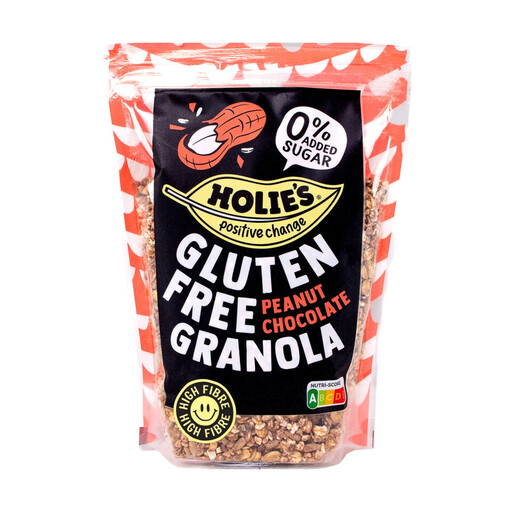
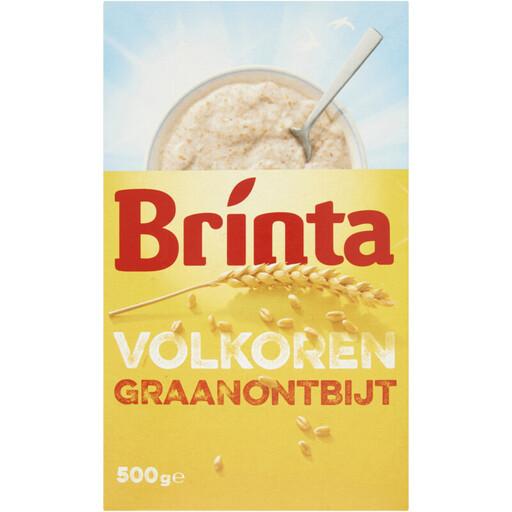
These products are granola and wholegrain wheat cereal, not cornflakes. They’re worth considering if you’re open to other types of breakfast cereal for a quick breakfast; compare the nutritional information and preparation needed to find the right option for you.
 No image available
An option for anyone considering granola instead of cornflakes for a quick breakfast. Compare the fibre and sugar per 100 g on the packaging, and check the allergen information if you have a peanut allergy.
Pack size: 330 g.
 No image available
A wholegrain wheat cereal to consider if you’re looking beyond cornflakes to a breakfast that needs preparation. Check the preparation instructions and compare fibre and sugar per 100 g; this isn’t a ready-to-go cornflake cereal.
Pack size: 500 g.
Under EU Regulation (EC) No 1924/2006, this claim can be used for products containing at least 6 g of fibre per 100 g or 3 g of fibre per 100 kcal. Check which nutritional value is shown on the label before comparing two breakfast cereals.
No. Jumbo lists Smaakt Bio Cornflakes Ongezoet at 1.0 g of sugar and 3.1 g of fibre per 100 g. The sugar content alone doesn’t tell you how much fibre a product contains.
Comparing per 100 g lets you assess different packs on the same basis, even if their stated serving sizes differ. The Dutch Nutrition Centre recommends comparing sugar and fibre this way, among other things.
Not without checking the ingredients: the Kellogg's All-Bran Fibre Plus described contains wheat and barley. Read the allergen information on the current packaging for the specific product.
Follow the storage instructions on the packaging. The product information for the Kellogg's and Smaakt varieties described recommends storing them in a dry place; for Smaakt, it also says to keep the pack sealed.