If you’re specifically looking for high-fibre breakfast cereal for Sunday breakfast, choose a product with at least 6 g of fibre per 100 g, then compare sugars, salt, ingredients and serving size. Under the EU conditions for nutrition claims, this amount is enough to use the claim ‘high fibre’; ordinary cornflakes don’t automatically meet this threshold. Fibre content alone doesn’t tell you how long you’ll feel energised after breakfast.
Who is this choice relevant to?
Breakfast lovers specifically looking for high-fibre flakes
You want to know how much fibre your breakfast cereal contains for Sunday breakfast. To compare products, check the nutritional information per 100 g rather than relying on the wording on the front of the pack.
Shoppers comparing sugars and ingredients too
You don’t want to confuse high fibre with low sugar. So, as well as fibre, you check the sugars and ingredients list, including any sweeteners.
Shoppers who need gluten-free flakes
You’re looking for a product that’s explicitly labelled gluten-free, and you also check the latest information about any other allergens that are relevant to you.
What should you look for when choosing?
If ‘high fibre’ is your priority, start by checking the fibre per 100 g. Then choose according to the ingredients and any other information that matters for your breakfast.
| What to consider |
What to check before buying |
Who it matters to |
| Fibre |
Compare the fibre per 100 g. Under the EU conditions for nutrition claims, at least 6 g per 100 g is enough to use the claim ‘high fibre’. |
If fibre is my main criterion, I don’t want to mistake ordinary cornflakes for high-fibre flakes. Around 42% of consumers put this distinction first. |
| Sugars and other ingredients |
Check the sugars and salt per 100 g, and look at the ingredients for added sugar or sweeteners. |
As well as fibre, I want to know what else is in my breakfast cereal, so a low sugar figure isn’t my only consideration. For around 33% of consumers, this comparison matters most. |
| Gluten and allergens |
If needed, look for an explicit gluten-free claim and check the ingredients and allergen information on the current pack. |
If I need to choose gluten-free, I can’t rely on the type of product or its fibre content. For around 17% of consumers, this reassurance comes first. |
| Packaging and range |
Check the pack size and the product information for the variant you want to buy. |
For a regular Sunday breakfast, I want to be able to choose a pack size that suits me. Around 8% of consumers give this the highest priority. |
Common mistakes
-
Mistaking ordinary cornflakes for high-fibre flakes
Albert Heijn lists 3 g of fibre per 100 g for Kellogg's Corn Flakes. That’s below the EU threshold of 6 g per 100 g for the claim ‘high fibre’.
Check the amount of fibre per 100 g on the pack before choosing a product as high fibre.
-
Comparing only the fibre figure
High-fibre flakes can also vary in their sugars, salt and ingredients. For example, Jumbo lists maltitols and 1,15 g of salt per 100 g for Special Flakes.
Compare the nutritional information and ingredients of the products you’re considering, using the figures per 100 g each time.
-
Assuming ‘flakes’ means gluten-free
Flakes can contain wheat or barley. Even if a product is labelled gluten-free, you still need to check for other relevant allergens.
If you need a gluten-free option, choose a product explicitly labelled gluten-free and check the latest allergen information every time you buy it.
-
Relying on an old product description
Ingredients and nutritional information can change, so an earlier comparison may no longer match what’s on the pack.
Check the packaging of the variant you’re buying, especially when fibre or allergens are deciding factors.
Brands to consider
Cornflakes and bran flakes from the same brand can differ considerably. So always assess each product individually.
Albert Heijn
The own-label range includes both wholegrain bran flakes and a separate gluten-free bran flakes variant.
- Albert Heijn lists 15 g of fibre per 100 g for AH Bran flakes volkoren and 12 g per 100 g for AH Glutenvrij Vezelrijke bran flakes.
- The grain base, sugars and allergens vary by variant. Check the pack of the product you choose.
Jumbo
Jumbo Special Flakes is an option if you want to compare fibre and sugars per 100 g.
- Jumbo lists 7,2 g of fibre and 1,3 g of sugars per 100 g for Special Flakes.
- According to Jumbo, this product also contains wheat, barley and maltitols; its salt content is 1,15 g per 100 g.
Kellogg's
The range includes both ordinary Corn Flakes and separate All-Bran products.
- Jumbo describes All-Bran Fibre Plus and All-Bran Fruit'n Fibre as high-fibre products.
- Albert Heijn lists 3 g of fibre per 100 g for ordinary Kellogg's Corn Flakes. Don’t compare these directly with the All-Bran variants.
Smaakt
Smaakt Bio Cornflakes Ongezoet is a cornflake option if you’re mainly interested in the sugar figure on the label.
- Jumbo lists 1,0 g of sugars per 100 g for this product.
- At 3,1 g of fibre per 100 g, it doesn’t meet the EU threshold of 6 g per 100 g for ‘high fibre’, according to the nutritional information provided.
Golden Bridge
ALDI Nederland lists products including Cornflakes and Special Flakes naturel under this own-label brand.
- You can compare the different product types individually using their packaging.
- Check the fibre, sugars and allergens for each variant before deciding if it suits your breakfast.
Breakfast cereals on Joybuy
If you’re considering whole wheat breakfast cereal as well as cornflakes for Sunday breakfast, this is one product to compare for its ingredients and nutritional information. It isn’t a cornflake made from maize.
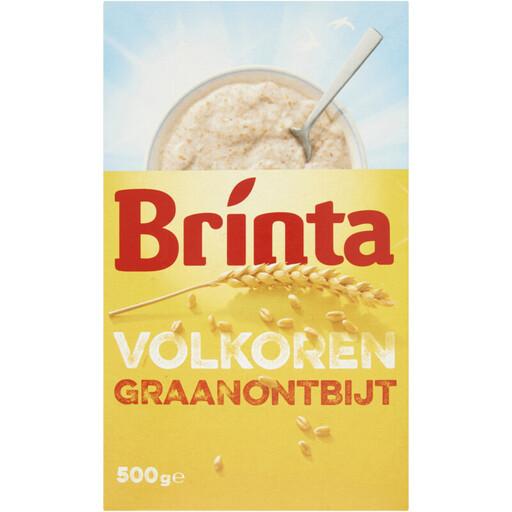 Image unavailable
Brinta Whole Wheat Cereal Breakfast 500 g
An option if you’re also considering whole wheat breakfast cereal instead of cornflakes for Sunday breakfast.
Pack size: 500 g. If fibre or allergens will influence your choice, check the nutritional information per 100 g and the ingredients on the pack.
View on Joybuy
Frequently asked questions
When can flakes be called ‘high fibre’?
Under the EU conditions for nutrition claims, the ‘high fibre’ claim can be used for products containing at least 6 g of fibre per 100 g or 3 g per 100 kcal. Check the nutrition table to see which figure is given for the product.
Are ordinary cornflakes automatically high in fibre?
No. Albert Heijn lists 3 g of fibre per 100 g for Kellogg's Corn Flakes, while Jumbo lists 3,1 g per 100 g for Smaakt Bio Cornflakes Ongezoet. Both figures are below the EU threshold of 6 g per 100 g for the claim ‘high fibre’.
Does high fibre also mean low sugar?
No, they’re different characteristics of a product. Albert Heijn lists 15 g of fibre and 12 g of added sugars per 100 g for AH Bran flakes volkoren. So compare fibre and sugars separately, and check the ingredients list too.
What should I look for if I need gluten-free bran flakes?
Choose a product explicitly labelled gluten-free and check the latest ingredients and allergen information. Albert Heijn lists 12 g of fibre per 100 g for AH Glutenvrij Vezelrijke bran flakes; also check whether any other allergen warnings are relevant to you.
What can I have with flakes for Sunday breakfast?
You can pair flakes with fruit and milk, yoghurt or a fortified plant-based alternative, for example. Still assess the nutritional information for the flakes on their own: adding other foods doesn’t change what the label says per 100 g of that product.


