
当日/次日达

品质保障

开启新人专享福利: 全场免邮 | 低至 2 折 | 免费试用 30 天 JoyPlus 会员
下载 Joybuy
A cordless drill may seem straightforward to choose at first. But models vary considerably in power, battery platform, drilling capacity and included accessories. A lightweight cordless drill for assembling furniture isn’t necessarily suitable for heavy renovation work.
The most common buying mistakes come down to three pitfalls:
Torque, measured in Newton metres (Nm), indicates how much turning force the drill can deliver. A higher figure is particularly useful for large screws, thick materials and intensive use. For assembly work and smaller screws, several adjustable torque settings are often more important than a high maximum figure.
A two-speed drill driver generally offers greater control:
Pay attention to the combination of torque and speed. A model with 45 Nm and a maximum speed of 2,000 revolutions per minute may be designed for different tasks from a model with a much higher Nm rating and a 3/4-inch fitting.
Check the stated maximum drilling capacity for wood, metal and masonry. These figures aren’t a universal guarantee for every job: the type of drill bit, the hardness of the material and your working method also make a difference.
For a drill for wood and metal, a metal chuck, two gears and an adjustable clutch are practical features. If you want to drill into brick or light masonry, look for a cordless hammer drill with a hammer function.
A cordless hammer drill isn’t the same as a machine with the power needed for drilling into concrete. For drilling lots of holes in hard concrete, an SDS rotary hammer is often more suitable. Only use the hammer function when the manufacturer says it’s suitable for the material in question.
Battery capacity is usually given in Ah. A 2.5 Ah battery can run for longer than a 1.5 Ah battery under similar conditions, but it’s often heavier too. For occasional jobs, one battery may be enough. For longer periods of work, two batteries are more convenient, so you can carry on while one is charging.
Also check:
A battery platform can save you money if you later buy a saw, multitool or garden tool from the same system. Only use batteries and chargers that the product information confirms are compatible.
The recommendations below are based on verifiable product specifications, such as voltage, torque, drilling capacity, battery capacity and included items. Always check the current product page before ordering, especially for details about batteries, warranty and delivery.
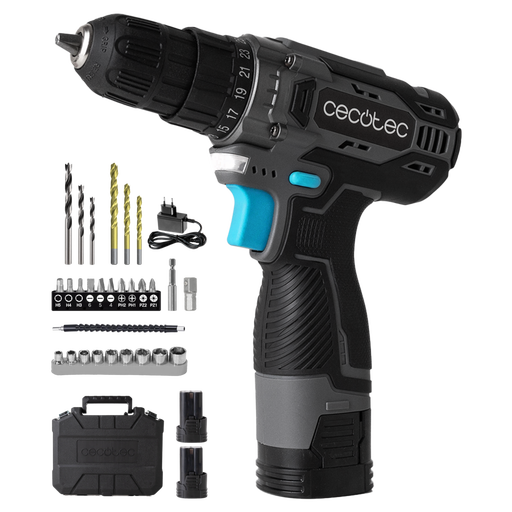
Why it suits this type of user: This kit is designed for household jobs and, according to the product information, includes two 16V 2.0 Ah batteries, a charger, a case and accessories.
The kit clearly states which batteries and accessories are included, so you don’t have to put together a starter kit separately.
38 Nm torque, two gears, 25+1 settings, LED light and an accessory set.
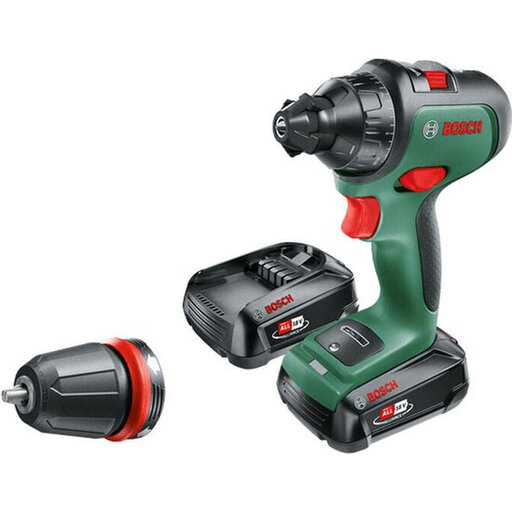
Why it suits this type of user: This model has a brushless motor, a 13 mm chuck and a Bosch POWER FOR ALL 18V platform, making it suitable for regular use in and around the home.
The product information clearly lists what’s included: two 2.5 Ah batteries and a charger. This avoids any confusion about the bare version.
Brushless motor, 13 mm chuck, two 2.5 Ah batteries and suitable for wood, plastic and metal.
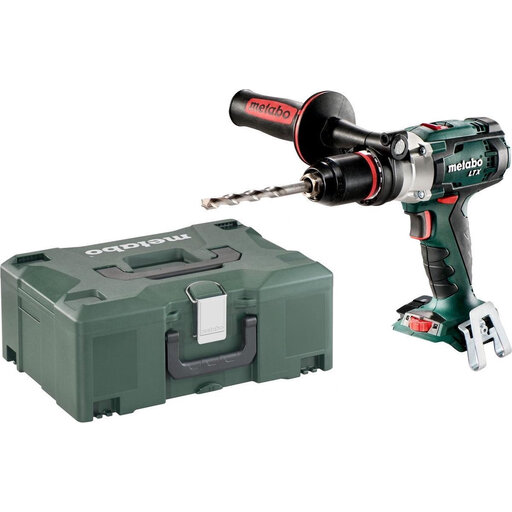
Why it suits this type of user: This 18V machine is designed for heavier-duty work and, according to the product specifications, has a metal gear housing, an impulse function and a hammer mechanism.
The machine is supplied without a battery. This is clearly stated, so you can check in advance whether you already have a compatible Metabo 18V battery pack.
130 Nm torque, drilling capacity up to 65 mm in wood and 16 mm in concrete, plus a Metaloc case.
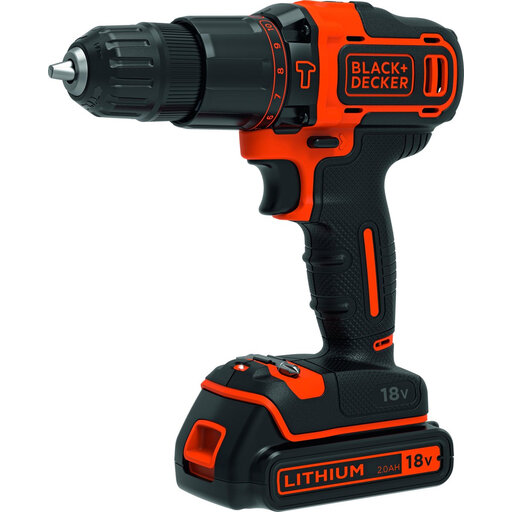
Why it suits this type of user: This cordless drill combines screwdriving, drilling and hammer drilling for use in wood, metal and masonry.
The product information specifies both the hammer function and a drilling capacity of 10 mm in masonry. This makes it easier to match the tool to the surface.
18V battery, 10 torque settings, variable speed, LED light, case, battery and charger.
We’ve put together a complete, up-to-date list of products that meet these strict selection criteria and the applicable European safety regulations.
Before drilling, check for pipes or electrical cables behind the wall. Secure the workpiece and choose a drill bit that’s suitable for the material. Wear safety glasses and hearing protection when instructed to do so in the manual. Remove the battery before changing bits or carrying out maintenance.
When using a professional cordless drill, don’t automatically choose the highest setting. Excessive torque can damage screw heads, wood or fixings. Let the drill do the work and don’t apply unnecessary pressure.
For many screwdriving and drilling tasks in wood, plastic and metal, an 18V cordless drill is a practical choice. For masonry, you’ll need a hammer function. For heavy-duty work on concrete, a separate rotary hammer is often more suitable.
Run time depends on battery capacity, material, drill bit size and workload. Under similar conditions, a 2.5 Ah battery has more capacity than a 1.5 Ah battery. With two batteries, you can generally carry on working more easily while one is charging.
With a cordless drill, you’ll need to factor in the cost of batteries and, potentially, replacing them in the longer term. In return, you won’t need an extension lead, and you can use one battery platform for several tools. So look at the total kit price, not just the price of the drill.
