
Vandaag of morgen in huis

Kwaliteit gegarandeerd

Welkomstaanbiedingen ontgrendelen: GRATIS bezorging | Tot 80% korting | Gratis 30 dagen JoyPlus-proefperiode
Download de app
A cordless wet and dry vacuum cleaner seems like the obvious solution for households with hard floors. You can vacuum up crumbs and mop up spilt drinks in one movement. However, not all models are the same. Some appliances are mainly suited to everyday maintenance, while others require more attention when it comes to emptying, drying and filter care.
When comparing models, therefore, do not focus solely on a high suction-power figure or long battery life. The design, water capacity and cleaning process after use have just as much influence on whether an appliance remains practical.
Brands sometimes quote a figure in pascals, such as 16,000 or 22,000 Pa. This is a technical indication of maximum suction power, but it does not automatically tell you how well the appliance handles hair, sticky residue or dirt along skirting boards. The brush, water distribution and sealing also play a role.
So look at a combination of:
A runtime of 40 or 50 minutes usually applies to a particular mode. Turbo mode, intensive mopping and heavily soiled floors can shorten the runtime. Also check the charging time. An appliance that takes four hours to charge is less suitable if you want to clean several floors one after another.
For a flat or everyday kitchen cleaning, 25 to 30 minutes may be sufficient. For larger homes, a model offering around 40 minutes or more is more practical, provided the water tanks are large enough.
A self-cleaning floor cleaner usually rinses the roller brush and internal tubing. You still need to empty the dirty-water tank, check the components and allow the filters to dry completely afterwards. Otherwise, odours may develop or the airflow may decrease.
Before buying, check:
A floor cleaner with separate tanks uses clean water for mopping and collects dirty water separately. This is more practical than a traditional bucket, but a small tank means refilling and emptying it more often. For everyday use, tanks of around 0.5 litres are suitable; larger households may benefit from greater capacity.
Only use a wet and dry vacuum cleaner according to the instructions. Product information for various models states that they are intended for surfaces including tiles, vinyl, laminate and sealed wood. Rough or untreated surfaces may produce different results.
A hard-floor vacuum mop should not only work well in the middle of the room. Check whether the brush can clean close to skirting boards on one or both sides. The height of the body is also important if you want to clean underneath sofas and cupboards.
A design that can lie flat at 180 degrees, as found on certain Tineco and Deerma models, can improve reach under low furniture. However, make sure that the dirty-water tank does not rise above the indicated maximum mark when the appliance is in this position.
A cordless floor cleaner moves easily between rooms, but the water, battery and motor make the appliance heavier than a standard electric mop. A self-propelled system can make it easier to move forwards. Also check the total product weight: you will notice a difference of a few kilograms particularly on stairs and when lifting the appliance.
The runtime, tank capacity and features listed below are based on the product information. Where these are brand claims, we present them as claims made by the manufacturer or product listing, rather than as a guaranteed cleaning result.
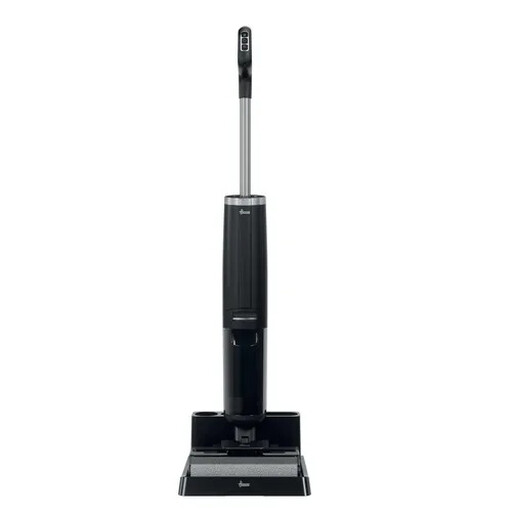
Why it suits this profile: The two modes make the appliance suitable for both crumbs and mopping, without requiring you to move straight to a more advanced model. The stated runtime is 40 minutes.
The product listing gives both the battery life and a four-hour charging time, and specifies clean- and dirty-water tanks of 0.55 litres. This allows you to assess the capacity more realistically in advance.
40-minute stated runtime, turbo mode, dual-edge cleaning, AutoClean and an anti-hair-wrap function according to the product description.
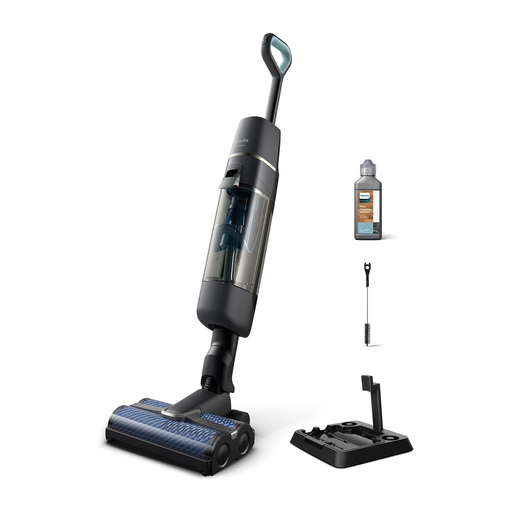
Why it suits this profile: If you value clear controls and different cleaning settings, this model offers an LCD display, three modes and automatic brush cleaning.
The maximum runtime of 25 minutes and charging time of approximately four hours are stated. This prevents features such as intensive wet cleaning from being confused with unlimited runtime.
AquaSpin technology, a 0.67-litre water tank, three cleaning modes and an automatic cleaning mechanism according to Philips.
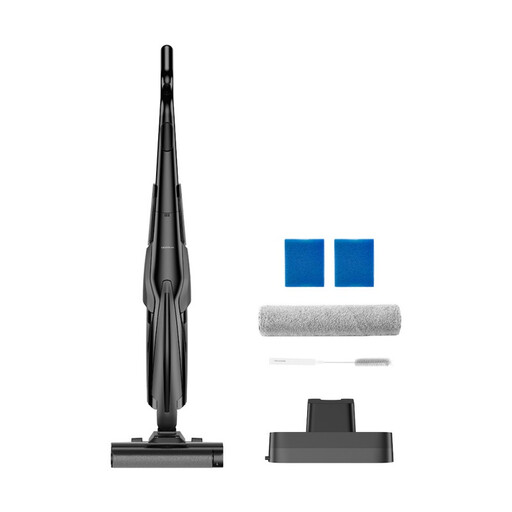
Why it suits this profile: This model is aimed at households that value longer mopping sessions and additional maintenance features.
The specifications state a maximum runtime of 50 minutes, suction power of 22,000 Pa and an anti-tangle system. The manufacturer also mentions a washing and drying function for the roller brush; check the desired cycle and settings in the instructions.
180-degree flat cleaning, 120-degree flexible control, up to 50 minutes of use and a stated noise level of up to 55 dB during drying.
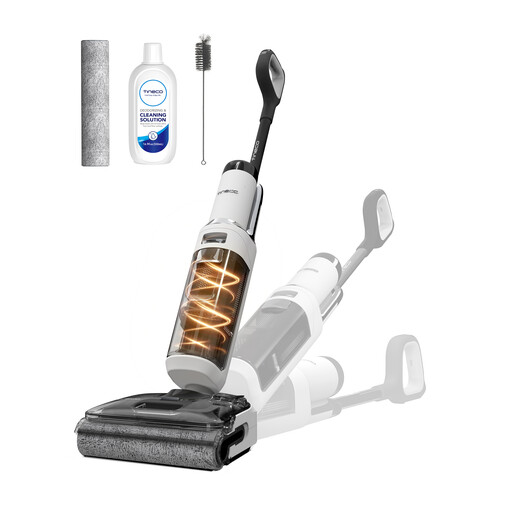
Why it suits this profile: The combination of cordless cleaning, a lay-flat design and edge cleaning is practical for busy households dealing with plenty of everyday floor debris.
The product title states that the design can lie flat at 180 degrees, has a height of 13 cm, offers edge cleaning on three sides and provides 40 minutes of runtime. These details help you assess reach and plan your cleaning in advance.
40-minute stated runtime, five-minute FlashDry self-cleaning, drying at 70 °C according to the product title, and a weight of 4.5 kg.
We have put together a complete, up-to-date list of products that fully meet these strict selection criteria and the applicable European safety regulations.
Always follow the instructions for your chosen model. In practice, these habits can help:
A wet and dry vacuum cleaner with a mopping function is not automatically suitable for carpets, flammable liquids or hot residue. Check the surfaces and prohibited applications before use.
This depends on the sealing and the recommended amount of water. According to their product information, many models are suitable for sealed laminate, tiles, vinyl and similar hard floors. Use a small amount of water and follow the manufacturer’s instructions to limit moisture entering the joints.
Electricity costs depend mainly on the charging time, charging power and how often you use the appliance. There are also recurring costs for cleaning solution, roller brushes and filters. Before buying, check which parts are included and whether replacements are available.
The service life depends on battery use, storage and maintenance. A battery will wear out more quickly if the appliance is continually stored flat or kept at high temperatures. Emptying, drying and cleaning the filters regularly helps maintain airflow and performance, but does not guarantee a fixed service life.
