
Vandaag of morgen in huis

Kwaliteit gegarandeerd

Welkomstaanbiedingen ontgrendelen: GRATIS bezorging | Tot 80% korting | Gratis 30 dagen JoyPlus-proefperiode
Download de app
A cordless water flosser can be useful if traditional flossing is difficult, for example if you have braces or implants, or limited space between your teeth. A portable water flosser is also appealing if you travel: there’s no cord, it’s easy to charge and it’s usually compact enough to fit in a wash bag.
However, many models look similar. High pressure, long battery life and multiple attachments may sound appealing, but they don’t tell you everything about day-to-day use. Look out for these common pitfalls.
A water flosser with a high PSI rating can deliver a powerful stream, but the lowest setting is just as important. If you have sensitive gums or are new to water flossing, you’ll need a gentle start. So check the full pressure range and the number of settings, not just the maximum pressure.
A quoted battery life of, for example, 30, 40 or 50 days is usually based on a particular usage scenario set by the brand. According to the manufacturer’s own product information, actual battery life can vary depending on the setting selected, charge level and frequency of use. So also check the charging time, the type of connection and whether you can charge a USB-rechargeable water flosser while travelling.
A water reservoir of 300 ml or more needs refilling less often, but it often makes the appliance larger and heavier. A compact water flosser with a 180 to 260 ml reservoir may be enough for one cleaning session. More important is whether the reservoir is removable and has a wide opening, so you can empty and clean it properly after use.
A water flosser with multiple settings gives you more control. For everyday use, a standard and a gentle setting are useful; a powerful setting may be preferable for stubborn food debris. Models with a DIY or adjustable setting let you tailor the water stream to your preference.
Pulse frequency is measured in pulses per minute. This helps describe how the water stream works, but it isn’t a guarantee of better cleaning on its own. Consider the combination of pulse frequency, pressure control and nozzle design.
If possible, choose a water flosser with a water reservoir that’s easy to remove. After each session, you can discard any remaining water and leave the reservoir to dry. This helps limit stagnant water and limescale build-up. Only use water or a liquid that the instructions say is suitable. Essential oils or harsh mouthwash can damage the components.
An IPX6 or IPX7 rating describes how well an appliance can withstand water. The precise restrictions on use vary by model. A water-resistant casing doesn’t mean you can connect the charger or USB port while it’s wet. Always let the port dry completely, and don’t use the appliance while it’s charging.
Also check which attachments are included. An orthodontic attachment is useful if you’re looking for a water flosser for braces. According to the product description, a periodontal attachment may be designed for targeted cleaning, but it’s no substitute for advice from a dentist or dental hygienist.
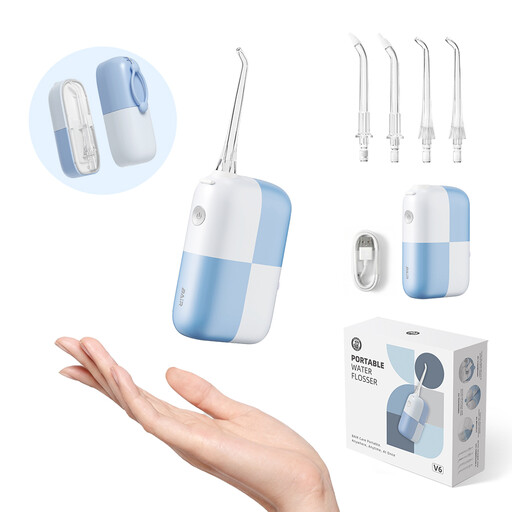
Why it suits this user: According to the product information, the compact body folds down to around 10 cm and weighs about 145 grams. The press-spray mode gives beginners control over the water stream.
It’s not all about high maximum pressure: the product description lists a pressure range of 75–80 PSI and a pulse-on-demand function. The magnetic reservoir can be removed for filling and cleaning.
USB-C charging, IPX7 water resistance, around 30 days of battery life according to the manufacturer, and standard, orthodontic and periodontal attachments.
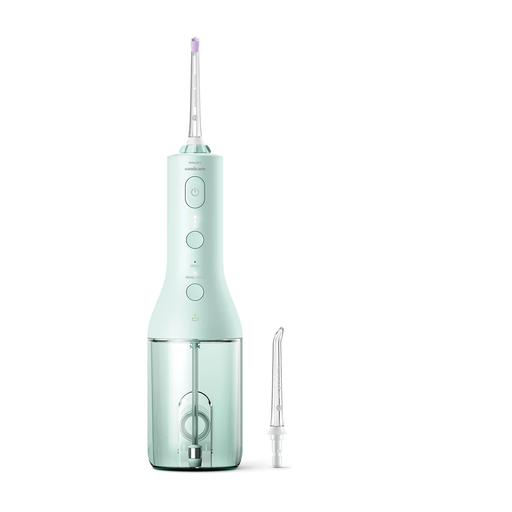
Why it suits this user: This model combines a cordless design with a 250 ml reservoir, two modes and three intensity levels. It’s a good fit if you want a regular routine at home without a large, mains-powered appliance.
The choice isn’t based on marketing claims alone: the product specifications clearly list two modes, three intensity levels and a reservoir designed for a session of around 60 seconds. According to Philips, claims about plaque removal are based on its own research.
QuadStream attachment, three intensity levels, removable 250 ml reservoir and a statutory warranty of at least two years according to the product information.
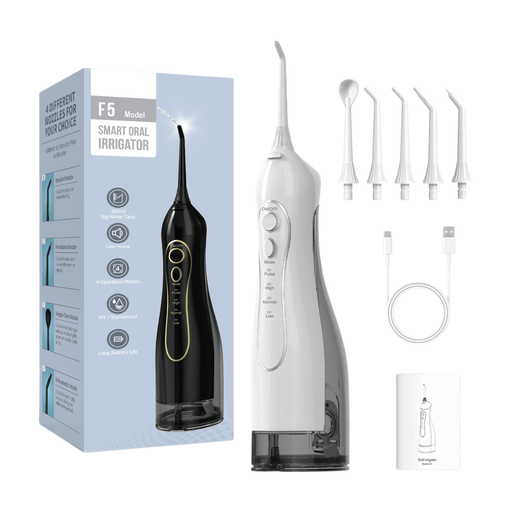
Why it suits this user: The F5 has five settings, a 300 ml reservoir and, according to the manufacturer, four types of attachment, including an orthodontic attachment. This makes it suitable if you want to tailor the settings to different needs.
According to the specifications, the five settings start at 40 PSI, giving you more choice than a model with only a powerful stream. The removable reservoir has a wide opening for filling and cleaning.
Pressure range of 40–140 PSI, five settings, 300 ml reservoir, 360° rotating attachment, IPX7 rating and battery life of up to 40 days as stated by Sunluxy.
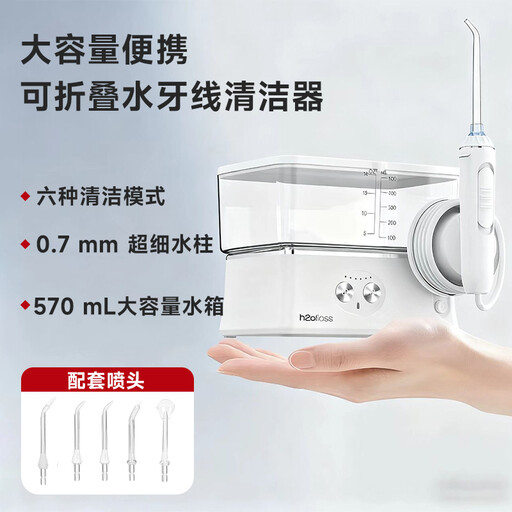
Why it suits this user: The product information lists six settings, five attachments and a large reservoir of around 570 ml. This may suit users who value sharing the appliance with family members, having longer sessions or refilling less often.
The larger reservoir means fewer interruptions, while the six settings give you the option of avoiding the most powerful setting by default. Bear in mind, though, that the stated weight is around 1 kg.
Six settings, five nozzles, IPX7 water resistance and a 2500 mAh battery according to the product information.
We’ve put together a complete, up-to-date list of products that meet these strict selection criteria and the applicable European safety regulations.
A water flosser is intended for oral care and is not a replacement for dental treatment. If bleeding persists or you experience severe irritation, stop using it and ask a dentist for advice.
Its lifespan depends on how you charge and clean it, and whether replacement attachments are available. Empty and rinse the reservoir after use, avoid harsh liquids and charge it according to the instructions. The stated battery life is a guide to usage, not a guarantee of the appliance’s overall lifespan.
It can be, depending on the model and the attachment included. Choose an appliance with an orthodontic or other suitable targeted-cleaning attachment, and start on a low pressure setting. If you’ve recently had oral surgery, have implants or have persistent symptoms, it’s best to speak to a dentist.
As well as the purchase price, your main costs are electricity and any replacement attachments. USB charging generally uses little electricity. Check in advance whether replacement nozzles are available and how often the manufacturer recommends replacing them.
